Why Is El Yunque Closed?
El Yunque is not closed as a forest: the PR-191 corridor is free, open 8 a.m. to 5 p.m., with no reservation needed. What closes are specific trails, El Portal in September, and the corridor during flash floods or construction. Here is what is actually shut, why, and which tours still run.
Why Is El Yunque Closed?
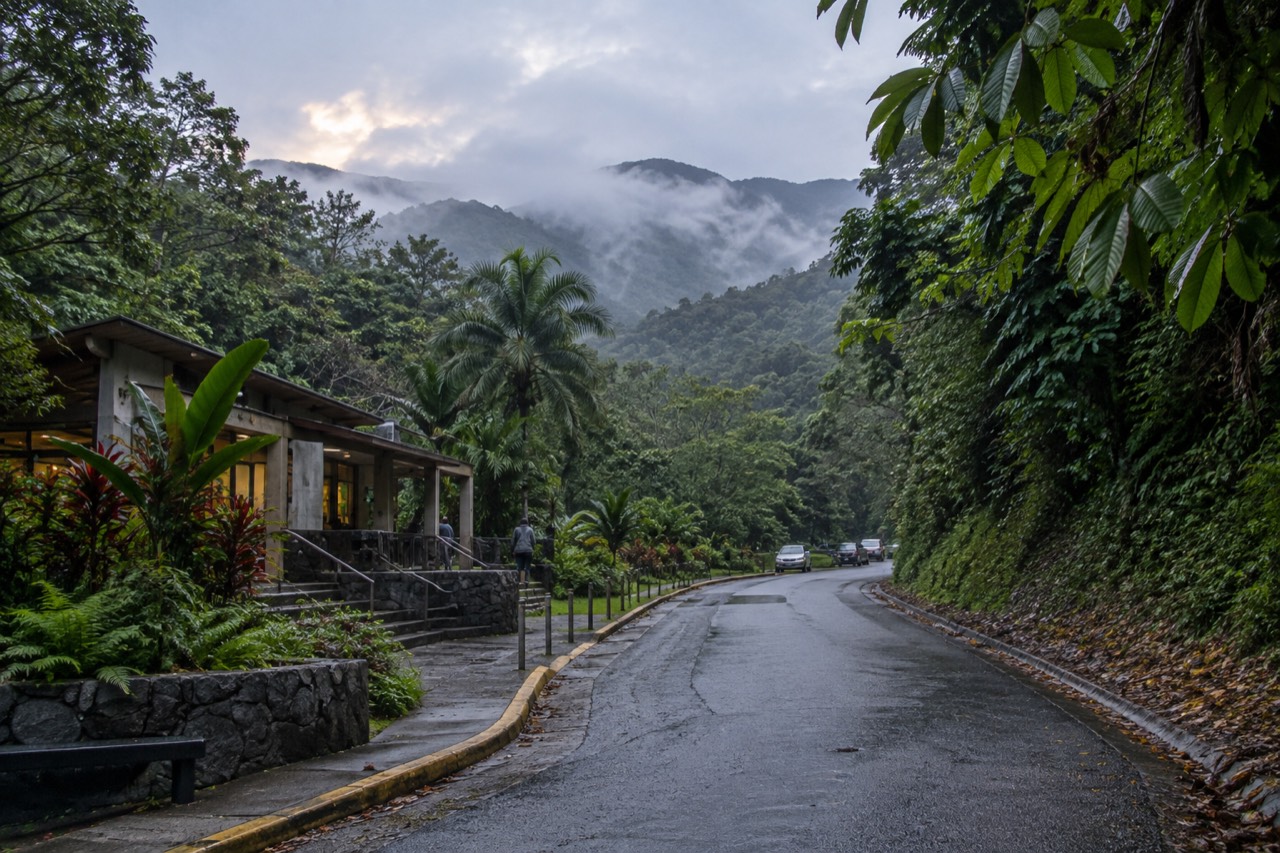
El Yunque National Forest is not closed as a whole. The PR-191 North recreational corridor in Río Grande is free to enter, requires no reservation, and operates from 8:00 a.m. to 5:00 p.m. daily. What closes are specific pieces: certain trails, all camping, the El Portal visitor center for two weeks each September, and the entire corridor on rare construction or emergency days.
That distinction matters more here than at most destinations, because almost everything a visitor reads about El Yunque online conflates the forest with its most famous trail. Someone searching "why is El Yunque closed" is usually reacting to one of three things: a news story about hurricane damage, a tour listing that mentions a substituted stop, or a travel forum thread from years ago when the timed-entry system was in place. None of those three means the forest is shut.
The confusion has a history. Hurricanes Irma and María in 2017 caused significant structural damage across the forest, and recovery has been gradual and uneven, which is why some trails have stayed closed for years while others reopened quickly. Before that, the forest ran a timed-entry vehicle reservation system during peak periods, and a lot of third-party content still tells readers to book a corridor reservation that no longer exists. The Forest Service's current conditions page states plainly that entrance to the PR-191 North corridor is free and no reservations are required, with capacity managed through parking rather than tickets.
If you are mid-booking or weighing whether to cancel, the short version is this: the forest is open, the corridor is open, and tours are running. What you should verify before you go is the status of the specific trails and sites on your itinerary, because those change with construction and storm recovery. The Forest Service's alerts page is the live authority, and a good guide checks it the morning of your tour.
Here are three ways to spend that day well regardless of what the alerts say:
Which Parts Of El Yunque Are Closed Right Now?
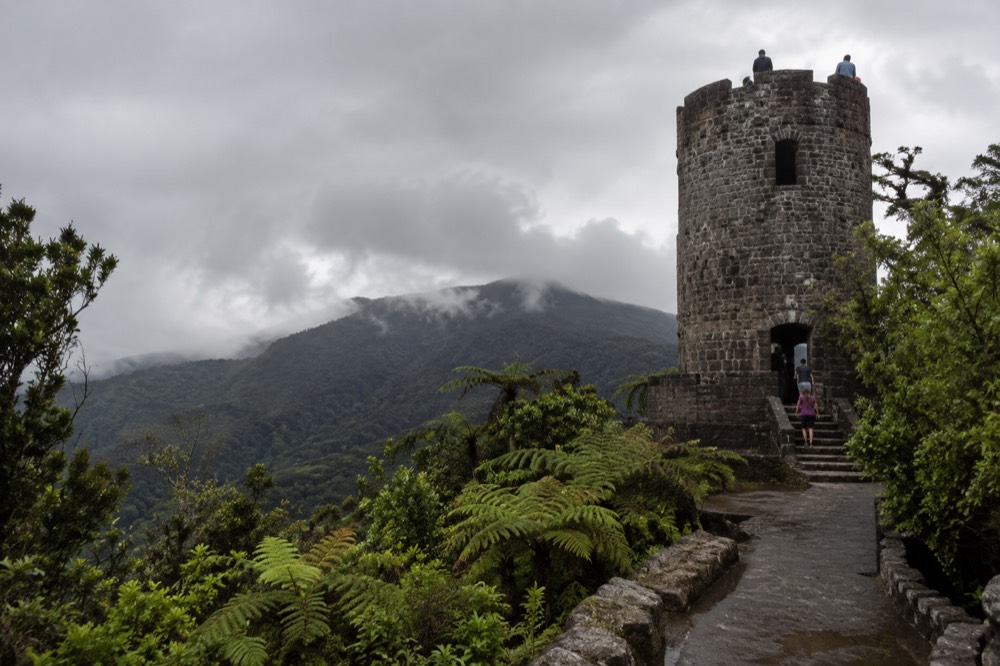
The closed items are the La Mina Trail and Big Tree Trail, both approaches to La Mina Falls; the summit section of the El Yunque Peak Trail beyond Los Picachos; Caimitillo Trail and its recreation area; the Tradewinds Trail; Las Cabezas Observation Point; and all three campsites. Everything else, including the corridor, Yokahú Tower, La Coca Falls, Juan Diego, and Angelito Trail, is open per current Forest Service status listings.
That list comes with an important caveat: closure status in El Yunque is volatile, and the only authoritative source is the Forest Service itself. The forest's trails status alert is the page that names which trails are closed, and it is updated as construction and recovery work progresses. Treat any list you read anywhere, including a summary like the one above, as a snapshot, and check the alert before you travel.
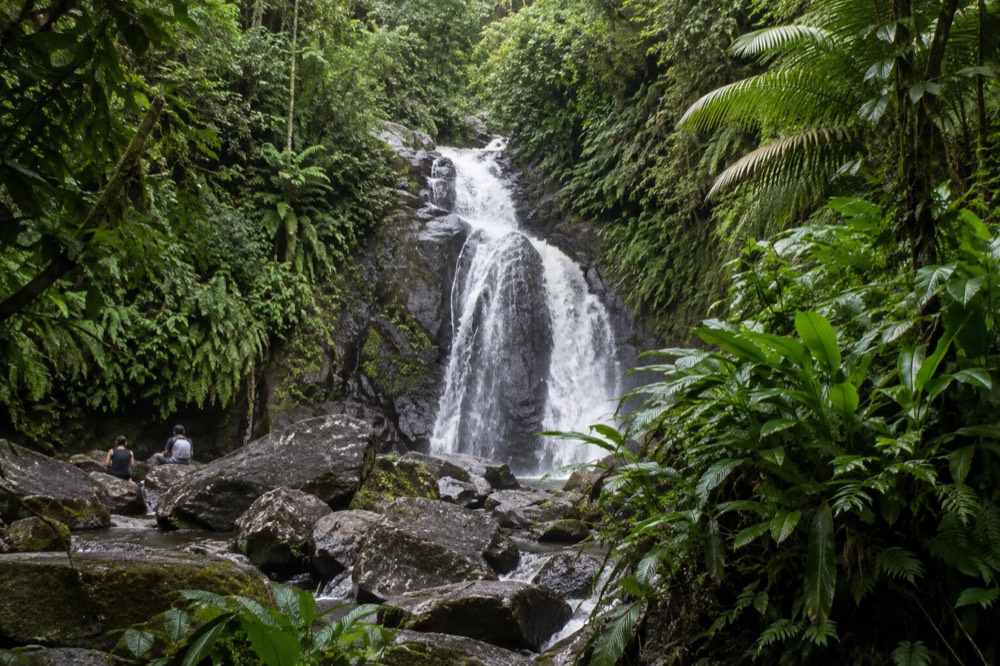
The single most consequential closure for visitors is La Mina Falls. Both trails that reach it, La Mina and Big Tree, have been closed for an extended period, and the Forest Service's FAQ attributes this to ongoing recovery from the 2017 hurricanes. Because La Mina Falls is the most heavily marketed image associated with El Yunque, its closure is the reason many people believe the entire forest is shut. It is not. The falls are one stop among many on a road corridor full of open ones.
| Area or site | Status to verify before visiting | What it means for a visitor |
|---|---|---|
| PR-191 North corridor | Open, 8:00 a.m. to 5:00 p.m., free, no reservation | The main road and its pull-offs are accessible |
| La Mina Trail and Big Tree Trail | Listed closed on the trails status alert | Both routes to La Mina Falls are affected |
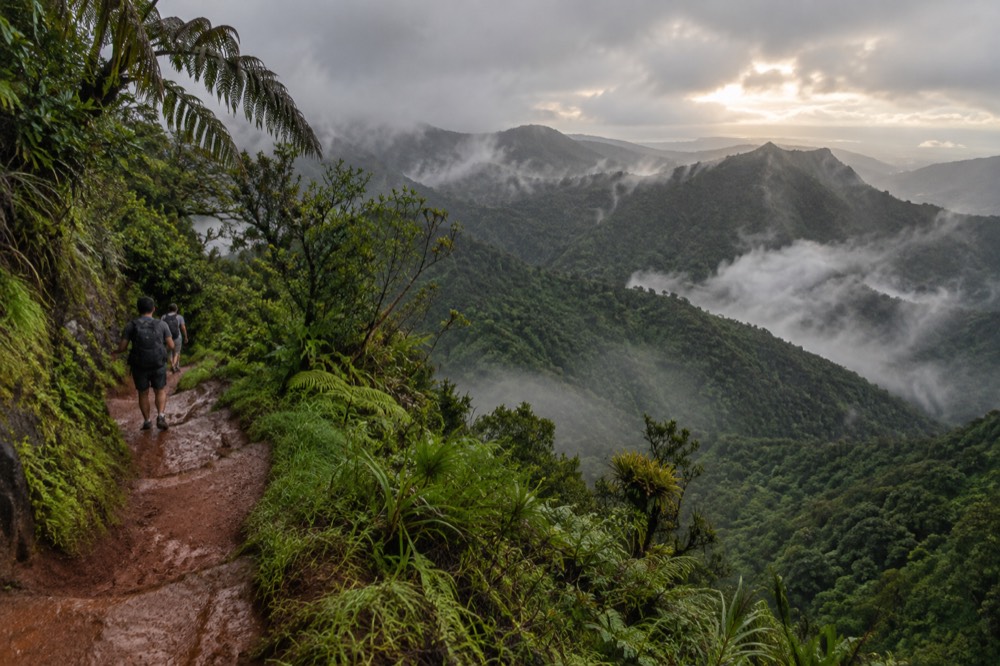
| El Yunque Peak Trail | Open only as far as Los Picachos | The true summit section stays off-limits |
| Camping (all three campsites) | Not available, no reopening date published | Overnight stays in the forest are not possible |
| El Portal Rainforest Center | Open daily, closed for maintenance in September | The fee site, $8 for visitors 16 and over |
| Yokahú Tower, La Coca Falls, Juan Diego | Open, with parking time limits | Photo and wading stops along the corridor |
One item deserves special caution: Baño de Oro Trail. Older Forest Service alerts describe it as closed for a federal highway construction project, while newer forest site pages describe it as reopened after eight years of hurricane-damage repair. The two sources disagree, so the honest answer is to check the alerts page rather than trust either version secondhand. Our guide to the hiking trails of El Yunque covers which routes are worth planning around.
Wondering what a guide actually does with all this? A private guide reroutes on the fly.
Is All Of El Yunque Closed, Or Just Some Trails?
Just some trails and facilities. The forest spans 28,516 acres across eight municipalities, and the closures affect a handful of named trails, one recreation area, one observation point, and the campsites. The PR-191 North corridor, the Luquillo entrance on Road 988, the El Toro Scenic Byway on Road 186, and the Naguabo side on Road 191 South all remain accessible, and none requires a reservation.
The scale helps explain why partial closures do not equal a closed forest. El Yunque is the only tropical rainforest within the national forest system, at nearly 29,000 acres one of the smallest national forests in size yet among the most biologically diverse. Its recreation is spread across four road corridors, dozens of trails, and 37 listed recreation sites and trails. When two trails close, that is a real loss for the visitors who wanted those specific hikes, but it leaves the overwhelming majority of the forest's public face intact.
It also helps to understand what "closed" means in each case. A trail closure usually means a physical hazard: a damaged retaining wall, unstable slopes, or active construction. A corridor closure, which is rarer, means the road itself is shut, and that does close everything along it. The June 2025 repaving project at kilometer 8.3 closed the PR-191 corridor for a single day, with access shut at the PR-191 and PR-9966 intersection. Those one-day engineering closures are announced in advance through the Forest Service newsroom, and tour operators adjust around them.
The practical takeaway for a tour-goer is that a "closed" search result almost never means your day is cancelled. It means your itinerary shifts. Guides who work the forest daily know which pull-offs are open, which pools are reachable, and which viewpoints substitute well for the ones that are not. That local knowledge is precisely what you are paying for on a day when the status board is mixed.
Why Did El Yunque Close After Hurricane María, And Is It Still Recovering?
Hurricanes Irma and María in 2017 caused significant structural damage across the forest, including to El Portal, which needed major reconstruction and did not reopen until January 2022. Recovery continues years later: the Baño de Oro Trail needed eight years of repair work before its site pages described it as reopened, and La Mina Trail remains closed for construction tied to the 2017 damage.
The 2017 hurricane season is the root of most of what people now read about El Yunque being closed. Two major hurricanes in the same September did structural damage to buildings, trails, bridges, and drainage across the forest. The Forest Service's own language is measured: the damage around the entire forest was significant, and recovery continues. What that looks like on the ground is a rolling program of trail reconstructions, road projects, and facility repairs, each with its own timeline, rather than a single reopening event.
Recovery has been genuinely uneven, which is part of why the picture is confusing. El Portal, the visitor center, took structural damage and reopened in January 2022 with new exhibits, a store, a cafe, and a theater, incorporating wood from trees blown down in the storms into some of its displays. The Baño de Oro Trail, damaged by María, was restored along with its historic site, which holds the first concrete pool and house built in Puerto Rico. Meanwhile La Mina Trail, the forest's most famous walk, is still listed as closed for construction. There is no published percentage of trails damaged or reopened, and any figure like that circulating online is not from the Forest Service.
For a visitor deciding whether to book, the recovery status cuts both ways. Some of the forest's showcase sites are in better shape than they have been in years, with completed construction at La Coca Falls delivering a new welcome station and improved parking. Others are still works in progress. A guide who visits weekly has a far better read on which is which than any article written months earlier, which is one of the quiet arguments for a guided day.
Does El Yunque Close For Weather Or Flash Floods?
The corridor stays open in rain, but flash floods are a serious, sometimes fatal hazard in El Yunque, and the Forest Service warns that flood surges can claim victims in less than one minute and reach heights of 30 feet or more. Rain itself does not close the forest, but heavy rain upstream can close river access, and extreme weather events can shut the corridor.
Rain is not an exception in El Yunque; it is the baseline. Annual rainfall ranges from roughly 96 inches at lower elevations to over 157 inches at higher stations, and the wettest station, near El Yunque Peak, has recorded around 169 inches in a year. A drizzle or a passing shower is a normal condition for a visit, and tours run in it. Our piece on visiting El Yunque in the rain covers what that actually feels like and what to pack.
Flash flooding is a different category. The Forest Service's flooding guidance notes that flash floods can occur throughout the year but are more frequent in the rainy months of April and May, and that rapidly rising water can roll boulders, tear out trees, destroy bridges, and undermine roads. The advice that matters most: stay alert for heavy rain not just where you are but upstream, get to higher ground if water starts rising, and never try to cross flowing streams. A flash flood watch means threatening weather is possible; a warning means you may have only seconds. The full index of guides sits on El Yunque National Forest Tours.
For river swimming specifically, there is a tool most visitors never hear about: the Río Mameyes has a live USGS stream gauge publishing real-time discharge and gage height, so you can check the river before getting in. The Río Espíritu Santo has a National Weather Service gauge page listing flood stages and recent crests. Guides watch conditions like these on the morning of a tour, and a good operator will substitute a river stop for a ridge or beach stop rather than gamble on water levels.
Does El Yunque Close In September?
El Portal Rainforest Center closes for two weeks each September for maintenance, and the Forest Service's current alert names September 8 to 20 as this year's window. The rest of the forest does not close for the season: the corridor keeps its 8:00 a.m. to 5:00 p.m. hours, and September is simply within the Atlantic hurricane season, so weather closures are more possible then than in winter.
The September closure is the one genuinely recurring, scheduled shutdown, and it applies only to El Portal, the visitor center at kilometer 4.1 on PR-191. The facility shuts for general maintenance work, and the Forest Service publishes an alert each year with the exact dates. If your only reason to visit El Portal is the parrot exhibit and the film, plan around those two weeks. Everything along the corridor above it, the waterfalls, towers, and trailheads, operates on its normal schedule.
September also sits inside peak Atlantic hurricane season, which runs roughly June through November, and that shapes the risk profile of any visit. A tropical system passing near Puerto Rico can close the forest for a day or two, and those closures are announced through the alerts page rather than being seasonal certainties. It is one reason September is a quieter, cheaper month to visit, and one reason flexible booking matters. Our guide to the best time to visit El Yunque weighs the trade-offs month by month.
There is a fee angle worth knowing here too. El Portal is the only site in the forest that charges admission today, $8 for visitors 16 and over, free for those under 15, and $4 with an interagency pass. A proposal to change fees at El Portal and add a La Mina Recreation Area permit has been through its public comment period but no decision has been published, so nothing about it is a current charge. If a page tells you that you must pay a fee to enter the forest itself, that page is out of date.
If A Trail Is Closed, What Do Tours Do Instead?
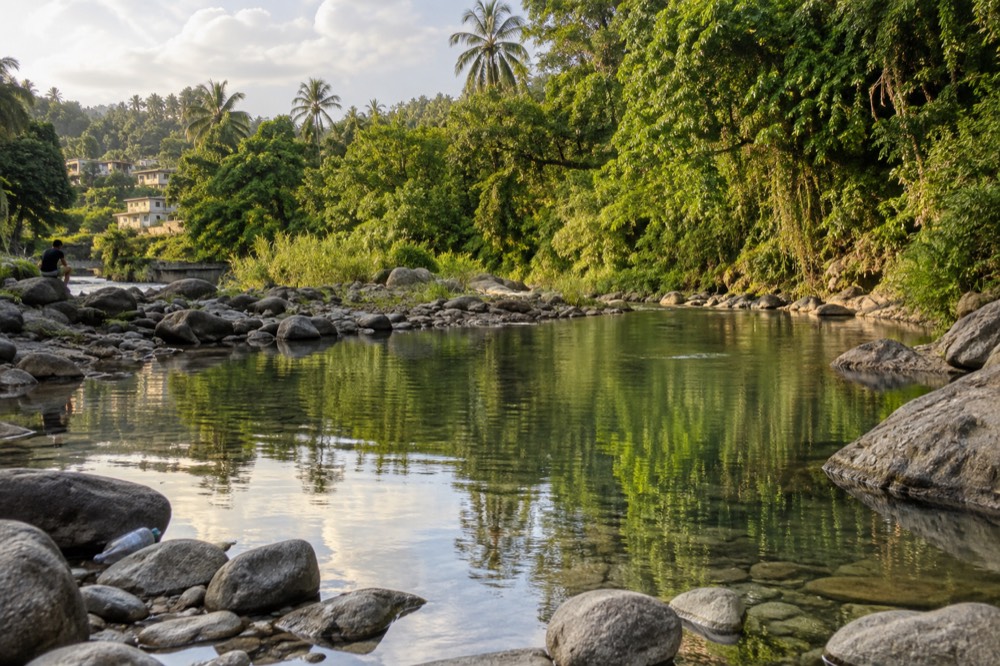
Guided tours substitute open stops for closed ones, and the substitutions are usually seamless for the visitor: river pools on the Río Mameyes, the Juan Diego Falls pool, beach time at Luquillo, or waterslides on private land outside the forest replace closed waterfall hikes. Operators rework itineraries the morning of the tour based on the live status of trails and water levels.
This is where the guided-versus-independent question gets sharp. An independent visitor who planned their day around La Mina Falls and discovers both approach trails closed has to improvise with a paper-digital map and a 30-minute parking limit. A guide absorbs that problem before the visitor ever knows it existed. The Forest Service also publishes a directory of authorized and permitted tour operators, and not every taxi holds a forest permit, so the operator you book matters for legal access, not just itinerary quality.
The roster of tours on this site shows how operators have adapted. The Small-Group El Yunque Waterfall and Waterslides with Pickup runs 4 to 5 hours from $63, rated 4.8 across 3,040 reviews, and centers on Las Tinajas and Charco Frío, river spots that do not depend on the closed La Mina corridor. The El Yunque Rainforest Guided Day Tour from San Juan, from $75 and rated 4.8 across 522 reviews, builds its route around Río Mameyes, La Coca Falls, and Yokahú Tower, all of which sit on the open corridor. These are itineraries designed around what is actually visitable, not around a brochure from before the hurricanes.
One substitution deserves plain labeling, because it changes what you are buying. Several popular tours include the natural waterslides above Luquillo, often called Las Paylas. Those slides are on private land outside El Yunque National Forest, with no Forest Service management, staffing, or safety oversight, and access is arranged with the landowners on the spot. A tour that sells the waterslides is selling a stop outside the national forest. That is not a defect, and many travelers love it, but you should know it before you book. Our page on Luquillo waterslide tours sorts out which listings include what.
The Half-Day Yunque Rainforest Waterslide and Rope Swing Guided Tour is a good example of the format: 4 hours from $25, rated 4.8 across 8,066 reviews, with free cancellation, built around slides, waterfalls, and a rope swing rather than the closed summit trails.
Do Tours Still Run When Parts Of The Forest Are Closed?
Yes. Tours run every day the corridor is open, and because the corridor itself is rarely closed, cancellations are rare. What changes is the route: a closed trail shifts the itinerary, high water shifts the swimming stops, and a full-day plan may compress or expand depending on conditions. Operators with free cancellation policies let you rebook if an extreme weather event does shut the forest.
The mechanics of a tour cancellation are worth understanding. A tour is cancelled outright only when the forest corridor itself is closed, which happens for extreme weather or an announced construction day. When individual sites are closed, the tour simply runs a different version. This is why the question "why is El Yunque closed" matters most to someone holding a booking: the answer almost never means your tour is off, but it may mean your tour is different from the listing's headline description.
Transport is the other half of the equation, and it is the part travelers underestimate. Rideshare apps cannot pick up at the recreational corridor or El Portal, and the Forest Service has warned that visitors relying on them have been forced to walk long distances to reach a valid pick-up point. Not every taxi holds a forest permit either, and the Forest Service explicitly advises asking before hiring any transportation service. A tour with a permitted vehicle solves both the exit problem and the parking problem, since parking in the corridor is limited to designated areas and is the real capacity constraint on busy days.
The Let Me Show You MY Island Tour With Visit to El Yunque illustrates the full-day format: 6 to 7 hours from $89 with hotel pickup, rated 4.9 across 1,655 reviews, with free cancellation, routing through La Coca Falls, Yokahú Tower, and Piñones. A guide running that route adjusts the order and dwell time around whatever the status board says that morning.
For travelers who want maximum adaptability, a private tour is the strongest hedge against closures. The Private El Yunque Half-Day Tour with Transport runs 5 hours from $125, rated 5 across 151 reviews, with free cancellation, and a private guide can reshape the entire itinerary around what is open, skip what is not, and time the parking-limited stops to avoid the midday crush.
How Do You Check If El Yunque Is Open Before You Go?
Check the Forest Service's El Yunque alerts page and the current conditions page on the morning of your visit. Those two pages are the live authority on trail closures, corridor status, and construction. For weather, check the San Juan National Weather Service forecast, and for river conditions, the live USGS gauge on the Río Mameyes publishes real-time water levels.
The checking routine takes five minutes and answers ninety percent of the questions this article covers. The current conditions page states the corridor hours, the reservation status, and any capacity management in effect. The forest trails status alert names the specific closed trails. The main alerts index carries everything else, including El Portal's September window and any transport advisories. If you are booking El Portal tickets in advance, they are sold 30 days ahead at 9 a.m. ET, and cancellations are accepted up to 24 hours in advance minus a $2 processing fee.
One habit worth forming: check the pages the same week you travel, not the week you book. Closures move with construction schedules and storm seasons, so a status read a month before your trip is a planning guide, not a guarantee. A guide does this checking for you as part of the service, which is one reason tours remain worth booking even though the forest itself is free to enter and needs no reservation. If you are weighing that trade-off, our article on visiting El Yunque without a tour walks through the self-drive alternative in full.
However your day is shaped, these formats all adapt well to a mixed status board:
Common Questions About El Yunque Closures
Why Is El Yunque Closed?
El Yunque National Forest is not closed as a whole. The PR-191 North corridor is free, requires no reservation, and opens daily from 8:00 a.m. to 5:00 p.m. What close are specific trails, all camping, and El Portal for two weeks each September, plus rare full-corridor closures for extreme weather or construction.
Is La Mina Falls open?
Both trails that reach La Mina Falls, La Mina Trail and Big Tree Trail, are listed as closed on the Forest Service's trails status alert, and the FAQ attributes this to ongoing recovery from the 2017 hurricanes. Check the alerts page before planning around the falls, since status changes with construction.
Do I need a reservation to enter El Yunque?
No. Entrance to the PR-191 North recreational corridor is free and no reservations are required, and all four forest corridors are published as not requiring one. The old timed-entry reservation system no longer exists. The only thing charged is El Portal, at $8 for visitors 16 and over.
Does El Yunque close when it rains?
No, the forest stays open in ordinary rain, which is frequent given annual rainfall of roughly 96 to 157 inches depending on elevation. Flash floods are the real hazard, more common in April and May, and can close river access or the whole corridor during extreme weather. Check the alerts page on the day.
Can I camp in El Yunque?
Not currently. Camping permits are not available, dispersed camping is not permitted until further notice, and all three campsites carry closed status with no reopening date published. Day use only, within the 8:00 a.m. to 5:00 p.m. corridor hours.
Will my tour be cancelled if a trail is closed?
Almost never. Tours are cancelled only when the corridor itself shuts for extreme weather or an announced construction day. When individual trails are closed, operators substitute open stops such as Río Mameyes pools, Juan Diego, Luquillo Beach, or the private-land waterslides outside the forest. Most listings on the roster carry free cancellation if conditions force a change.