Is El Yunque A Difficult Hike?
How hard El Yunque really is to hike, trail by trail, what a guided tour asks of your legs, and how to match the walking load to your fitness before you book.
Is El Yunque A Difficult Hike?
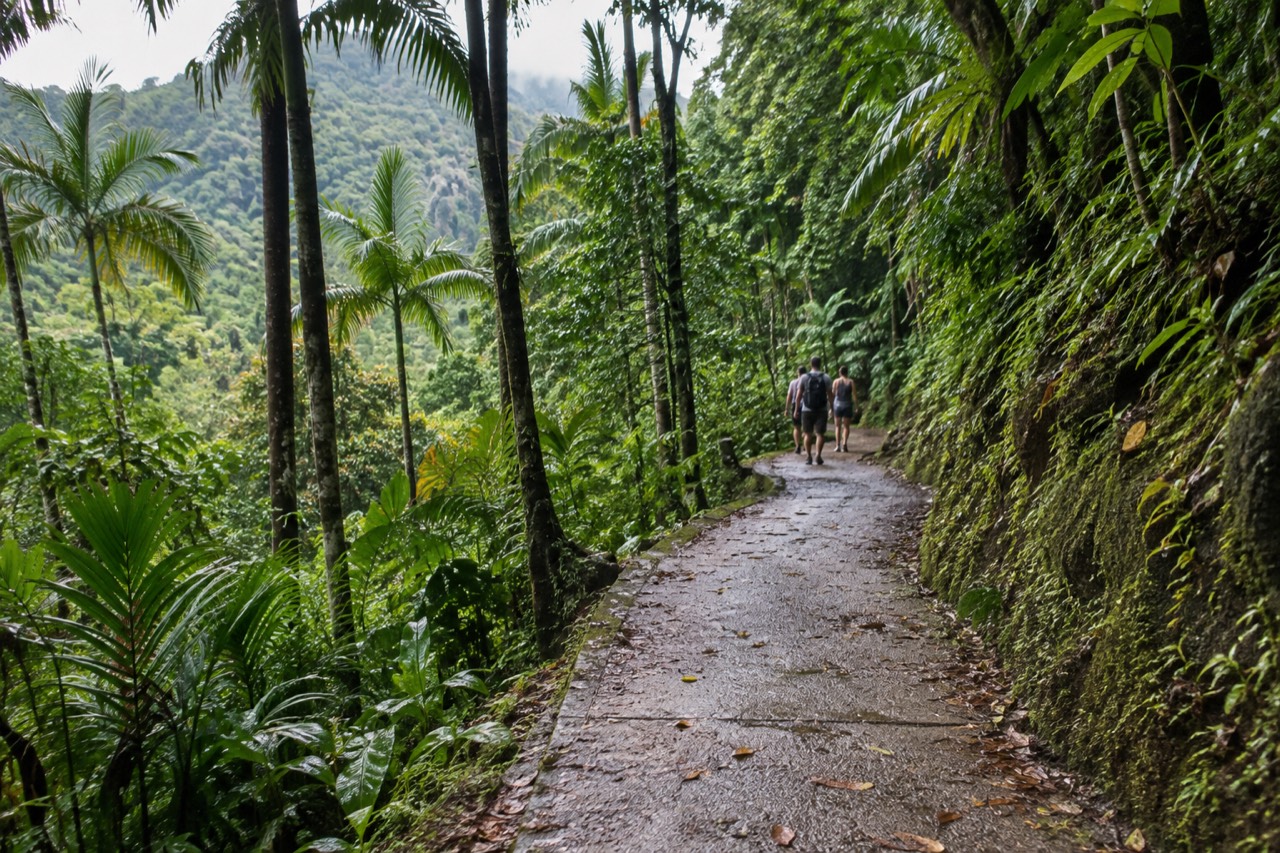
No single answer covers the whole forest, because El Yunque ranges from a 0.4 km easy riverside stroll to a 2.6 mile challenging climb gaining 1,378 feet. The Angelito Trail is listed as Easy and flat enough for young children, while the El Yunque Trail is listed as Challenging. Most visitors walk something in between, and most guided tours keep to the gentler end.
That spread is the honest answer, and it is also why the question matters so much for tour buyers. Difficulty in El Yunque is not a fixed property of the forest, it is a property of the route you choose within it. The Forest Service grades its own trails on a published scale, Easy through Very Challenging, and the grades are not decorative. La Coca Trail carries the note that it is "one of the trails where we lose the most people," meaning lost hikers, not injuries, but the warning still tells you something about how tangled the terrain can get once you leave the main corridor.
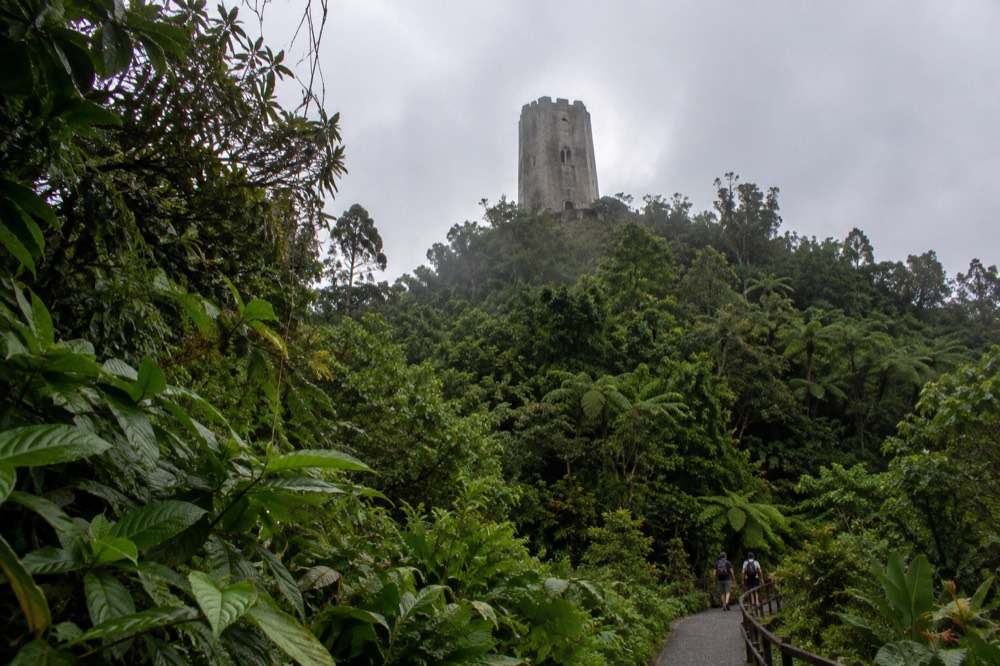
The good news for anyone worried about fitness is that the most visited parts of the forest barely qualify as hiking at all. La Coca Falls is a roadside stop at 1,476 feet of elevation: you park, you look, you photograph an 85-foot cascade, and you leave. Yokahú Tower is a short walk up some stairs to a 69-foot observation deck built in the early 1960s. Neither requires anything you would call exertion. Plenty of visitors experience El Yunque entirely through stops like these and leave soaked in rainforest without ever breaking a sweat on purpose.
Where the question gets real is the trail network, and that is where a little planning pays off. The Forest Service publishes lengths and elevation changes for every trail, so you can know before you go that Angelito is 0.4 km with 132 feet of climbing, and that Mount Britton is 1.3 km with 591 feet of climbing, and pick accordingly. A guide does that filtering for you, which is one of the quieter arguments for taking one: the guide has already matched the route to the group in front of them.
If you are already weighing whether a tour is the right call, these three options sit at different points on the effort spectrum, from a full forest day to a combination that mixes walking with ziplining so nobody in your group has to be a pure hiker.
One more thing belongs in this first answer, because it changes what "difficult" means on the day. Trail and site closures in El Yunque shift with construction and storm recovery, and some of the best-known routes have been off the menu for a while. Before you build a plan around any specific trail, check the Forest Service's forest trails status alert, which is the live authority on what is walkable right now.
Which El Yunque Trails Are Actually Hard?
The hardest verified trails are El Toro at 2.3 miles with 1,325 feet of climbing, Tradewinds at 4.6 miles with 1,096 feet, and El Yunque Trail at 2.6 miles with 1,378 feet. All three carry Forest Service grades of Difficult, Very Challenging, or Challenging. At the easy end, Angelito is 0.4 km with 132 feet and the El Portal interpretive loop is 0.3 miles with 66 feet.
The Forest Service grades every trail, and the numbers are worth reading side by side before you commit to anything:
| Trail | Length | Elevation change | FS difficulty |
|---|---|---|---|
| El Portal Trail | 0.3 mi (0.5 km) | 66 ft / 20 m | Easy interpretive loop |
| Angelito Trail | 0.4 km one way | 132 ft / 40 m | Easy |
| Baño de Oro Trail | 0.5 km one way | 230 ft / 70 m | Short, moderate grade |
| Big Tree Trail | 0.9 mi (1.4 km) | 164 ft / 50 m | Moderate |
| La Mina Trail | 0.7 mi (1.1 km) | 492 ft / 150 m | Challenging |
| Mount Britton Trail | 1.3 km | 591 ft / 180 m | Challenging |
| La Coca Trail | 1.8 mi (2.9 km) | 656 ft / 200 m | Very Challenging |
| El Toro Trail | 2.3 mi (3.8 km) | 1,325 ft / 404 m | Difficult |
| El Yunque Trail | 2.6 mi (4.2 km) | 1,378 ft / 420 m | Challenging |
| Tradewinds Trail | 4.6 mi (7.4 km) | 1,096 ft / 334 m | Very Challenging |
Two honest footnotes belong under that table. First, La Mina and Big Tree, the two classic approaches to the famous falls, have been closed for construction, and the El Yunque Peak Trail has only been open as far as Los Picachos. Statuses like these change, so treat the table as a menu of what exists, not a guarantee of what is open, and confirm on the official alerts page before your visit. Second, the difficulty grades reward reading closely. La Mina Trail is only 0.7 miles but rated Challenging, because it descends and then climbs back up several sets of winding concrete stairs. Short does not mean easy in this forest.
The stairs point deserves its own sentence, because it surprises people. Several El Yunque trails were built by the Civilian Conservation Corps in the 1930s and 1940s, and their signature is stone and concrete stairways built straight into the mountainside. Mount Britton's 591 feet of elevation change comes largely on constructed steps crossing two mountain streams. Descending is easy on the lungs and hard on the knees, and the return trip is where the grade bites. If you have knee or ankle issues, weight the "elevation change" column more heavily than the "length" column.
For walkers who want the longer, quieter side of the forest without signing up for El Toro, there is a middle path. The From San Juan: El Yunque Forest Off the Beaten Path Tour runs 8 hours from $85, rated 4.7 across 210 reviews on the listing, and its whole premise is taking you past the roadside crowds. You can read more in the off the beaten path tour rundown, or check dates directly.
That tour also illustrates a point about pacing worth holding onto. An 8-hour day sounds intimidating next to a 4-hour half-day, but the hours include transport, stops and lunch, not eight hours of continuous walking. Long tours in El Yunque are long in the vehicle, on viewpoints and at the river, and the actual trail time is usually a fraction of the headline duration. That is why duration alone is a rough guide to difficulty, and why reading the confirmed stops matters more.
How Much Walking Does A Guided Tour Actually Involve?
Most El Yunque tours from San Juan involve light to moderate walking, usually under two miles total, spread across short stops rather than one continuous hike. Sightseeing tours keep to viewpoints like La Coca Falls and Yokahú Tower. Waterslide and beach tours spend more time in water than on feet. Only tours with hiking in the title ask for genuine trail mileage.
This is the part of the question that matters most to tour buyers, because the fear is usually not the trail, it is being stranded on a trail. Nobody wants to discover mid-tour that the group is doing something their knees disagree with. The roster of available tours splits fairly cleanly by walking load, and the listing tells you which family you are in.
Sightseeing and corridor tours, the ones that visit La Coca Falls, Yokahú Tower and the Río Mameyes, are built around short walks from a vehicle. The Half-Day El Yunque National Forest Tour from San Juan runs 5 hours from $100 and confirms stops at La Coca Falls and Yokahú Tower, both of which are stair-and-viewpoint stops rather than hikes. The Small Group El Yunque Rainforest & Transportation Luquillo Beach tour runs 6 hours from $65 with hotel pickup and mixes the forest with Luquillo Beach, so the walking is broken up by a swim. If your concern is stamina, this family of tours is the safe pick.
Waterslide and river tours are a different animal. The Half-Day Yunque Rainforest Waterslide & rope swing Guided Tour runs 4 hours from $25 and its exertion is scrambling over wet rock and climbing back up the slide, not distance. The Top Rated El Yunque Rainforest & Waterslide SmallGroup Tour runs 7 hours from $45, rated 4.9 across 16,584 reviews on the listing, and that review pool covers the operator's whole range of experiences rather than this single tour. The walking in these tours is short, steep in bursts, and usually optional, with watching from dry rock a legitimate choice.
Genuine hiking tours are the smallest family, and they name themselves honestly. The El Yunque Rainforest and Waterfall Guided Tour runs 8 hours from $72 with hotel pickup, and the From San Juan: El Yunque Rainforest Hiking Adventure runs 8 hours from $103.44. These expect you to walk real mileage on real grades. Between the two sits the El Yunque Forest Off the Beaten Path Tour discussed above, which is a long day but paced for a mixed group.
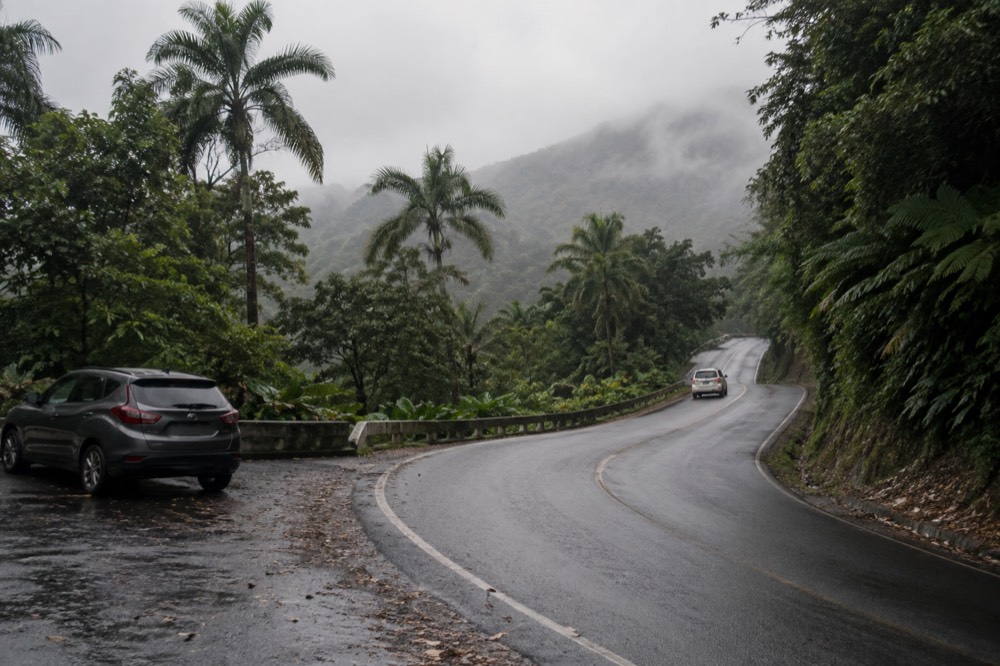
One structural point that makes El Yunque easier than most rainforests: the main corridor is a road. PR-191 North runs up through the heart of the recreation area, and most trailheads, towers and falls sit just off it. You are never more than a short walk from your vehicle on the classic stops. That is also why parking, not terrain, is the real constraint here, and why a tour with a permitted vehicle and a legal drop-off solves a problem no amount of fitness solves. The Forest Service is explicit that entrance is free, no reservation is required, and equally explicit that capacity is managed around parking limits, with parking permitted only in designated areas.
Does The Rain Make El Yunque Harder?
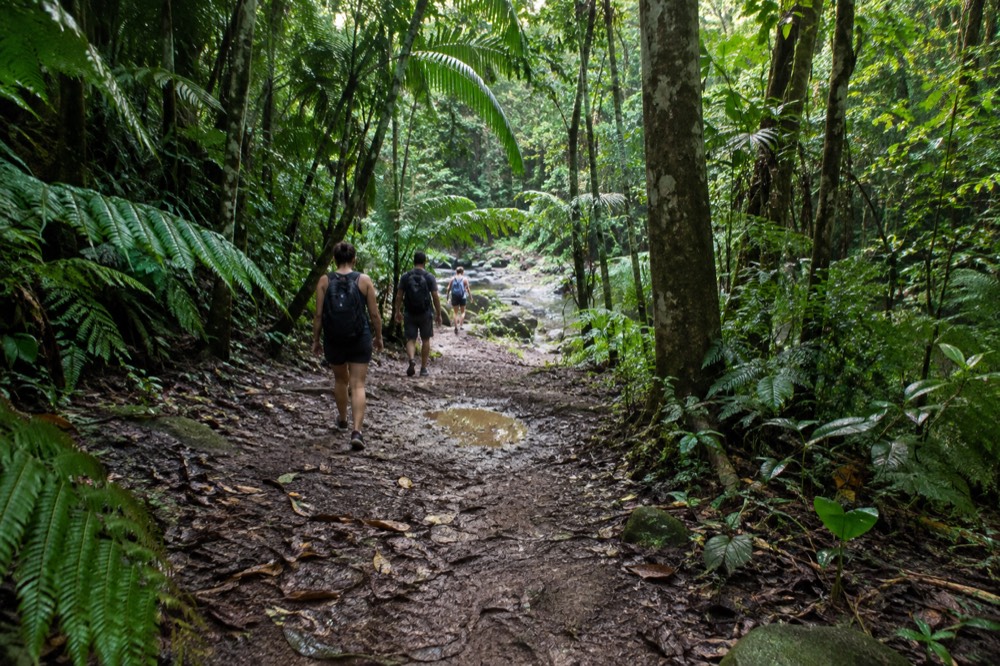
Yes, and permanently. El Yunque receives roughly 96 inches of rain a year at lower elevations and over 157 inches higher up, so every surface is wet. The Forest Service's own first piece of advice is footwear: wear good shoes with traction, because wet surfaces are a hazard and worse on a slope. Rain does not close the forest, it just raises the stakes.
The numbers come from Forest Service research published through the International Institute of Tropical Forestry, and they describe a place where dry trails are the exception. Annual rainfall ranges from 2,450 mm at lower elevations to over 4,000 mm at higher stations, with the highest recorded annual total, 4,300 mm, at El Yunque Peak. Translated: this is a forest that is wet by design. Any visit plan that assumes dry ground is a plan for a different forest. Other pages covering the same trip are gathered on El Yunque National Forest Tours.
What that means practically is that the difficulty grade of a trail understates its slickness. A Moderate trail in El Yunque can feel like a Hard one after an afternoon shower, because the mossy stone steps the CCC built hold water for days. The Forest Service's safety guidance does not mince words on this: "Wear good shoes with traction: it is a rainforest, and it is wet and mossy. Wet surfaces can be a hazard and even more so if it's on a slope." That is the agency telling you, in its own voice, that footing is the number one physical challenge here.
The deeper hazard is water in motion. Flash floods can occur throughout the year and are more frequent in the rainy months of April and May, and the Forest Service warns that a sudden surge can claim victims in less than one minute, with flood water capable of reaching 30 feet or more. This is why every river-adjacent trail page carries a standing flash-flood warning, and why guides watch upstream weather rather than the sky directly overhead. If you want the full picture on conditions and timing, the El Yunque in the rain guide covers what a wet day actually looks like on the ground.
For gear, the choice is simpler than the marketing suggests. You need closed shoes with real tread, and you need to accept they will get soaked. Water shoes work for the river stops but not for the stair climbs, which is why many people bring both and leave one pair in the vehicle. The what to wear and bring guide goes deeper on the packing list, including the footwear question specifically.
How Fit Do You Actually Need To Be?
For the main corridor stops and most tours, ordinary tourist fitness is enough: you need to handle stairs, short uneven walks and a hot, humid climate. For the named hiking trails, you need genuine hill fitness, because grades of 400 to 1,378 feet of climbing are mountain walking, not sightseeing. Age is not the filter, stair tolerance is.
Humidity deserves more credit as a difficulty factor than it usually gets. The forest sits in a tropical climate where the lower trails sit below 500 meters of elevation and the air is thick year-round. Visitors from dry or temperate climates routinely report that a walk they would call easy at home feels 30 percent harder here, purely from the air. Pace yourself accordingly, drink more water than seems necessary, and treat the first hour as a warm-up rather than a race.
The honest fitness test is stairs. If you can climb five or six flights without stopping to rest, you can handle Mount Britton Tower, Yokahú Tower and every mainstream tour on the roster. If stairs are a problem, the corridor still delivers: La Coca Falls is visible from near the road, El Portal's Discovery Trail is an accessible packed-gravel loop, and several tours are effectively drive-and-view itineraries with a swim stop. The forest grades itself generously at the bottom end.
Families with children are well served, and the Forest Service says so directly about the Angelito Trail, calling it "a nice trail for families with younger children." It runs 0.4 km one way down to the Río Mameyes, a federally designated Wild and Scenic River, with 132 feet of elevation change on an Easy grade. Older walkers have the same options, and the best time to visit guide covers the weather windows that make any walk more pleasant.
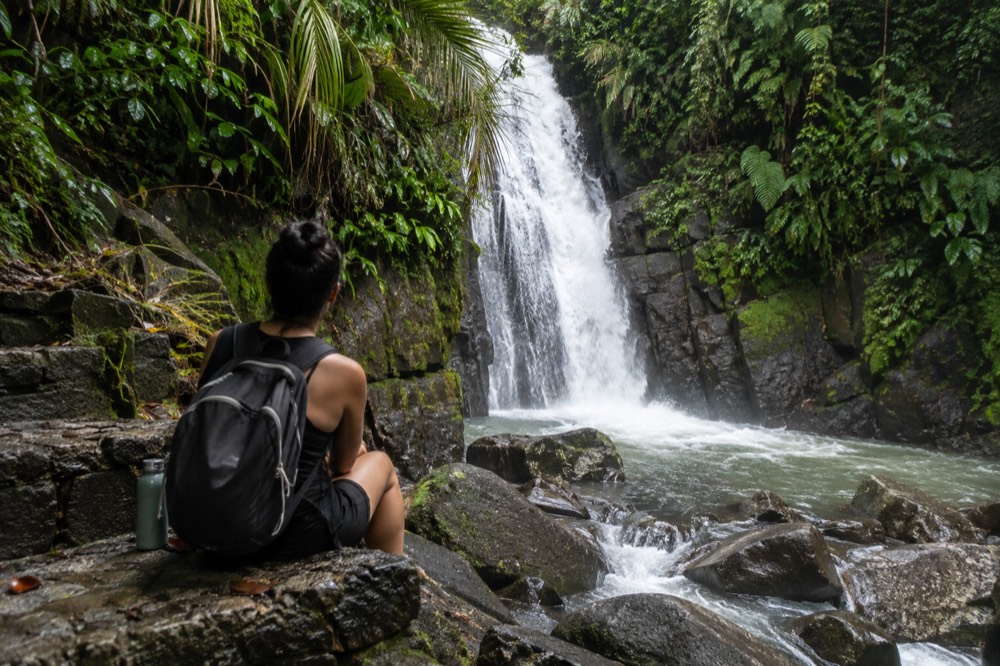
One group deserves a specific warning, and it is the group most likely to be misled: people booking a tour because a listing mentions a waterfall. The famous swimming-hole falls have been unreachable by their classic trails during the construction closure, and any listing still advertising that specific swim is describing an aspiration, not a guarantee. The Forest Service's own swimming opportunities are elsewhere, at places like Juan Diego Falls, the Angelito Trail's Las Damas Pool, Puente Roto and Quebrada Grande, each carrying the standing flash-flood caution. A good guide routes around what is closed and tells you why, which is worth more on a changeable mountain than any fixed itinerary.
Can You See El Yunque Without Hiking At All?
Yes, completely. La Coca Falls, Yokahú Tower, El Portal Rainforest Center and the drive up PR-191 itself deliver the rainforest with almost no walking, and several tours are built exactly this way. The Let me show you MY Island Tour With visit to El Yunque runs 6 to 7 hours from $89 with hotel pickup and confirms stops at La Coca Falls, Yokahú Tower and Piñones.
This is the answer that converts hesitation into a booking, and it is true without any sales spin. PR-191 North climbs from the coast through four visible forest types, Colorado, Tabonuco, Palm and Cloud Forest, and the drive itself is the experience. Yokahú Tower asks for a short staircase and rewards you with a view the Forest Service describes as reaching the coastline and, on a clear day, the Virgin Islands. La Coca Falls is a roadside cascade. El Portal, at kilometer 4.1 on PR-191, is a full visitor center with exhibits, a Puerto Rican Parrot display and a theater, open 8 a.m. to 4 p.m. with an $8 adult entry fee and under-15s free.
The island-day tours are the least demanding way to buy all of this at once. The Let me show you MY Island Tour is rated 4.9 across 1,655 reviews on the listing, includes hotel pickup and free cancellation, and spreads a 6 to 7 hour day across forest stops plus the Piñones coast. For a group split between keen walkers and people who would rather not, this is the compromise that keeps everyone happy.
If even that sounds like a long day, the half-day options cover the same core stops in 4 to 5 hours, and the tours from San Juan guide compares them by length and price. The pattern to remember: in El Yunque, effort is optional, and the rainforest does not hide its best views behind a qualification test.
How Do You Pick The Right Difficulty Before You Book?
Read the tour title and the duration first: hiking in the title means real mileage, and anything over 6 hours means stamina matters more than strength. Then check the confirmed stops against the trail table above. Finally, filter by honesty, a listing that promises a specific closed waterfall is selling you something that may not be there on the day.
Duration is the best single proxy. A 1 to 2 hour activity like the Carabalí horseback ride or a zipline course is a legs-optional outing. A 4 to 5 hour half-day tour is a moderate commitment with vehicle time built in. An 8 hour tour with hiking in its name is a walking day, full stop. The what El Yunque tours cost guide breaks the roster down by price and length together, which is the fastest way to see the effort-for-money tradeoff.
Group format matters too. Small-group tours pace themselves to the people in the vehicle, and a guide with six guests can slow down for one tired walker in a way a 40-person bus cannot. The tours on this site marked SmallGroup or small-group in their titles are making exactly that promise, and the reviews consistently reward it. If your fitness worry is real, that word in the title is worth paying a little more for.
The last filter is the one this site exists for: does the listing match the forest's reality? El Yunque needs no reservation and charges no corridor entry fee, so any tour selling you queue-skipping or included entry permits is selling air. What a good tour actually sells is a permitted vehicle, a legal drop-off in a forest where rideshare apps cannot collect you, parking solved, and a guide who knows which trails are open on the day. That is the honest version of the purchase, and it is worth every dollar of it.
For a final side-by-side, these three tours bracket the difficulty spectrum this article has walked through, from a full forest day, to a mixed island tour, to a hike-plus-zipline combination that splits the effort.
Common Questions About Hiking Difficulty In El Yunque
Is El Yunque A Difficult Hike?
El Yunque is only as difficult as the trail you choose. The forest spans a 0.4 km easy riverside walk, a 0.3 mile accessible interpretive loop, and a 2.6 mile climb with 1,378 feet of elevation gain rated Challenging. Most guided tours keep to the gentler end, and the main corridor viewpoints require almost no walking at all.
What is the easiest trail in El Yunque?
The Angelito Trail is the Forest Service's clearest easy option: 0.4 km one way, 132 feet of elevation change, graded Easy, and described by the agency as good for families with younger children. It ends at the Río Mameyes, a federally designated Wild and Scenic River. The El Portal interpretive loop is even shorter and partially accessible.
What is the hardest trail in El Yunque?
By elevation gain, the El Yunque Trail is the steepest verified walk at 1,378 feet of climbing over 2.6 miles. By grade and remoteness, the Tradewinds Trail at 4.6 miles and the El Toro Trail, a roughly three-hour hike to the forest's highest peak at 3,524 feet, are the serious commitments. All carry Forest Service grades of Challenging or above.
Do I need to be fit to take an El Yunque tour?
For most tours, ordinary tourist fitness is enough. You need to handle stairs, short uneven walks, and a hot humid climate. Waterslide and beach tours involve more swimming than walking, and sightseeing tours are drive-and-view itineraries. Only tours with hiking in the title ask for genuine hill fitness.
Does rain make the trails harder?
Yes, always. The forest receives roughly 96 inches of rain a year at lower elevations and over 157 inches higher up, so surfaces stay wet, and the CCC-built stone steps hold water for days. The Forest Service's first safety advice is to wear shoes with good traction. Rain does not close the forest, but it raises the difficulty of every trail by a step.
Can I visit El Yunque without hiking?
Yes. La Coca Falls is a roadside stop, Yokahú Tower is a short staircase, El Portal is a full visitor center, and the drive up PR-191 itself passes through four forest types. Several tours, including island-day options with hotel pickup, are built around exactly this low-effort itinerary.