Puerto Rico Rainforest Tour Guide: Choosing The Right El Yunque Trip
Almost everyone searching for a Puerto Rico rainforest tour is looking for El Yunque National Forest without knowing it by name. This guide explains what these tours actually include, what they cost, and the one thing no tour can sell you, because it is already free.
Short answer
A Puerto Rico rainforest tour is a guided trip into El Yunque National Forest, the only tropical rainforest in the national forest system. Guided tours run from $25 to $225 per person and typically include transport from San Juan, a permitted guide, and stops like La Coca Falls and Yokahú Tower. Entry to the forest itself is free.
Almost every search for a "Puerto Rico rainforest tour" is a search for El Yunque National Forest by someone who has not yet attached the name to the place. That matters, because the tours sold under the rainforest label vary enormously: some spend their whole day inside the federal forest, some spend most of it on private land near Luquillo, and a few are really beach trips with a forest stop bolted on. Knowing which is which before you book is the difference between the day you imagined and a day of driving.
This guide walks through what a rainforest tour in Puerto Rico actually is, what the honest case for booking one looks like, what the different formats cost, and which stops you will genuinely visit. One fact frames everything else, so it comes first: entrance to the forest is free, and no reservation is required.
What Is A Puerto Rico Rainforest Tour, Actually?
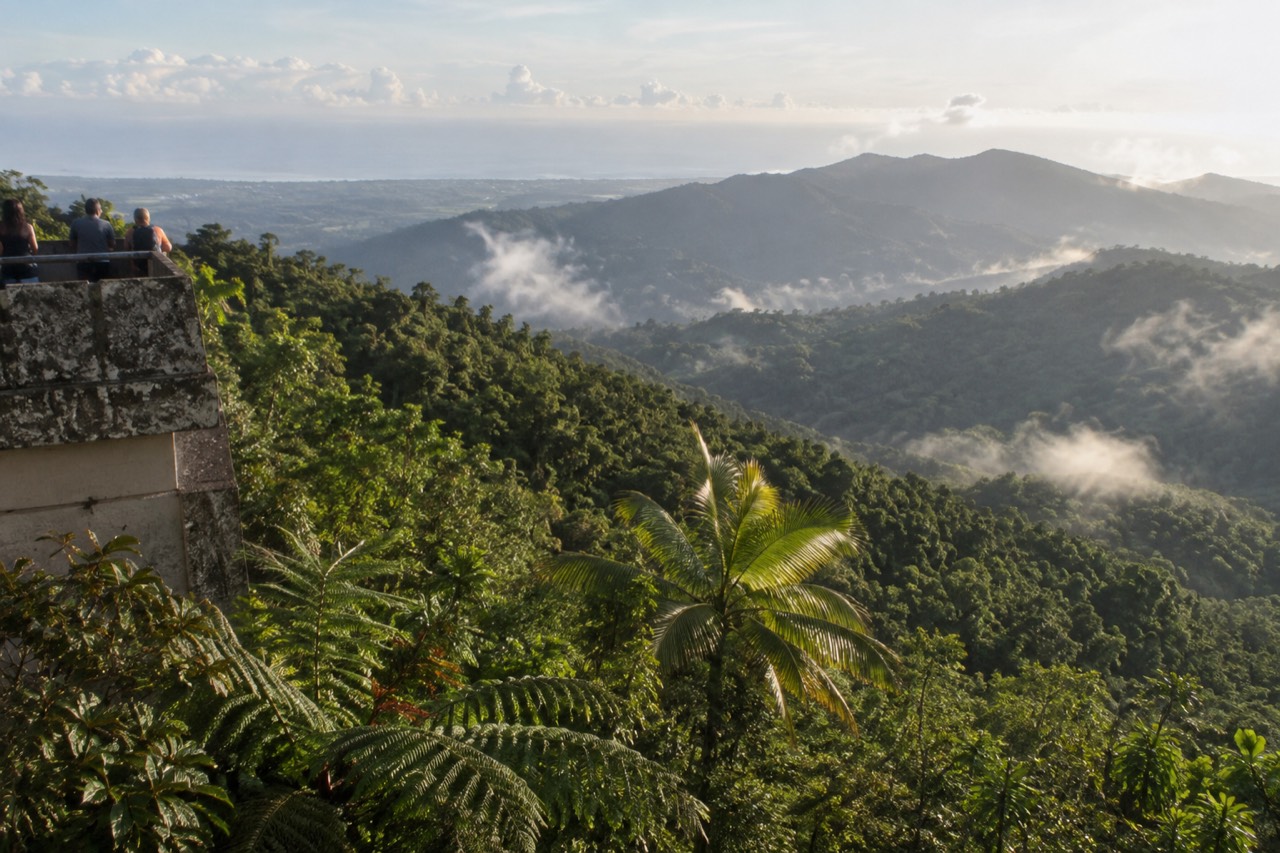
A Puerto Rico rainforest tour is a guided excursion into El Yunque National Forest, 28,516 acres of tropical rainforest in the mountains of northeastern Puerto Rico. It is the only tropical rainforest within the national forest system, managed by the USDA Forest Service, not a national park. Tours typically bundle transport, a guide and several named stops into a single half-day or full-day booking.
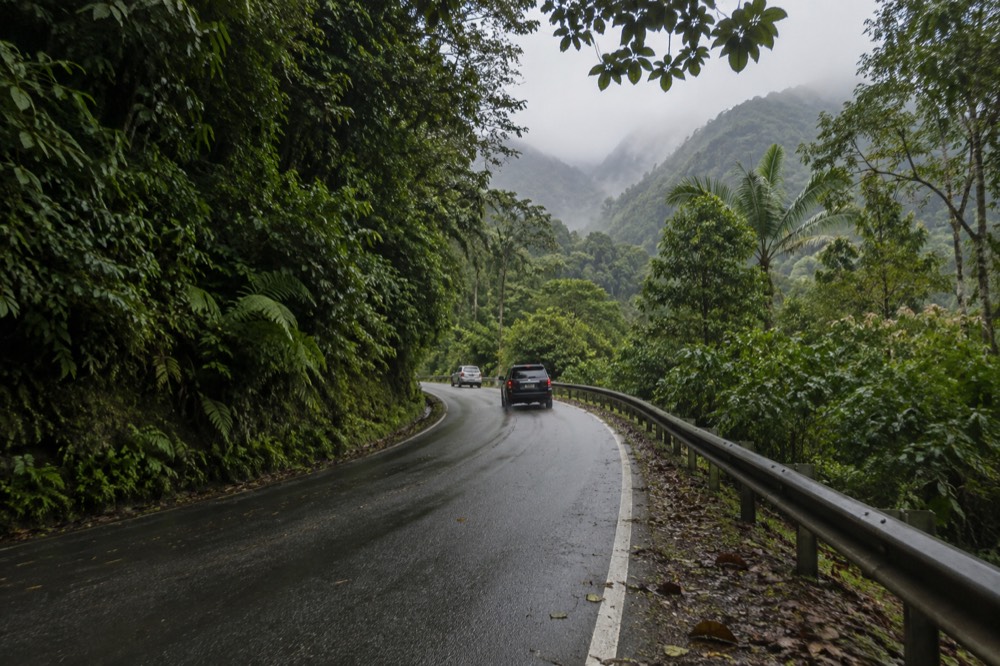
The forest extends through eight municipalities, Río Grande, Luquillo, Canóvanas, Fajardo, Naguabo, Ceiba, Las Piedras and Juncos, and sits behind the towns of the island's northeast coast. Most tours reach it from San Juan hotels or the cruise port, drive up the PR-191 corridor on the Río Grande side, and stop at roadside highlights like La Coca Falls and Yokahú Tower before or instead of a hike.
The label "rainforest tour" covers several quite different products. A sightseeing tour drives the corridor with photo stops. A hiking tour spends hours on trails like Mount Britton or El Toro. A waterslide tour may spend most of its time on private land outside the forest boundary near Luquillo. A combo tour bolts on a bioluminescent bay kayak in Fajardo after dark. All of them appear in search results under the same phrase, which is why the format matters more than the headline price.
The Forest Service describes the forest as one of the smallest national forests in size yet one of the most biologically diverse, with rainfall rising from roughly 96 inches a year at lower elevations to over 157 inches at the higher stations. You are visiting a genuinely wet place, and every tour format below is built around that fact.
Do You Need A Tour To Visit The Rainforest?
No, you do not need a tour to enter El Yunque National Forest. Entrance to the PR-191 North recreational corridor in Río Grande is free, no reservations are required, and the corridor is open 8:00 a.m. to 5:00 p.m. The old timed-entry reservation system no longer exists. What a tour buys is a permitted vehicle, a legal drop-off and a guide who knows what is open that day.
This is the single most useful thing to understand before you book anything, because a great deal of third-party content still tells readers to reserve a corridor entry slot. There is no slot to reserve. The Forest Service's current conditions page states it plainly: free entry, no reservations, capacity managed through parking, and parking permitted only in designated areas. All four forest corridors, PR-191 North, PR-191 South, PR-988 and PR-186, are published as not requiring a reservation.
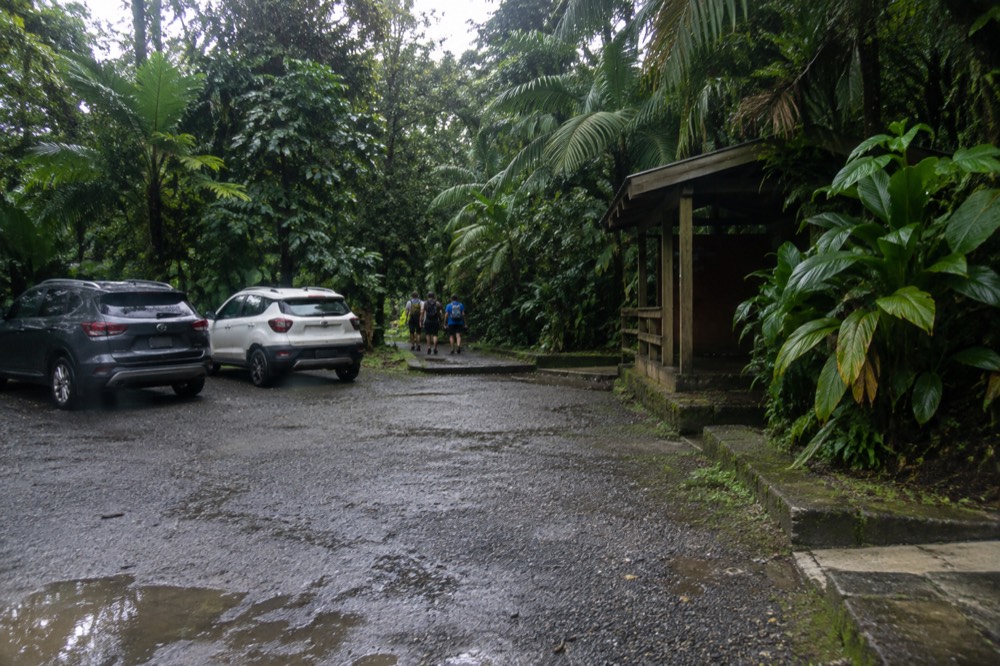
So why pay for a tour? Because the free entry hides three real constraints. First, parking: capacity in the corridor is actively managed because lots are limited, and parking outside designated areas earns a ticket at La Coca Falls. Second, transport: the Forest Service warns that rideshare apps cannot pick up at the corridor or El Portal, and that not every taxi holds a forest permit, so a visitor without a car can end up walking a long way out. Third, closures: trails in El Yunque change status with construction and storm damage, and a guide who checks the alerts that morning is worth more here than at most destinations. For more on the self-drive option, see our piece on visiting El Yunque without a tour.
The honest framing, in other words, is not queue-skipping, because there is no queue. It is logistics and knowledge. The Forest Service maintains a public directory of authorized and permitted tour operators, and booking through a permitted operator is the cleanest way to guarantee a legal vehicle, a legal drop-off and a guide who is allowed to guide there.
If that case fits your trip, these three tours cover the main formats: a classic guided corridor tour with transport, a small-group island day trip, and a hike-plus-zipline adventure.
What Does A Rainforest Tour Actually Include?
Most El Yunque rainforest tours include round-trip transport from San Juan or a meeting point, a permitted guide, and stops at two to four named locations, typically La Coca Falls, Yokahú Tower and a river or beach site. What varies is everything else: group size, hiking time, food, and whether the water activities are inside the forest or on private land outside it.
The core product is the corridor drive. PR-191 climbs from the coast past El Portal, the visitor center, to the high stops, and the road itself was largely built in the 1940s by the Civilian Conservation Corps. A guide narrates the forest types as you climb, Tabonuco forest at the bottom, then Palo Colorado, palm and cloud forest near the top, and points out the coquí frogs you will hear whether or not you see them.
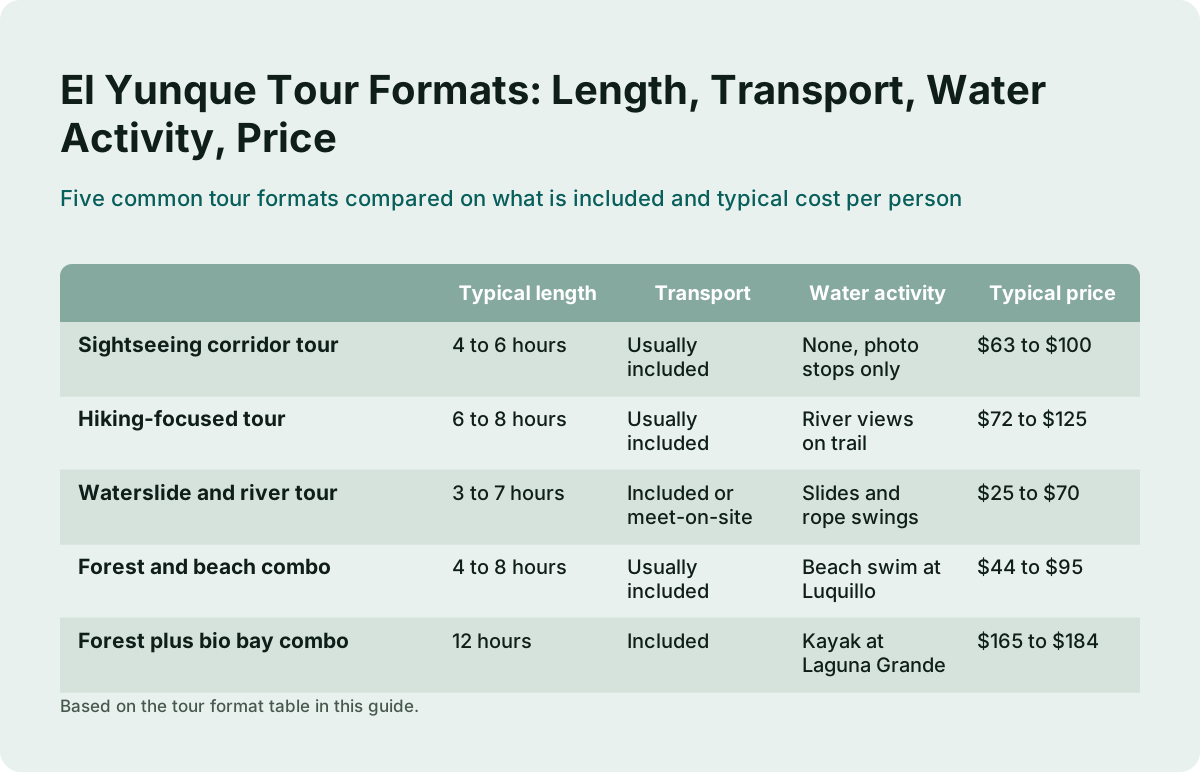
Beyond the corridor, tours differentiate on what they add. Here is how the common inclusions stack up across the formats on our roster:
| Format | Typical length | Transport from San Juan | Water activity | Typical price range |
|---|---|---|---|---|
| Sightseeing corridor tour | 4 to 6 hours | Usually included | None, photo stops only | $63 to $100 |
| Hiking-focused tour | 6 to 8 hours | Usually included | River views on trail | $72 to $125 |
| Waterslide and river tour | 3 to 7 hours | Included or meet-on-site | Slides and rope swings, mostly on private land | $25 to $70 |
| Forest and beach combo | 4 to 8 hours | Usually included | Beach swim at Luquillo | $44 to $95 |
| Forest plus bio bay combo | 12 hours | Included | Kayak at Laguna Grande | $165 to $184 |
Two things that look like inclusions are not. El Portal, the visitor center, charges its own $8 admission for visitors 16 and over, free under 15, and that is separate from any tour price. And no tour includes a corridor entry fee, because no such fee exists. If a listing's fine print suggests otherwise, treat that as a signal about the listing, not the forest.
One warning worth carrying through the whole decision: several popular tours advertise "El Yunque waterslides." The natural waterslides near Luquillo, known as Las Paylas, sit on private land outside the national forest boundary, with no Forest Service management or oversight. Those tours can be excellent days out, but you should know you are buying something other than a national forest visit. Our guide to Luquillo waterslide tours breaks down exactly where that line falls.
How Much Does A Puerto Rico Rainforest Tour Cost?
Rainforest tours in Puerto Rico cost from about $25 to $225 per person depending on format and length. Meet-the-guide waterslide tours start around $25, half-day guided tours with transport run $63 to $100, full-day hiking tours reach $125, and forest-plus-bio-bay or zipline combos run $165 to $225. Group size and hotel pickup are the two biggest price drivers.
The cheapest listings are cheap for a reason: they are meet-the-guide products where you drive yourself to the trailhead or the river. That works well if you have a rental car and want flexibility, and our article on what El Yunque tours cost goes deeper on the trade-offs. If you are relying on hotel pickup, expect the price to rise and the value to rise with it, because transport in the forest is not trivial to arrange yourself.
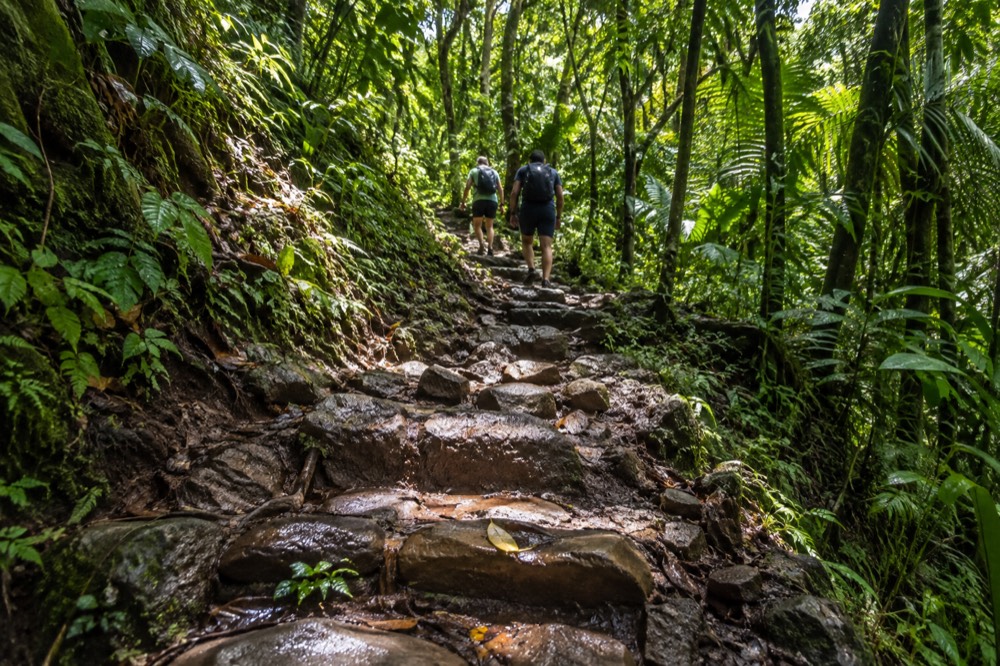
A useful benchmark tour is the guided corridor trip with San Juan transportation included: rated 4.9 across 369 reviews on the listing, from $89, five hours, with hotel pickup and free cancellation. It is the format most first-time visitors picture when they search for a rainforest tour, and it is a fair reference point for judging whether a longer or cheaper listing is worth the difference.
Watch for what the price does not cover. Meals are usually extra except where a listing says otherwise. El Portal's $8 admission is separate. Gratuities are typically not included. And the proposed La Mina Recreation Area fee, $4 per person, is proposed only, not a current charge; if a tour operator quotes it as fact, that is another signal about the operator.
Which Tour Fits The Way You Travel?
Choose a sightseeing tour if you want the corridor highlights in half a day, a hiking tour if trails are the point, a waterslide tour if you want to get wet and will accept private-land venues, and a combo if you want to stack the forest with a beach or the bio bay. Group size, pickup and cancellation policy should narrow it further.
The single most common mismatch is the visitor who books a waterslide tour expecting a national forest hike, or the reverse. The formats are genuinely different days. Here is a sharper comparison built around what you actually do:
| If you want... | Best format | Example from our roster | Why it fits |
|---|---|---|---|
| Classic first visit, photo stops, tower views | Sightseeing with transport | Half-Day Trip from San Juan, from $100, stops at La Coca Falls and Yokahú Tower | Covers the corridor's two signature stops in five hours |
| A real hike in tropical forest | Hiking tour | 8-Hour Waterfall Hike with pickup, from $72 | Full day on trails with a guide who tracks conditions |
| Slides, rope swings, swimming | Waterslide tour | Half-Day Waterslide and Rope Swing, from $25 | Cheapest entry point, meet-the-guide format |
| Forest plus beach recovery time | Combo | Small-Group Beach Day with pickup, 5 across 499 reviews, from $65 | Rainforest morning, Luquillo beach afternoon |
| Maximum day, two ecosystems | Bio bay combo | Two-in-One Day Trip, from $183.98, 12 hours | Forest by day, kayaking Laguna Grande after dark |
Group size is the quiet variable. Small-group listings cost more and fill faster, but in a rainforest where the guide is doing real work, interpretive and safety-wise, the ratio matters more than at a museum. Every listing on our roster publishes its group size on the listing; check it against your tolerance before comparing prices.
Cancellation policy is the other one. Most tours on our roster offer free cancellation, but a few of the cheaper meet-the-guide products do not. In a destination where rain is a near-daily event and the forest can close sections on short notice, a flexible booking is worth real money, and our page on El Yunque in the rain explains when a wet forecast should change your plans.
What Will You Actually See And Do On The Tour?
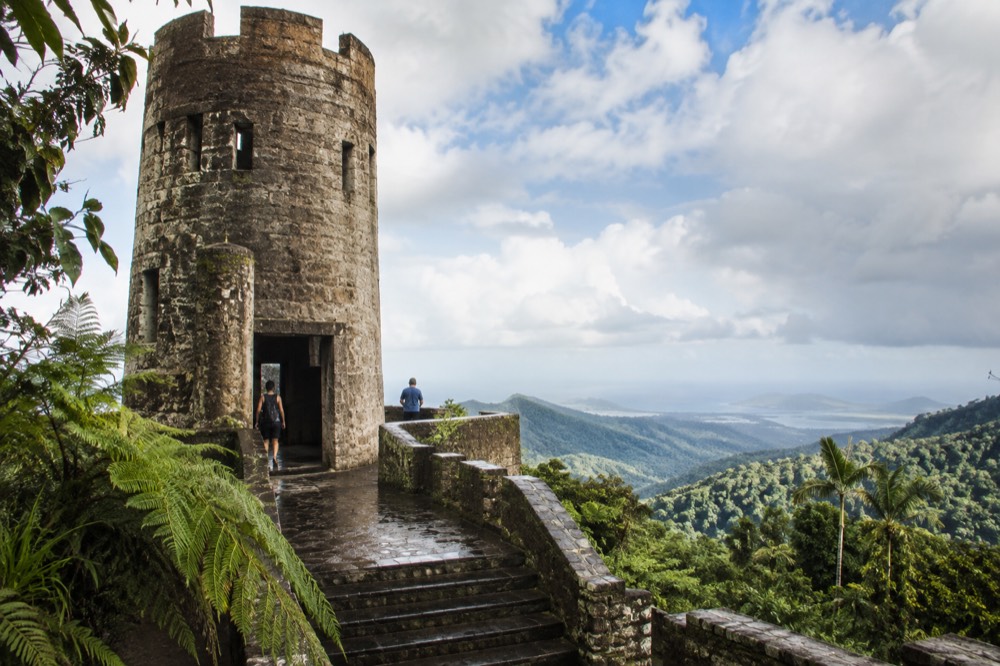
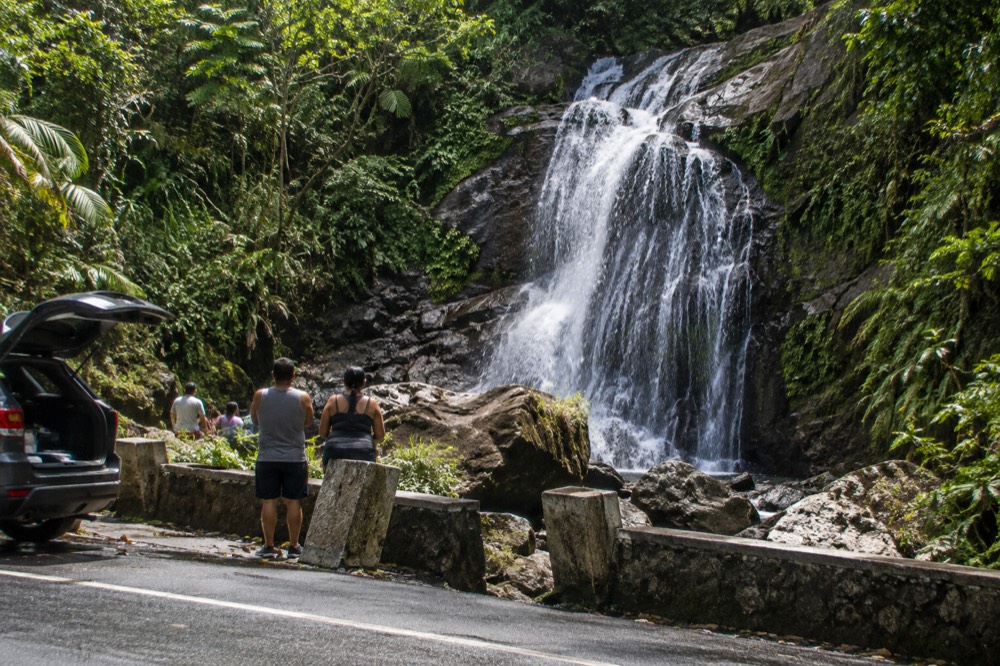
The standard corridor stops are La Coca Falls, an 85-foot roadside waterfall at 1,476 feet elevation, and Yokahú Tower, a 69-foot stone observation tower built in the early 1960s with a 30-minute parking limit. Beyond those, tours diverge into rivers, trails, El Portal or the Luquillo side, and several popular water stops are outside the forest entirely.
La Coca Falls is a viewing stop, not a swimming hole; the Forest Service lists no swimming there, and the only listed activity is viewing scenery. Yokahú Tower shows you four forest types from one platform and, on a clear day, the coastline and the Virgin Islands. Both are quick stops by design, which is why tours stack them with something longer.
The waterfall question deserves its own honesty check, because it is where tour marketing and the official record diverge most. La Mina Falls, the classic swimming waterfall, has both of its access trails, La Mina Trail and Big Tree Trail, listed as closed in the Forest Service trails status alert, and the FAQ says the trail and falls remain closed for construction. Trail and site closures in El Yunque change with construction and storm damage, so check the Forest Service alerts page before you go, and before you believe any listing that promises that pool.
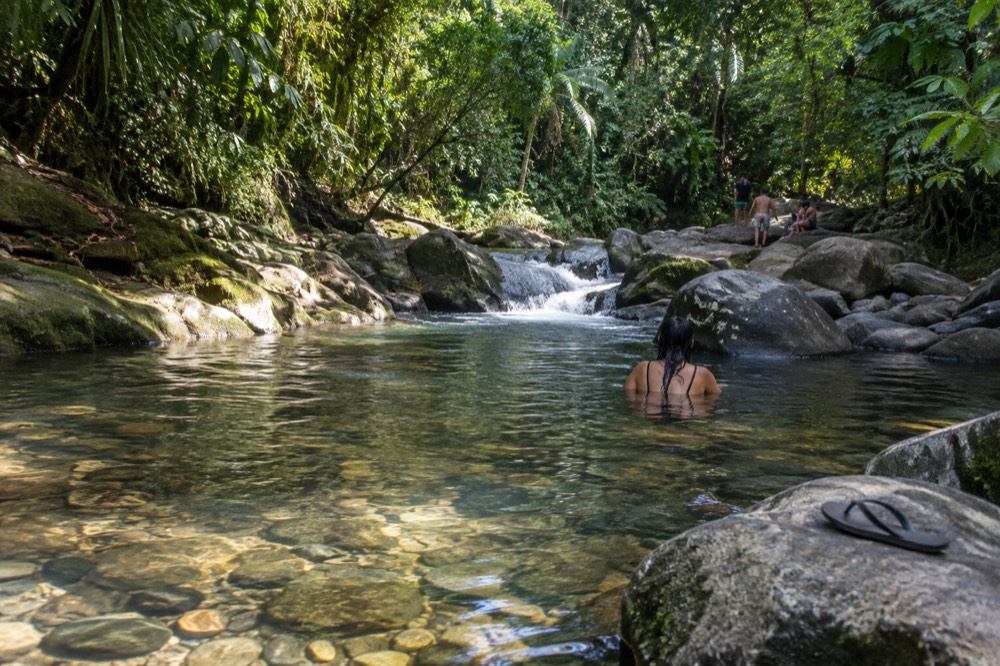
Where swimming is genuinely listed as an opportunity, it is at specific sites: the Juan Diego Falls pool, the Angelito Trail and Las Damas Pool on the Río Mameyes, Puente Roto, Quebrada Grande, Quebrada Sonadora, the Río Espíritu Santo Observation Point and the Río Sabana Recreation Area. Flash flooding is the standing risk at every one of them; the Forest Service warns that a sudden surge can claim victims in less than one minute, and that flooding is more frequent in the rainy months of April and May.
| Site | What it is | Swimming status |
|---|---|---|
| La Coca Falls | 85-foot roadside waterfall, PR-191 km 8.1 | Viewing only, not a listed activity |
| Yokahú Tower | 69-foot observation tower, PR-191 km 8.8 | Not offered, viewing site |
| Juan Diego Falls | Short path to a natural pool, PR-191 km 9.6 | Listed, 30-minute parking limit |
| Angelito Trail / Río Mameyes | Easy 0.4 km trail to Las Damas Pool, Road 988 | Listed, flash-flood warning applies |
| Baño Grande | CCC-era stone dam pool, 18 feet deep | No swimming permitted, closed to swimmers since 1968 |
| La Mina Falls | Classic waterfall pool | Access trails closed, check the alerts page |
Tours that include a beach component almost always use Luquillo, and that pairing is a genuinely good one. The kiosks there generate around 840 direct jobs and an estimated $41.4 million a year for the eastern island economy, and about a million people visit them annually, so the food stop is a real cultural institution rather than a tourist trap. Our guide to the Luquillo kiosks and beach covers what to order.
What About The Waterslide Tours And The Forest Boundary?
The natural waterslides most tours visit, Las Paylas above Luquillo, are on private land outside El Yunque National Forest, verified against Forest Service boundary and ownership mapping, with no Forest Service management, staffing or safety oversight. A waterslide tour can be a great day, but it is not a national forest tour, and the two products should be compared as different things.
This is not a technicality. Point-tested against the USDA Forest Service's own boundary and ownership GIS layers, the slides return zero features, while a La Coca Falls control returns El Yunque National Forest. The slides do not appear on any of the Forest Service's 37 published recreation sites for the forest. Access is arranged with private landowners on the spot, and no verified figure exists for access costs or hours, so treat any specific number you read elsewhere with caution.
What that means for choosing: if your heart is set on sliding down wet rock into a river pool, book the waterslide tour and enjoy it, the roster's top-rated option runs 4.9 across 16,584 reviews on the listing and starts from $45 for a seven-hour small-group day. But if you specifically want to say you walked in the only tropical rainforest in the national forest system, make sure your tour's itinerary includes forest stops, not only the private slides.
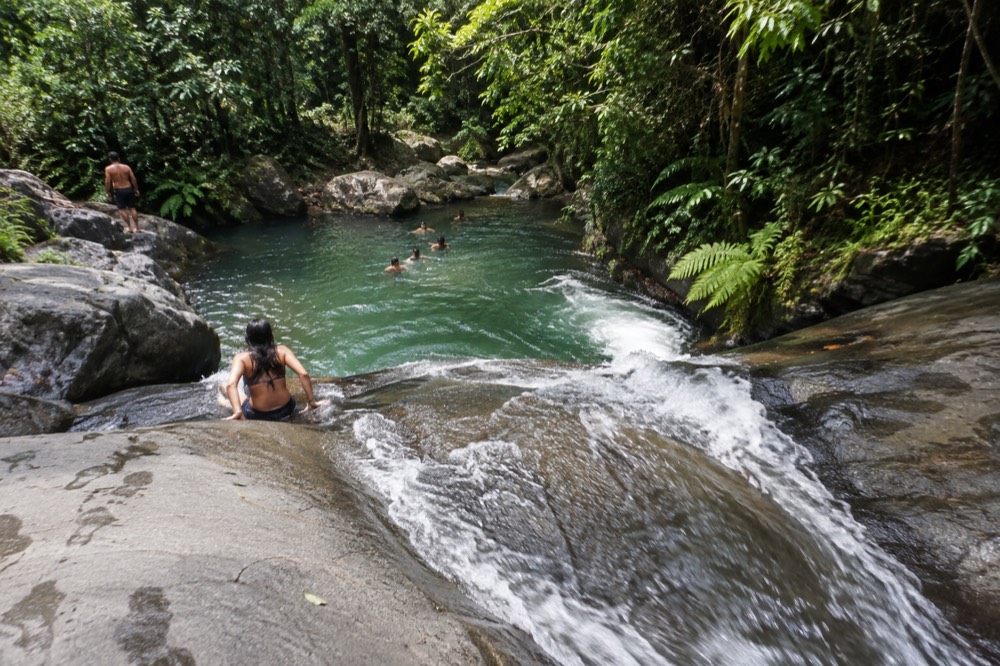
Some tours do both, and those hybrids are among the best-reviewed products on the roster, because they split the day between a river morning and a corridor afternoon. Read the confirmed stops carefully: a listing that names Las Paylas is telling you where you will actually be, and a listing that names Río Mameyes or the Angelito Trail is telling you something different and equally specific. The Forest Service maintains a live stream gauge on the Río Mameyes, so river conditions are checkable in a way the private slides are not.
How Do Weather And Closures Affect Your Tour Day?
Rain is normal in El Yunque and tours run in it, but flash flooding closes river sites, and trail closures change with construction, so your tour's exact stops can shift on the day. Tours typically proceed in rain and reschedule or refund when the forest itself closes. Check the Forest Service alerts page the morning of your trip rather than relying on any listing's itinerary.
Annual rainfall in the forest ranges from roughly 96 inches at lower elevations to over 157 inches at higher stations, with the highest recorded annual totals near El Yunque Peak. A dry day is a lucky day, not a baseline. The practical consequences are the ones the Forest Service itself emphasizes: wear good shoes with traction, because wet surfaces on slopes are a genuine hazard, and stay aware of flash flood reports when you are near a river.
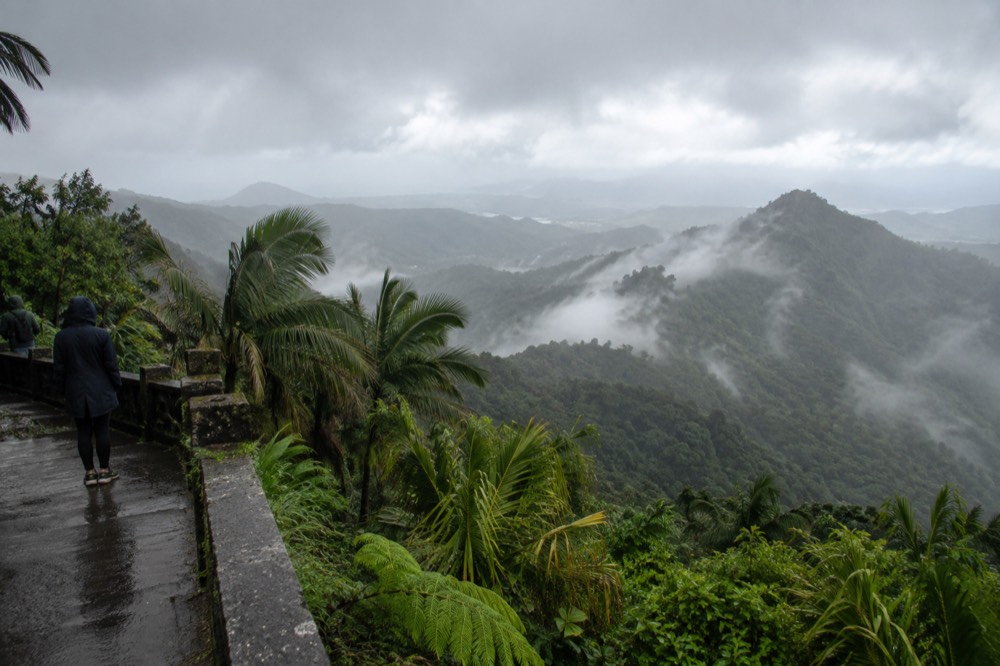
Closures are the other moving part, and this is where a guide earns their fee. The forest has been recovering from the 2017 hurricanes for years, and sections have reopened in stages, Baño de Oro Trail after an eight-year closure, La Coca Falls with a completed new welcome station, while other trails remain closed for construction. A permitted guide who checked the alerts that morning will route the day around what is actually walkable. A self-driver relying on a blog post from two years ago may not.
This is also why free cancellation matters so much in the booking decision. If the forest closes for an extreme weather event, El Portal's ticketing policy issues automatic refunds, and most tour operators on our roster follow a similar logic, but the exact terms are on each listing. Read them once, before you pay, rather than on the morning of.
How Do You Book The Right Rainforest Tour?
Pick the format first, then the operator, then the price. Confirm the listing names forest stops if the forest is the point, check that pickup is included if you have no car, verify free cancellation, and book through the operator's live listing. On the day, bring traction shoes, a dry bag and cash for food, and check the alerts page that morning.
The operators on our roster run the full spread of formats, and two of them illustrate the ends of the spectrum well. At the fuller end, the island day tour with a visit to El Yunque runs 4.9 across 1,655 reviews, from $89, six to seven hours with hotel pickup, confirmed stops at La Coca Falls, Yokahú Tower and Piñones, plus free cancellation. It is closer to a hosted island day than a hike, which is exactly what some travelers want.
At the adventurous end, the hike and zipline combo runs 4.7 across 21 reviews, from $225, nine and a half hours, pairing forest hiking with a zipline course. It is the most expensive format on the roster and the most activity-dense, and its small review pool is worth reading before committing that much money to a single day.
Between those poles sit the corridor classics, the beach combos and the waterslide days, and the choice among them is genuinely a preference, not a ranking. If you are still weighing whether a guided day is worth it at all, our article on whether El Yunque tours are worth it works through the arithmetic, and El Yunque National Forest Tours keeps a full roster with verified prices and review figures for every format described here.
Whichever you choose, book early for peak winter weeks, when cruise traffic through San Juan is at its heaviest, keep your plans flexible, and remember the one thing the search results get wrong most often: the forest is already free, and anyone selling you entry is selling you something that does not exist.
Common Questions About Puerto Rico Rainforest Tours
Do you need a reservation for a Puerto Rico rainforest tour?
No. Entrance to the PR-191 North recreational corridor in Río Grande is free and no reservations are required; hours are 8:00 a.m. to 5:00 p.m. The old recreation.gov timed-entry system no longer exists. A tour booking reserves your seat with the operator, not entry to the forest.
What is the best rainforest tour in Puerto Rico?
It depends on the day you want. The top-rated waterslide tour on our roster runs 4.9 across 16,584 reviews from $45, but its slides are on private land outside the forest. For a classic forest day with transport, guided corridor tours from $63 to $100 with 4.8 to 4.9 ratings are the benchmark format.
Can you swim at El Yunque on a rainforest tour?
Swimming is listed by the Forest Service at specific sites only, including Juan Diego Falls, the Angelito Trail on the Río Mameyes, Puente Roto and Quebrada Grande. La Coca Falls and Baño Grande are not swimming sites, and La Mina Falls access trails are closed. Flash flooding is a standing risk at every river site.
How much does a rainforest tour from San Juan cost?
From about $25 per person for meet-the-guide waterslide tours to $225 for a full hike-and-zipline combo. Guided tours with hotel pickup typically run $63 to $100 for a half day, and forest-plus-bio-bay combos run $165 to $184 for a 12-hour day.
Is El Yunque the only rainforest in Puerto Rico?
El Yunque is the only tropical rainforest within the national forest system, and it is the rainforest every tour from San Juan visits. At 28,516 acres it is one of the smallest national forests, yet one of the most biologically diverse, with annual rainfall from roughly 96 to over 157 inches depending on elevation.
Do rainforest tours get cancelled when it rains?
Usually not. Rain is normal in the forest and tours run in it. Tours reschedule or refund when the forest itself closes sections or an extreme weather event hits, which is why a free-cancellation booking is worth choosing. Check the Forest Service alerts page on the morning of your tour.