Is It Better To Go To El Yunque In The Morning Or Afternoon?
Morning gives cooler trails, earlier light and a full forest day; afternoon suits late arrivals and beach combos. Here is how to pick the right El Yunque slot for your tour.
Is It Better To Go To El Yunque In The Morning Or Afternoon?
Morning is the stronger default for a first visit: the corridor opens at 8:00 a.m., parking is still available at the headline stops, and cooler air makes uphill sections more comfortable. Afternoon can work for cruise mornings, beach add-ons, or travelers who do not want an early start. The real decision is which tour departure matches your day.
El Yunque does not use a morning-only reservation system. Entrance to the PR-191 North recreational corridor in Río Grande is free with no reservations required, and the corridor operates from 8:00 a.m. to 5:00 p.m. What fills up is parking: designated spaces at La Coca Falls, Yokahú Tower and Juan Diego can be gone by mid-morning on busy days, and the Forest Service manages capacity through parking, not through timed entry. So the slot you choose mainly decides whether you get a space or wait.
The corridor closes right at 5:00 p.m., and the Forest Service advises visitors to begin exiting at least 15 minutes before that. On a morning visit, that deadline feels distant; on an afternoon visit, it can sneak up if you try to fit one more stop. This is why the departure time matters more than the sunrise: a 6:00 a.m. sunrise photo opportunity does not get you into a single official site before 8:00 a.m.
A guided tour changes the timing equation by removing the parking gamble. You are not buying a skip-the-line pass, because no entry line exists. You are buying a permitted vehicle, a legal drop-off and pick-up, and a guide who can reorder stops around the day's weather and crowding. The tour comparison work on El Yunque National Forest Tours is built on that honest case.
That fact changes how you should think about morning versus afternoon. If you have your own car and you arrive at 8:00 a.m., you gain a better parking spot but you still need to know the per-stop limits. If you book a tour, the departure time determines the whole day, and the operator handles the corridor's parking constraint for you. That is why the choice is less about sunrise and more about the departure that matches whether you want a full forest day or a forest plus beach day.
What Does The Morning Buy You At El Yunque?
Mornings buy cooler air, lower sun angles, and the best chance at a parking space at La Coca Falls and Yokahú Tower before the midday peak. A morning start also leaves the afternoon free for Luquillo Beach or a return to San Juan without rushing. If you are hiking the corridor's uphill trails, the first two hours after opening are the most comfortable of the day.
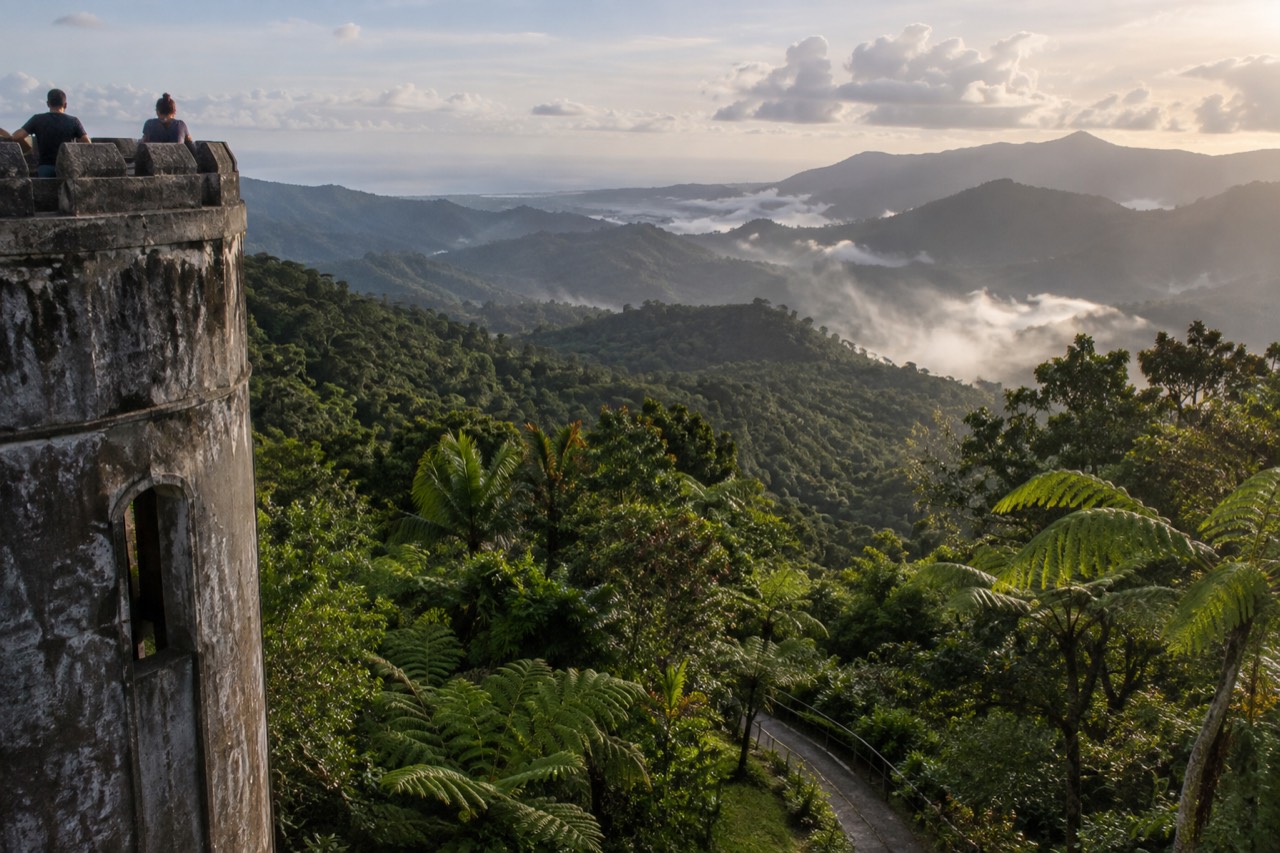
The corridor's most photographed stops reward an early arrival. Yokahú Tower has a 30-minute parking maximum, and La Coca Falls has designated parking that is enforced with tickets. Morning visitors can loop both stops before the independent crowd peaks and still have time for a longer trail or a beach stop on the back end. That is the strongest practical argument for the early slot.
Cooler air is not a marketing line. The forest sits in a rainforest climate with official rainfall running from 96 inches a year at lower elevations to around 169 inches at El Yunque Peak. Morning temperatures near the road are more forgiving for the uphill stretches of Mount Britton Trail, which climbs 591 feet in 1.3 kilometers to the stone tower, or the longer El Yunque Trail with its 1,378-foot elevation change. You do not need to be an athlete, but you will feel the difference in the first two hours.
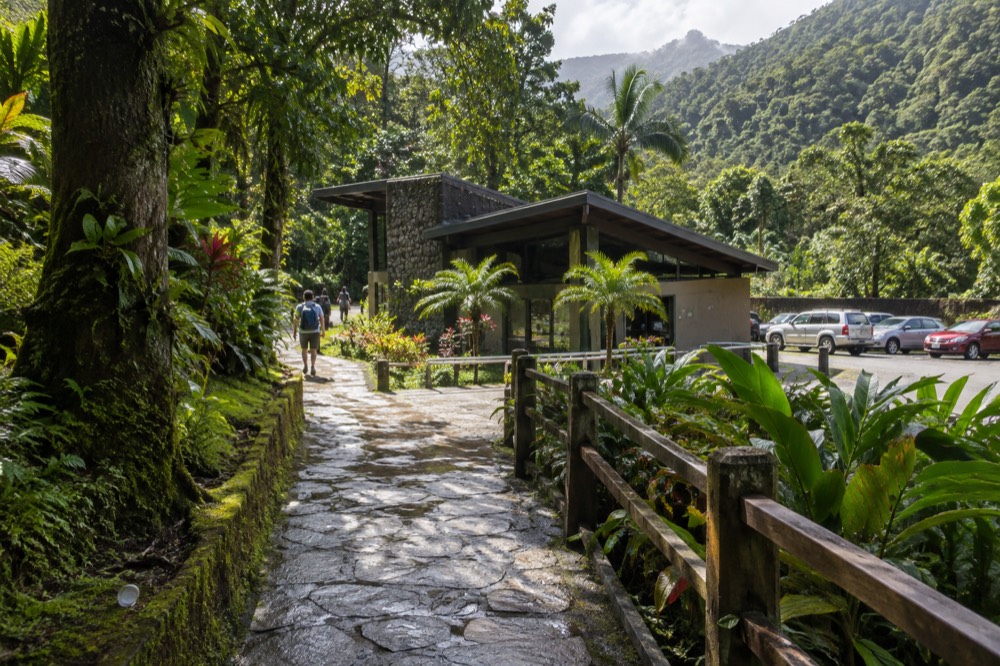
One practical point is the visitor center. El Portal opens at 8:00 a.m., and its exhibits, parrot display and orientation film are best used before your legs are tired, not after. The fee is $8 for adults 16 and older, free for younger kids, and visitors with an interagency pass pay $4. If you are using the morning for orientation, stopping at El Portal first is a better use of 45 minutes than driving straight to a trail and trying to read the map on your phone.
The morning also lines up with El Portal's schedule if you want to stop at the visitor center first. El Portal opens at 8:00 a.m., and the $8 adult fee is the only official admission in the forest, free for under 15s. Starting there gives you a better sense of which trails and sites are open before you commit the rest of the daylight, though the center closes at 4:00 p.m., not 5:00 p.m. like the corridor itself.
For travelers who want the full forest, the 6-Hour Hike with Transport from San Juan is the clean morning anchor. It includes hotel pickup, a guide, and free cancellation on the live listing, and it removes the parking question entirely. That is a true morning tour: the guide can use the daylight for the longer walking sections and still leave room for a stop near the end.
Morning is also the slot where a guide can use the extra daylight. A six-hour outing that starts at 8:00 a.m. finishes at 2:00 p.m. with time for Luquillo Beach or a kiosk lunch without driving back in the dark. That is the practical argument for the earliest departure you can find. If you need to know what to pack for those first hours, the forest's own advice starts with shoes that have traction: it is wet and mossy, and the slopes stay slick all morning.
What Does The Afternoon Buy You At El Yunque?
Afternoon works when you are arriving on a cruise schedule, starting late from San Juan, or planning to finish at Luquillo Beach or the kiosks. It also suits travelers who want a shorter, water-focused stop instead of a long uphill hike. The trade-off is warmer midday air, stronger sun, and the likelihood that the most popular parking areas are already full.
A later start is not a lesser forest experience if the tour is built for it. Several roster tours begin mid-morning or early afternoon and pair a forest stop with Luquillo Beach or the kiosks, which works for travelers who want one full outing rather than two separate commutes. The afternoon is also the natural fit for cruise arrivals that clear San Juan in the late morning. If you are asking whether you even need a tour, the afternoon makes the case stronger, because spontaneous parking is harder.
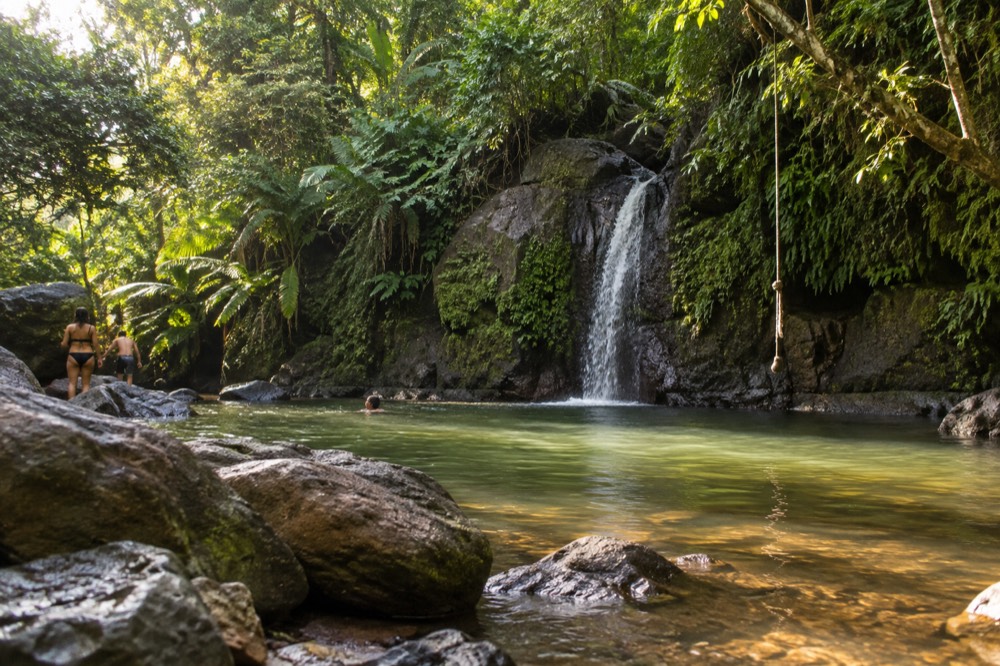
For a later afternoon by water, the self-drive half-day option is not the only one. Some roster tours combine a waterslide or rope swing with Luquillo Beach and the kiosks, which pairs the warmest part of the day with the coast instead of the mountain. The kiosks are not a forest-managed attraction; they sit in Luquillo and generate an estimated 840 direct jobs, with about one million visitors every year. If you build the afternoon around them, the later start works in your favor because you finish at the beach instead of racing down PR-191 at dusk.
The Half-Day Waterslide and Rope Swing is one afternoon-flexible, self-drive option: four hours, meeting a guide rather than waiting on hotel pickup, and free cancellation on the live listing. On a self-drive tour you still need to park your own car legally, but the short format matches the afternoon's shorter attention span before heat peaks.
The afternoon also comes with a rain reality. Official rainfall figures run from 96 inches at lower elevations to about 169 inches at El Yunque Peak, so a later start is not categorically drier. If you are walking a creek-side route, flash-flood guidance from the Forest Service still applies even when the sky above you is clear, because water upstream can arrive as a surge. Check the live USGS gauge for the Río Mameyes before entering the water.
The beach add-on is the afternoon's genuine advantage. Luquillo Beach and the kiosks sit on the lower coast, and finishing there between midday and late afternoon is easier than trying to return from the mountains after dark. A tour that ends at Luquillo means the afternoon's later light is spent on flat sand, not on a steep trail. That is a reasonable trade if you are not set on doing every sight in the forest corridor.
Does The Slot Change Which Water Stops You Can Do?
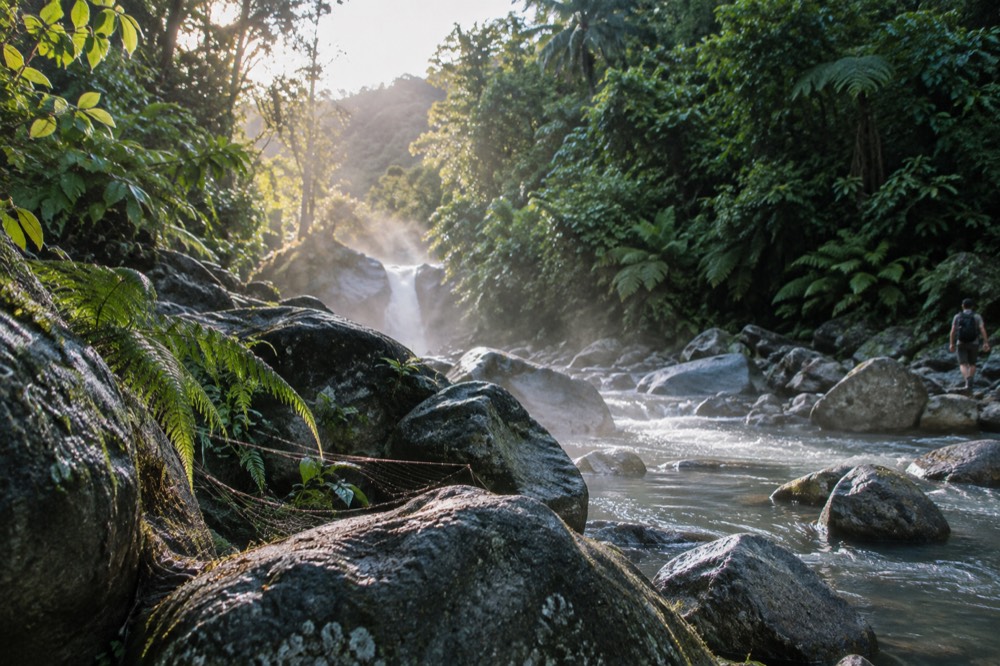
Morning or afternoon, the open water stops are the same, but the safety window changes. The Forest Service lists swimming or wading opportunities at Juan Diego Falls, Angelito Trail and the Río Mameyes, Puente Roto, Quebrada Grande, Quebrada Sonadora and the Río Espíritu Santo Observation Point. Each comes with a flash-flood warning, and a sudden surge can arrive in under a minute.
This is where the clock interfaces with the water. A pool that looks calm at 9:00 a.m. can be affected by rain that fell upstream hours earlier, and the Forest Service warning notes a flood surge can reach 30 feet or more and roll boulders. The USGS gauge for the Río Mameyes near Sabana publishes real-time discharge and gage height, and the National Weather Service has a river gauge page for the Río Espíritu Santo near Río Grande. Neither is a morning-only tool; both should be checked when a tour stops at any river.
Water temperature in the streams is frequently on the cool side, around 60 to 65 degrees in the La Mina drainage according to the old Big Tree Trail description, though that route remains closed. For the open pools, the same cool water makes a mid-afternoon dip more welcome than one at opening, but that is not a reason to gamble with parking. Juan Diego Falls has a 30-minute parking max, which on the shortest wading stop is enough if you stick to the marked path.
The deciding factor is not your preference for warm or cool water. It is whether you can legally get back out. Since rideshare does not pick up at the corridor, a late afternoon river stop without a booked tour or your own car can leave you walking toward a pick-up point outside the gate. That is where the official trail and water status page should be checked before you plan any river time.
A guided tour with a permitted vehicle removes most of that friction. The operator drops you at a legal pull-in, waits out the stop, and drives you back out before the 5:00 p.m. corridor deadline. The slot you pick still matters, because a late afternoon water stop with a tour can run tight against closing, but the return leg is not left to chance.
Which Tour Departures Match Each Half Of The Day?
For a full forest day, book the earliest departure you can manage. For a beach and forest combination, choose a tour that leaves by 8:30 or 9:00 a.m. and returns with afternoon beach time. For cruise passengers, an afternoon forest stop works only if a permitted pickup is already arranged, because rideshare cannot retrieve you at the corridor.
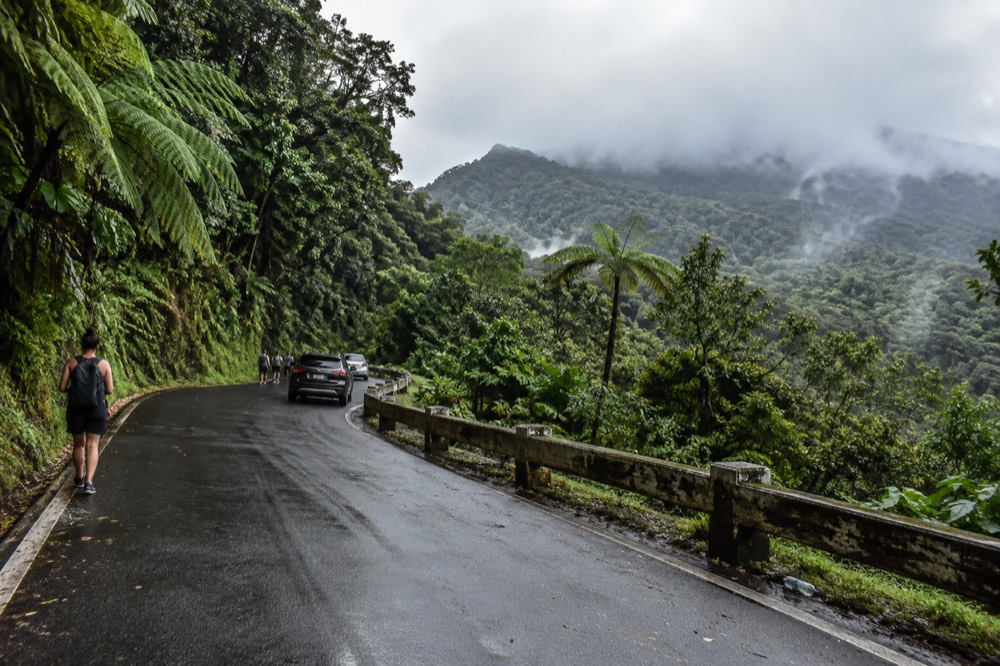
The time you pick is really the departure you book. The roster's transport-included tours solve the parking problem before it starts: a permitted vehicle drops you at the trailhead and waits out the visit. But not every departure is equally suited to the same half of the day. Here is how three common formats line up.
| Tour format | Best slot | Duration | Why it fits |
|---|---|---|---|
| 6-Hour Hike with Transport from San Juan | Morning | 6 hours | Longest trail time, guide can adjust to weather, ends with afternoon free |
| Island Day Tour with Pickup Included | Morning to midday | 6 to 7 hours | La Coca Falls and Yokahú Tower covered, hotel pickup, no long hike required |
| Half-Day Waterslide and Rope Swing | Afternoon | 4 hours | Self-drive meeting point, shorter water-focused stop, free cancellation |
The 6-Hour Hike with Transport from San Juan is the clearest match for the morning answer. It includes hotel pickup and a guide who can move stops around the day's conditions, and its six hours are enough for the corridor's longer walking sections without turning the day into a forced march. For readers who are still deciding whether the full hike is right for them, the guide to El Yunque hiking trails breaks down the actual distances and elevation changes.
For travelers who want the classic corridor sights without a long hike, the Island Day Tour with Pickup Included covers La Coca Falls and Yokahú Tower in six to seven hours, with hotel pickup and free cancellation. It is an easier half-day answer than the full hike and still gets you back before evening. That departure is the practical middle ground: you see the two headline stops, you do not have to drive, and you still have the evening in San Juan.
Departure times on the live listing are the only reliable schedule source, because operators shift slots seasonally. What stays fixed is the forest's corridor window: 8:00 a.m. to 5:00 p.m., with officials asking visitors to begin leaving at least 15 minutes before closing. That means a late-afternoon arrival with no tour and no prearranged ride is the one combination to avoid, especially because the corridor is not a rideshare pickup zone.
What Do Rain, Traffic, And Parking Change About Timing?
Rain is a constant in this rainforest: official figures run from 96 inches a year at lower elevations to about 169 inches at El Yunque Peak. Parking is the actual afternoon bottleneck, because Yokahú Tower has a 30-minute limit and La Coca ticketing. Rideshare cannot legally pick you up, so the afternoon slot only works if you have a permitted ride back.
Rain is a constant in this rainforest, but the Forest Service does not publish a morning-versus-afternoon rainfall split. Its official figures run from 96 inches a year at lower elevations to about 169 inches at El Yunque Peak, and the agency's safety pages warn that flash floods can occur throughout the year. The practical timing issue is not the rain itself: it is the road.
| Factor | Morning | Afternoon | Why it matters |
|---|---|---|---|
| Entry | Free, no reservation | Free, no reservation | No timed-entry pass exists; capacity is by parking |
| Parking | Easier at 8:00 a.m., but Yokahú limit still applies | Harder at La Coca and Juan Diego; Yokahú 30-minute max | Designated-only parking, tickets at La Coca |
| Return | Tour can end by early afternoon with beach time | Must have a permitted pickup arranged | Rideshare cannot legally collect you at the corridor |
| Rain | Possible any time, no official hourly split | Same | Check the flash-flood alert and river gauges |
The corridor's rideshare ban is the strongest reason to treat afternoon as a tour decision rather than a personal-logistics one. The Forest Service alert still states that the recreational corridor and El Portal are not rideshare pick-up points, and visitors have been forced to walk long distances to reach a valid location. If you drive yourself, you can avoid that by arriving early, but if you arrive without a car and without a booked return, the afternoon becomes a problem.
Parking is permitted only in designated areas, and at Juan Diego the maximum allowed time in a space is 30 minutes, which makes a rushed visit out of a longer hike. A guided tour with a permitted vehicle sidesteps that because the driver handles the drop-off and the wait. For the exact routes and the self-drive pitfalls, the getting to El Yunque from San Juan guide covers the road conditions and the corridor access points.
The difference between a good afternoon and a stressful one is usually decided before you leave. If your return is prearranged and your tour departure matches the day's goals, later is fine. If you arrive at 3:00 p.m. without a reservation, a car, or a booked ride, the forest's 5:00 p.m. exit deadline works against you. Morning simply gives you more runway to recover from the things that tend to go wrong.
Common Questions About El Yunque Morning vs Afternoon
Is It Better To Go To El Yunque In The Morning Or Afternoon?
Morning is better for first visits, cooler hiking and parking; afternoon works for cruise arrivals, beach combos, and travelers who prefer a later start. The tour departure you book matters more than the clock.
What time should I arrive at El Yunque?
The PR-191 North corridor opens at 8:00 a.m., and arriving at opening gives you the best parking odds at La Coca Falls and Yokahú Tower. If you have a tour, follow the operator's pickup time, because that vehicle is what solves the parking question.
Does El Yunque close in the afternoon?
The recreational corridor closes at 5:00 p.m., and officials advise starting your exit at least 15 minutes before closing. El Portal visitor center closes earlier, at 4:00 p.m.
Is parking harder in the morning or afternoon?
Afternoon is tighter, especially at La Coca Falls and Juan Diego. Yokahú Tower has a 30-minute parking maximum all day, and parking is only allowed in designated areas.
Do I need a reservation for the morning?
No. Entry to the PR-191 North corridor is free and no reservation is required. The only fee is $8 for adults at El Portal, and visitors under 15 enter free.
Is El Yunque wetter in the afternoon?
The Forest Service does not publish an hourly rainfall split. Official annual figures run from 96 inches at low elevations to about 169 inches at El Yunque Peak, so rain is possible at any time. Check the flash-flood alert before river stops.