How Early Should I Arrive At El Yunque?
Arrival timing at El Yunque National Forest: opening hours, parking limits, and when a tour removes the whole question.
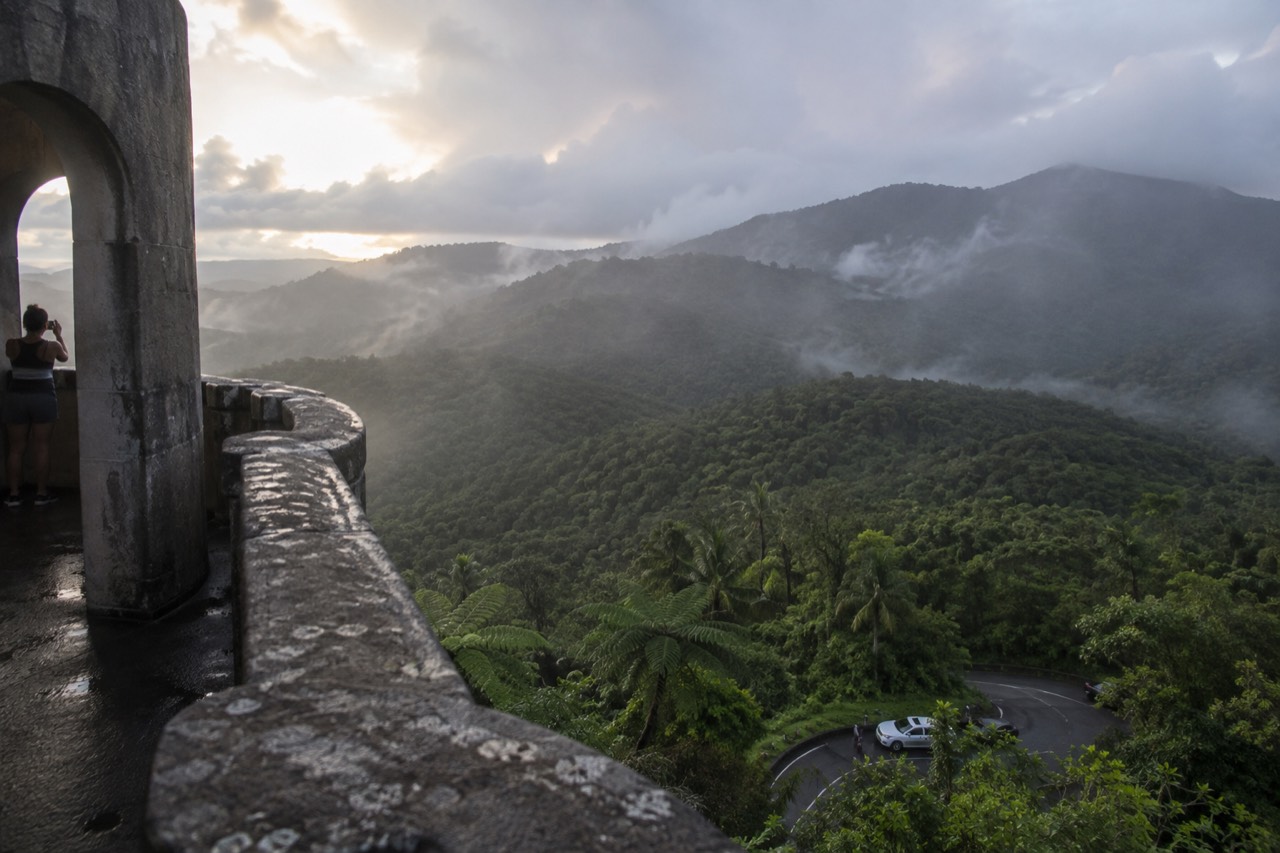
How Early Should I Arrive At El Yunque?
Arrive by 8:00 a.m., when the PR-191 North recreational corridor opens, or within the first hour after. Entry is free and no reservation is required, so there is no line to beat, but parking is limited and the Forest Service manages capacity around it. On weekends and holidays, the lots closest to the popular stops can fill before mid-morning, and parking outside designated areas is ticketed.
That is the short answer, and it is more nuanced than most travel content makes it sound. The single most common piece of advice about El Yunque, repeated across hundreds of pages, is that you need to arrive early to "beat the reservation line" or "get your entry permit before they sell out." Neither of those things exists. The Forest Service states plainly that entrance to the PR-191 North recreational corridor in Río Grande is free and no reservations are required, with operating hours from 8:00 a.m. to 5:00 p.m. The old timed-entry system that once ran through recreation.gov is gone; the only bookable product associated with the forest on that site today is the El Portal Visitor Center ticket.
So if nobody is selling you a slot, why does arrival time still matter? Because the corridor's capacity is managed, in the Forest Service's own words, because of parking limitations and the public's safety during ongoing construction work throughout the forest. Parking is permitted only in designated areas. When the designated lots at La Coca Falls, Yokahú Tower, Juan Diego, and the trailheads fill, the experience changes fast: you end up circling, waiting for someone to leave, or skipping a stop you came for.
The site behind this article, El Yunque National Forest Tours, exists because there is a genuine decision to make here, and the honest framing matters. Arriving early is a self-driver's problem. A permitted tour with a driver solves it outright, not by skipping a queue that does not exist, but by removing your car from the equation entirely.
Before we go further, three quick picks that fit different arrival strategies, from a roster where every tour is checked against what the Forest Service actually publishes:
What Time Does El Yunque Open?
The recreational corridor on PR-191 North opens at 8:00 a.m. and closes at 5:00 p.m., and the Forest Service advises visitors to begin exiting at least 15 minutes before closing. El Portal de El Yunque Rainforest Center, the visitor center at kilometer 4.1, is open daily from 8:00 a.m. to 4:00 p.m. and charges $8 for visitors 16 and over, free for under 15.
Those are the official numbers, and they are worth internalizing before you plan a morning around them. The corridor hours are published on the Forest Service's Current Conditions page, which is also where any construction-related changes to access get posted first. It is the page to check the night before you go, not a travel blog, and not a cached copy of one.
A detail that catches people out: the 5:00 p.m. closing is not a suggestion. The Forest Service FAQ states that the recreational corridor "closes right at 5:00 p.m." and that visitors should begin the process of exiting the forest at least 15 minutes before closing time. If your plan involves a late-afternoon hike, work backwards from 4:45 p.m., not 5:00.
El Portal's hours have a small source quirk worth knowing about if you cross-check pages: the Spanish text on one Forest Service page says 5:00 p.m., but the English page, the FAQ, and the recreation.gov ticket record all say 4:00 p.m., so 4:00 p.m. is the figure to rely on. El Portal also closes entirely for an annual September maintenance window, and the dates live on the Forest Service alerts page, which is the live authority rather than any recurring-date rule you may have read elsewhere.
One more thing that belongs in any honest timing conversation: El Portal is the only thing in the forest that charges entry today, and its $4 rate for interagency pass holders is the only discount in play. A separate proposal to add fees at El Portal and a La Mina Recreation Area permit was published in May 2026, and the public comment period closed in August 2026, but no decision has been published and the Passes page still lists only the $8 El Portal fee. Until a decision is announced, treat any "new El Yunque entry fee" claim you see online with suspicion.
If an early start sounds like the wrong trade for your travel style, there is a middle path worth considering:
Why Parking, Not Tickets, Decides Your Arrival Time
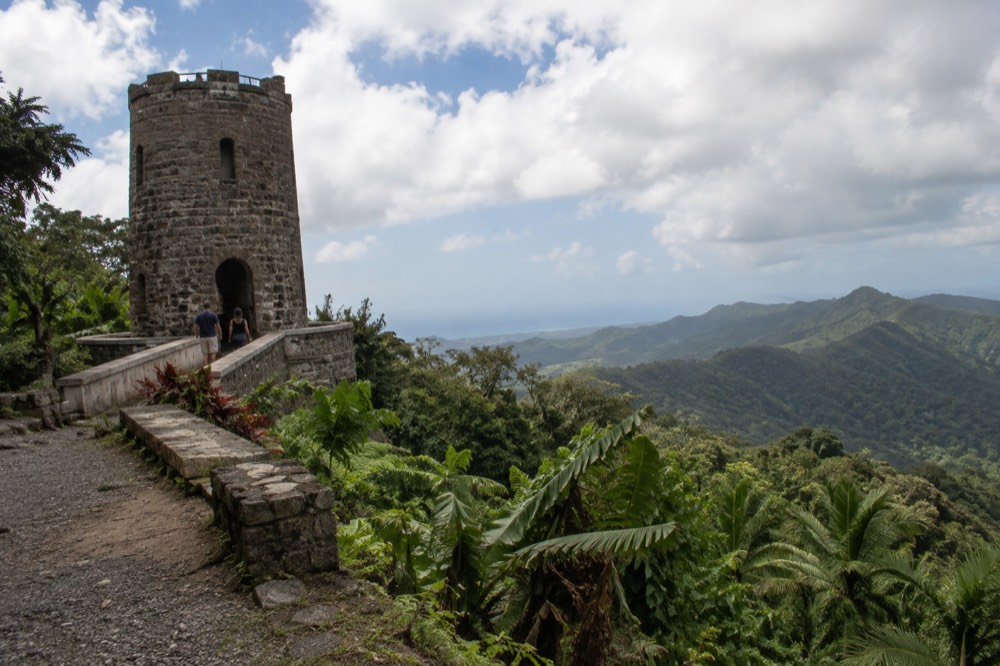
Every access corridor into the forest, all four of them, is published as requiring no reservation and no entry fee, so the only scarce resource is road space at the designated lots. The Forest Service manages visitor capacity in collaboration with the Puerto Rico Police specifically because of parking limitations, and at the most popular stops the limits are strict: Yokahú Tower and Juan Diego both carry a 30-minute maximum parking rule.
This reframes the whole "how early" question. You are not racing other people for tickets. You are racing them for about thirty minutes of legal standing room at a tower, or a spot in a lot that fills and empties slowly because everyone is on the same 30-minute clock. La Coca Falls, the first major stop most visitors reach, warns that parking violators will be ticketed, which removes the usual fallback of just pulling onto a shoulder.
The stops along PR-191 North are strung along a single mountain road, and the practical effect of a full lot is that you either wait or drive on. There is no overflow meadow, and roadside parking is not permitted. The Forest Service's own preparation advice for the corridor leans on exactly this reality, and their safety page leads with footwear: "Wear good shoes with traction: it is a rainforest, and it is wet and mossy. Wet surfaces can be a hazard and even more so if it's on a slope." The same wet-mossy reality applies to the parking areas and walkways around the falls.
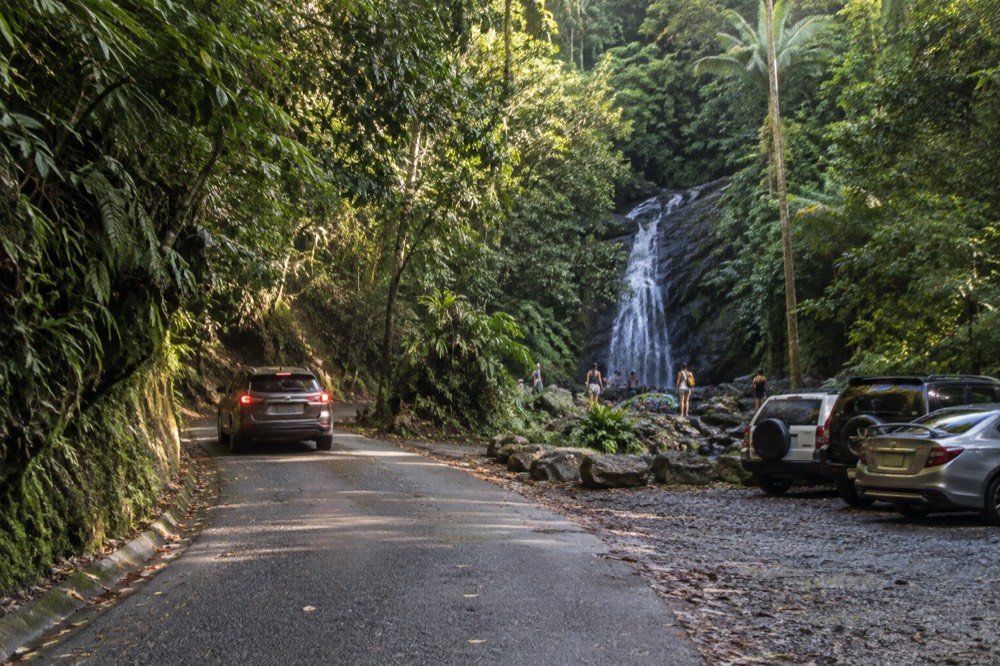
Here is how the timing pressure actually distributes across a day, based on how the corridor's rules work:
| Time window | What tends to happen | Why |
|---|---|---|
| 8:00 to 9:00 a.m. | Easiest parking at nearly every designated lot | Corridor has just opened; tour vans and self-drivers are still arriving |
| 9:00 a.m. to noon | Lots at popular stops fill; 30-minute limits start to bind | Peak arrival window for both tours and independent visitors |
| Midday | Circling for spaces at La Coca, Yokahú, Juan Diego | Turnover exists but is slow; everyone is on short clocks |
| After 3:00 p.m. | Pressure eases, but the 4:45 p.m. exit deadline approaches | Corridor closes right at 5:00 p.m.; El Portal closes at 4:00 p.m. |
The table is a planning guide, not a guarantee. Weather, cruise-ship days, and construction all shift it, and the Forest Service's Current Conditions page is the authoritative check before any visit. If you want a deeper look at the stops themselves and how they sit along the road, the guide to El Yunque's map and main stops walks the corridor stop by stop, including which ones have the tightest parking clocks.
What Arriving Early Actually Gets You
An 8:00 a.m. arrival buys you three things: first pick of the designated lots, cooler temperatures on the steeper trails, and a better chance of the cloud-free views that the towers are famous for, since cloud cover typically thickens as the day warms. What it does not buy you is any kind of priority entry, because there is no entry system to have priority in. Early arrival is purely a parking and weather play.
The weather point deserves more attention than it usually gets. El Yunque is a rainforest in the literal, measured sense: Forest Service research publications record annual rainfall ranging from roughly 2,450 mm at lower elevations to over 4,000 mm at higher stations, with the highest annual totals recorded at the El Yunque Peak station. Rain can fall on any visit at any hour, and the honest framing is not "go early to avoid rain," it is "go early because if rain arrives, you will already have your views and your parking."
Morning also matters for the flash-flood reality. The Forest Service warns that flash floods can occur throughout the year and are more frequent during the rainy months of April and May, and that a sudden surge can claim victims in less than one minute. Rivers that are calm at 8:00 a.m. can be brown and rising by early afternoon after an upstream shower you never saw. Checking conditions before you enter the water, not just before you enter the forest, is the habit that matters. If swimming is on your agenda, the Forest Service lists its designated water opportunities, including the Juan Diego Falls pool and the Angelito Trail's Las Damas Pool on the Río Mameyes, each carrying the standard flash-flood warning.
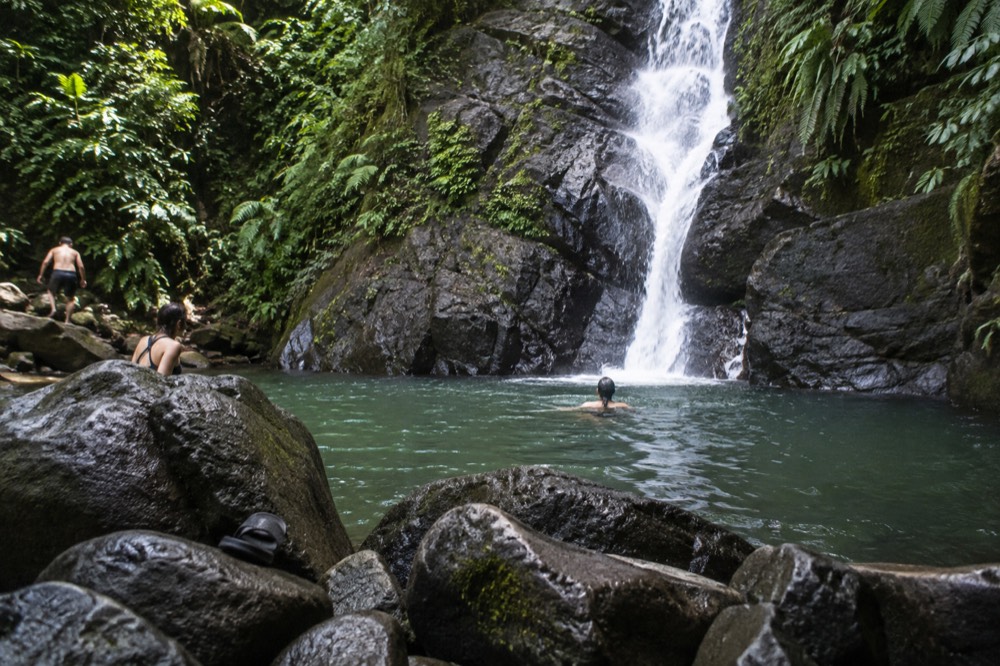
The other honest point about the morning question is that it has already been asked and answered from several angles on this site. If you are weighing the two halves of the day rather than the first hour specifically, the morning or afternoon comparison for El Yunque works through the trade in detail, and the piece on how many hours you need in El Yunque covers how long the stops actually take once you are inside the gate.
For visitors who want the water, not just the views, one roster option fits the early-arrival strategy particularly well. The Half-Day El Yunque Waterslide Excursion runs without transportation, which means you drive yourself to the meeting point on your own schedule and the guide takes over from there:
What If You Can Only Go Later In The Day?
An afternoon visit is workable and far better than skipping the forest, but it inverts your priorities: parking gets harder until mid-afternoon, the exit deadline of 4:45 p.m. starts working against longer hikes, and afternoon cloud and rain are more likely than morning clearing. Plan a shorter loop, target the roadside stops over the long trails, and be strict about turning around.
The corridor's math is unforgiving in the afternoon. Say you arrive at 1:00 p.m. You have under four hours of legal time inside, minus the 15-minute exit buffer, minus whatever you spend hunting for parking. The longer trails stop being realistic. El Yunque Trail, for reference, is 2.6 miles one way with 1,378 feet of elevation change and is rated challenging, and portions of it have been subject to closures for safety reasons, which is exactly the kind of status that changes and should be checked on the trails-status alert rather than assumed from any article, including this one.
Afternoon visitors should also know that the Forest Service's own FAQ is blunt about the closing time: the corridor closes right at 5:00 p.m. This is enforced, not advisory. A plan that has you "finishing the hike around five" is a plan to finish it in a car park outside the gate.
There is one late-day scenario that works well: the bio bay combination. Several operators on the roster run a forest-plus-bioluminescent-bay day, ending with a kayak on Laguna Grande in Fajardo after dark, which flips the whole schedule, since the forest portion runs earlier in the day and the water glows after sunset. If your constraint is not "I can only do afternoons" but "I only have one day on this side of the island," that combination is worth a look, and the guide to El Yunque and bioluminescent bay tours covers how those days are structured.
For a straight afternoon forest-and-beach day, this roster option pairs the corridor with Luquillo Beach and the kiosks, which makes the later start feel like a plan rather than a compromise:
When A Tour Removes The Arrival Question Entirely
A guided tour with transportation does not get you into the forest earlier or past any gate, because there is no gate queue to skip. What it removes is the parking problem, the navigation problem, and the exit-time problem: a permitted vehicle with a legal drop-off, a driver who handles the 30-minute parking clocks, and a guide who knows which stops are worth the time on your specific day.
This is the honest version of the tour argument, and it is worth stating carefully because so much marketing gets it wrong. No tour on this roster, or anywhere else, holds a reservation slot for you, because no reservation system exists. The Forest Service publishes a directory of authorized and permitted tour operators, and that permit is what matters: it authorizes commercial vehicles to operate in the forest. Not every taxi holds one, and the Forest Service explicitly advises asking before hiring any transportation service.
The rideshare point is the one that strands people. The Forest Service has an active alert warning that the recreational corridor and El Portal are not authorized pick-up or drop-off points for rideshare apps, and that visitors have been forced to walk long distances to reach a valid pick-up point. A self-driver without a car can genuinely be left on foot at the end of the day, in the rain, on a mountain road. This is not a scare story; it is the stated reason the alert exists.
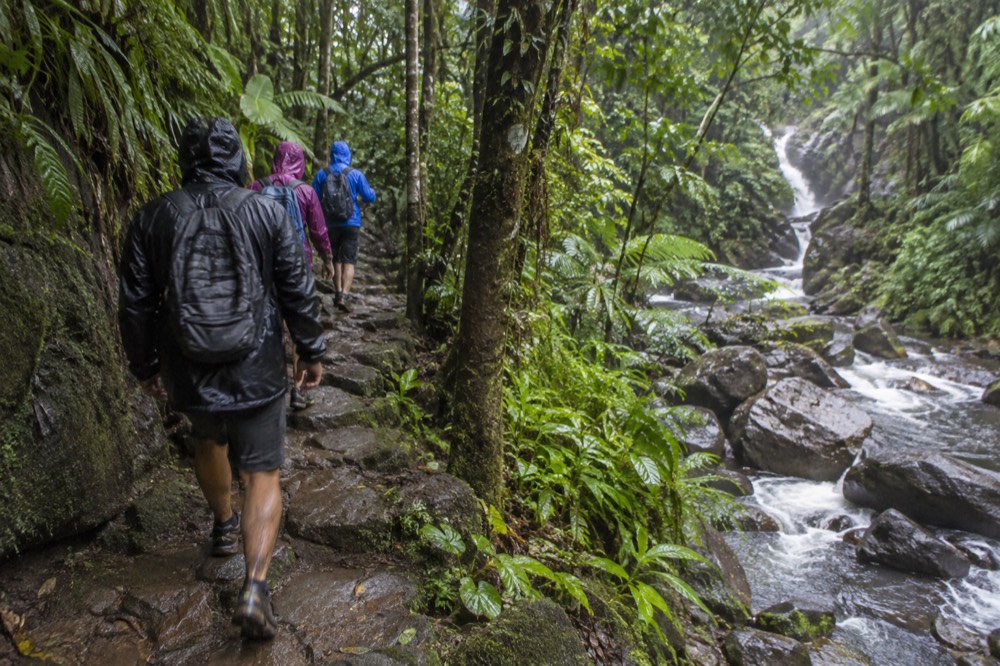
So the decision tree looks like this:
| Your situation | Arrival strategy | Why it works |
|---|---|---|
| Rental car, flexible morning | Be at the gate for 8:00 a.m. | Best parking, best weather odds, full day available |
| Rental car, afternoon only | Short loop, roadside stops, strict 4:45 p.m. turnaround | Fits the closing clock without rushing trails |
| No car | Tour with hotel pickup | Permitted vehicle, legal drop-off, no rideshare trap |
| Car but want the waterslides | Meet-a-guide tour without transport | You drive to the meeting point; guide handles the rest |
| One day for everything | Forest plus bio bay or beach combo | Structures the whole day around the exit deadline |
The tours below cover the three most common answers to that tree: the meet-a-guide waterslide excursion if you have your own car, a self-drive slides-and-rope-swing half day at the lower price point, and a full hike-plus-zipline combination if you want the whole day built for you:
Common Questions About Arriving At El Yunque
How Early Should I Arrive At El Yunque?
Arrive by 8:00 a.m., when the PR-191 North corridor opens, or within the first hour after. Entry is free and no reservation is required, so the reason is parking: designated lots at popular stops can fill before mid-morning, and parking outside them is ticketed. If you take a tour with transportation, the arrival question largely disappears.
What time does El Yunque open and close?
The recreational corridor is open 8:00 a.m. to 5:00 p.m., and the Forest Service advises starting your exit at least 15 minutes before closing. El Portal Visitor Center is open 8:00 a.m. to 4:00 p.m. and charges $8 for visitors 16 and over, free for under 15.
Do I need a reservation to enter El Yunque?
No. The Forest Service states that entrance to the PR-191 North recreational corridor is free and no reservations are required. The old recreation.gov timed-entry system no longer exists. The only bookable item is the El Portal visitor center ticket, which is separate from forest entry.
Can I take an Uber or rideshare out of El Yunque?
No. The Forest Service warns that the recreational corridor and El Portal are not authorized pick-up points for rideshare apps, and visitors have been forced to walk long distances to a valid pick-up point. Permitted taxis, authorized tour operators, or your own vehicle are the options.
Is it better to visit El Yunque in the morning or afternoon?
Morning, on balance: parking is easier, temperatures are cooler on the trails, and cloud cover tends to thicken as the day warms. Afternoon visits are still worthwhile, but plan a shorter loop and respect the 4:45 p.m. exit start time.
What happens if the parking lots are full?
Parking is permitted only in designated areas, and violators are ticketed at La Coca Falls. If lots are full you wait for turnover or move on to the next stop. This parking squeeze, not ticketing, is the real reason early arrival matters.