Do You Need Water Shoes For El Yunque?
Water shoes matter at El Yunque only if your day includes river time. Here is how the answer changes by tour type, what the Forest Service says about wet rock, and what to buy.
Do You Need Water Shoes For El Yunque?
You need water shoes for El Yunque only if your day includes getting in the water: a river pool, a natural waterslide, or a rope swing landing. If you are driving the PR-191 corridor to Yokahú Tower, La Coca Falls, and El Portal, ordinary walking shoes with traction are enough, and the Forest Service's own advice is simply to wear good shoes on wet, mossy surfaces. The answer splits by tour type, not by the forest itself.
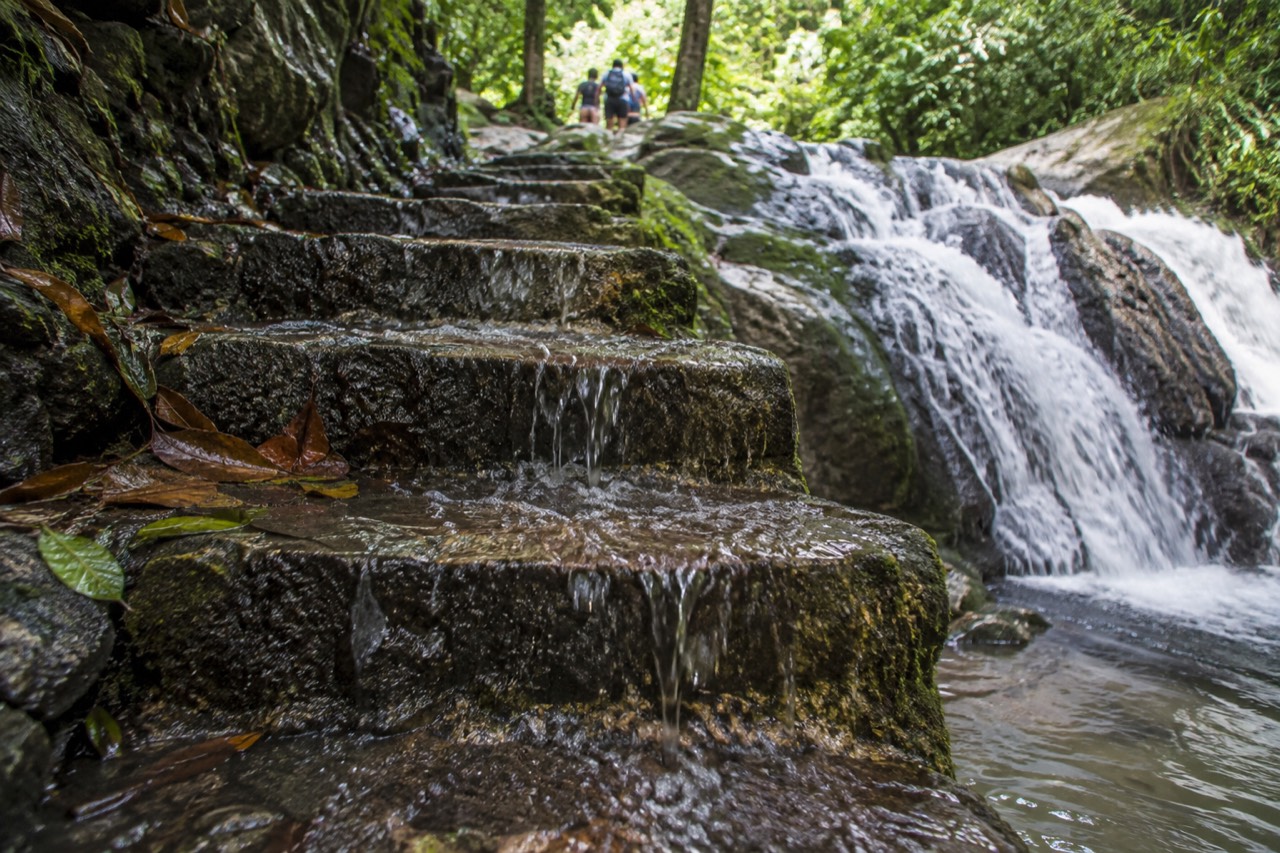
That split is the whole reason this question is worth more than a yes or a no. El Yunque National Forest is the only tropical rainforest within the national forest system, and it is wet by definition: Forest Service research publications record annual rainfall ranging from roughly 2,450 mm at lower elevations to over 4,000 mm at the higher stations, which is about 96 to 157 inches a year. Every path, every rock, every set of stone stairs in that environment stays damp. Some of it stays submerged.
So the footwear question really has three answers, one for each kind of visitor. The sightseer walking short paved paths and roadside stops needs shoes with grip but nothing specialized. The hiker heading up a longer trail needs the same, plus ankle support depending on the trail. The swimmer, slider, and rope-swing jumper needs shoes that grip on wet rock while letting water drain straight through, which is the actual definition of a water shoe, and which ordinary sneakers fail at spectacularly.
If you already know your day includes river time, the tours below are the ones where this article's advice matters most. Each one puts you in or near the water for a real part of the day, and each one is booked as a self-drive, meet-the-guide experience, which matters for footwear planning because you will be carrying your own gear from the car.
The rest of this article walks through what the Forest Service itself says about wet surfaces, which tour formats genuinely require water shoes, what separates a good water shoe from a bad one, and what people ask about the alternatives. If you are still choosing what kind of El Yunque day you want at all, start with our overview of El Yunque tours from San Juan, since transport decisions shape footwear decisions more than most people expect.
What Does The Forest Service Say About Footwear At El Yunque?
The Forest Service's own preparation advice for El Yunque leads with footwear, and it does not mention water shoes at all: it says to wear good shoes with traction because the forest is wet and mossy, and wet surfaces are a hazard, especially on slopes. That advice covers every visitor. Water shoes are the specific version of it for people who plan to stand in rivers.
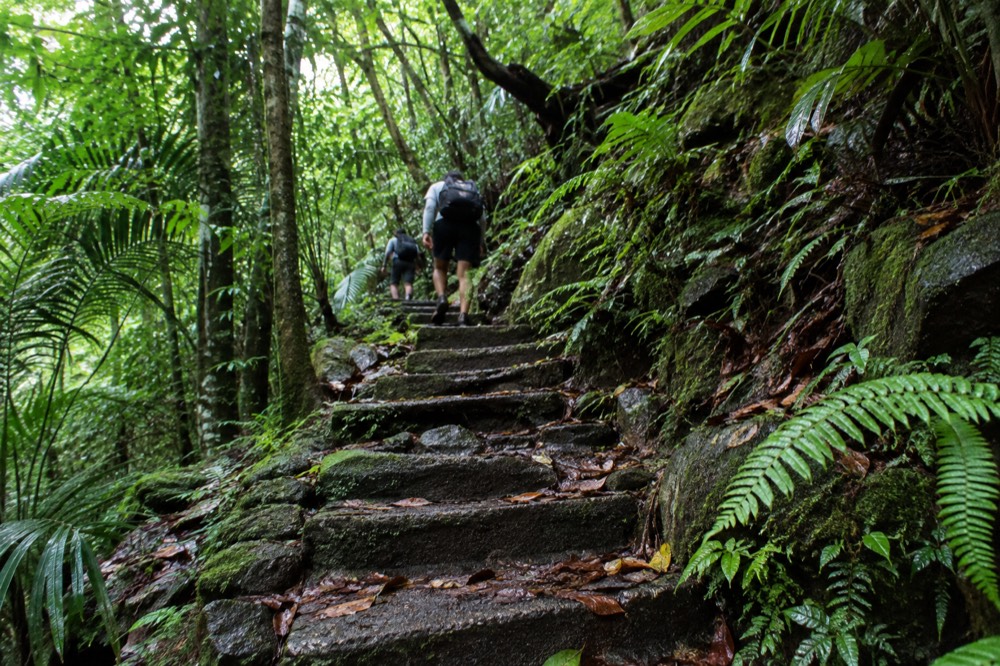
The exact wording, from the Forest Service's Safety and Outdoor Ethics page for El Yunque, is blunt about the reason: "Wear good shoes with traction: it is a rainforest, and it is wet and mossy. Wet surfaces can be a hazard and even more so if it's on a slope." There is no qualifier about which trail or which season. It is a forest-wide statement about a forest-wide condition, and it lines up with the rainfall record: this is a place where the trail surface itself is a wet surface for much of the year.
Two things follow from that. First, nobody at El Yunque needs flip-flops, not even the sightseer. The short interpretive paths and roadside pull-offs are paved or compacted, but they are slick when damp, and the stone stairs at the historic sites were built in the 1930s and 1940s by the Civilian Conservation Corps, in an era when surface texture was not a design priority. Second, the "good shoes with traction" baseline is what hikers should aim at, and water shoes are an addition to that baseline rather than a replacement for it, unless the water is genuinely the point of your day.
There is one more official angle worth knowing, because it changes how you read tour listings. Several of the river spots that tours use sit outside the national forest entirely. The natural waterslides above Luquillo, known as Las Paylas, are on private land outside the forest boundary, with no Forest Service oversight, which means the Forest Service's safety guidance does not follow you there, and neither does any official trail standard. On private land, the footwear decision is entirely yours, and the wet-rock risk is at least as high. Our Luquillo waterslides tours guide covers that side of the mountain in detail.
Which El Yunque Tours Actually Require Water Shoes?
Tours that put you in a river, on a natural waterslide, or on a rope swing are the ones where water shoes are close to mandatory, and on our roster that means the waterslide-and-river family of tours, priced from $25 to $94.78 depending on length and transport. Sightseeing and corridor tours do not require them at all, and hiking tours sit in between, where they help at river crossings but are not essential.
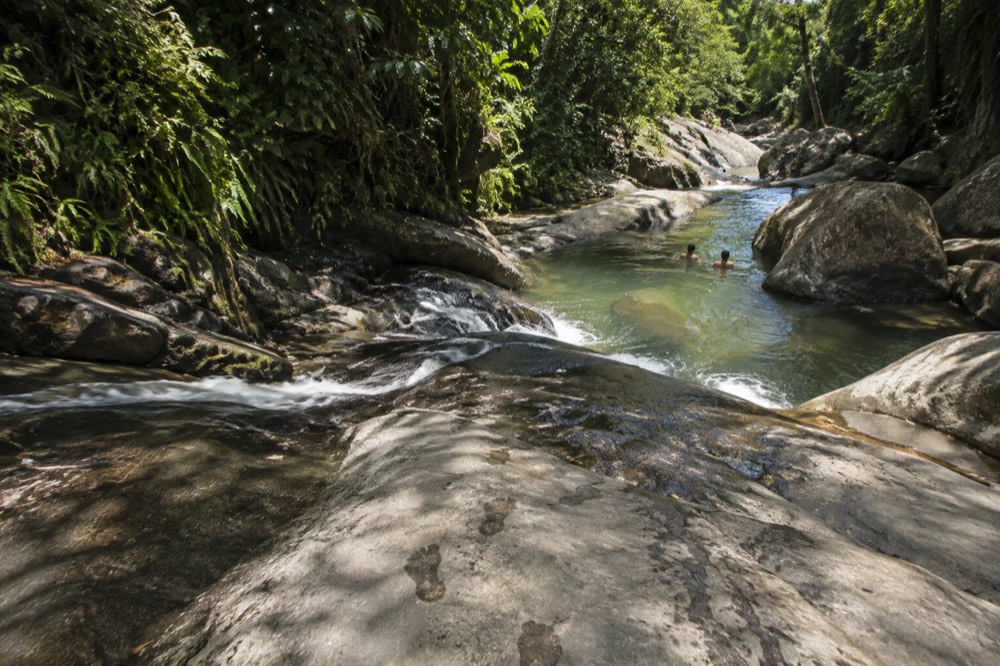
The cleanest way to see the split is by what the tour's confirmed stops and activity actually are. A sightseeing tour that visits La Coca Falls, Yokahú Tower, and El Portal involves stepping out of a vehicle onto paved or compacted surfaces. La Coca Falls is explicitly a viewing stop: the only listed recreation opportunity there is viewing scenery, and swimming is not among the forest's listed opportunities at that site. For that kind of day, traction shoes are enough, and water shoes would be wasted luggage.
A waterslide tour is the opposite. The Half-Day Yunque Rainforest Waterslide & rope swing Guided Tour, rated 4.8 across 8,066 reviews and priced from $25 for a 4-hour outing, is built around natural rock slides and a rope swing, both of which involve walking on submerged rock, pushing off it, and climbing back up it repeatedly. That is the exact failure mode of ordinary sneakers: they fill with water, they gain weight, they lose whatever grip they had, and smooth wet rock defeats them. The same logic applies to the El Yunque Rainforest Waterslides, Waterfalls and Rope Swing tour, also from $25, also 4 hours, rated 4.8 across 2,496 reviews.
Between those poles sits the beach-and-forest combo. A tour like the San Juan to El Yunque Rainforest Waterslides and Luquillo Beach day, from $50 for 5 to 7 hours and rated 4.7 across 5,953 reviews, mixes slides with a beach stop, which means water shoes do double duty on wet rock and then on sand, where they also beat sneakers comfortably. If your day includes both, pack the water shoes and let the beach be the bonus.
| Tour type | What your feet do | Water shoes needed? | Example on our roster |
|---|---|---|---|
| Sightseeing corridor | Short paved walks, photo stops | No, traction shoes suffice | Half-Day El Yunque National Forest Tour from San Juan, from $100 |
| Hiking tour | Longer trails, possible stream crossings | Helpful, not essential | El Yunque Rainforest Hiking Adventure, from $103.44 |
| Waterslide and rope swing | Standing, sliding, climbing on wet rock | Yes, effectively | Half-Day Yunque Waterslide & rope swing, from $25 |
| Forest plus beach | Wet rock plus sand | Yes, and they work on both | Rainforest Waterslides and Luquillo Beach, from $50 |
| Zipline and adventure park | Platforms, cables, dirt paths | No, closed-toe shoes required instead | Rainforest Zipline Experience, from $99 |
One nuance on the zipline row: adventure-park operators generally want closed-toe shoes for platform and harness work, not water shoes, so if your El Yunque-area day is a zipline day, read our El Yunque ziplining tours guide instead of buying aqua shoes. The two footwear categories solve different problems.
Do You Need Water Shoes If You Are Only Hiking?
For a hiking-only El Yunque day you do not need water shoes, and the Forest Service's advice of good traction shoes is the right target, with one exception: trails that cross or run beside rivers, where a shoe that drains and grips is genuinely better than a soaked boot. Hikers should also know that trail closures change, so the route you planned may change on the day.
The hiking inventory at El Yunque spans everything from the 0.4 km Angelito Trail, an easy path down to the Río Mameyes, to the El Toro Trail, a 2.3-mile difficult climb to the forest's highest peak at 3,524 feet. None of them is a river walk. But several cross streams: the Mount Britton Trail crosses two mountain streams, and the Bisley Trail on Road 988 includes two river crossings. On those trails, a hiker in conventional trail shoes who steps wrong on a crossing ends the day with wet socks and heavy shoes, which is unpleasant rather than dangerous, but which a water shoe would have shrugged off. Everything else covered here is indexed on El Yunque National Forest Tours.
The counter-argument is support. The challenging trails here involve real elevation change: Mount Britton gains 591 feet over 1.3 km, and the El Yunque Trail gains 1,378 feet over 2.6 miles. Most water shoes are flat and flexible, with little structure, and on a long steep descent that costs your arches and ankles. That is why the honest advice for hikers is a traction-first trail shoe, with water shoes as a spare pair in the bag if your route includes crossings, rather than water shoes as the primary choice.
There is a planning wrinkle that matters more than footwear for hikers: trails here open and close with construction and storm recovery, and any article that tells you a specific trail is open today is guessing. The Forest Service's forest trails status alert is the live authority, and a guided hiking guide is the person who tracks it daily, which is one of the quiet reasons people book hiking tours at all. Our El Yunque hiking trails guide covers the trail inventory and what each one is like.
What Makes A Good Water Shoe For El Yunque Conditions?
A good El Yunque water shoe has three features: a real rubber outsole with aggressive tread that grips wet rock, a closed toe that protects against stone and submerged debris, and fast drainage so the shoe does not stay heavy after every immersion. Anything marketed purely as a beach slip-on, including thin rubber soles without structure, will underperform on the rock slides and river pools this article is about.
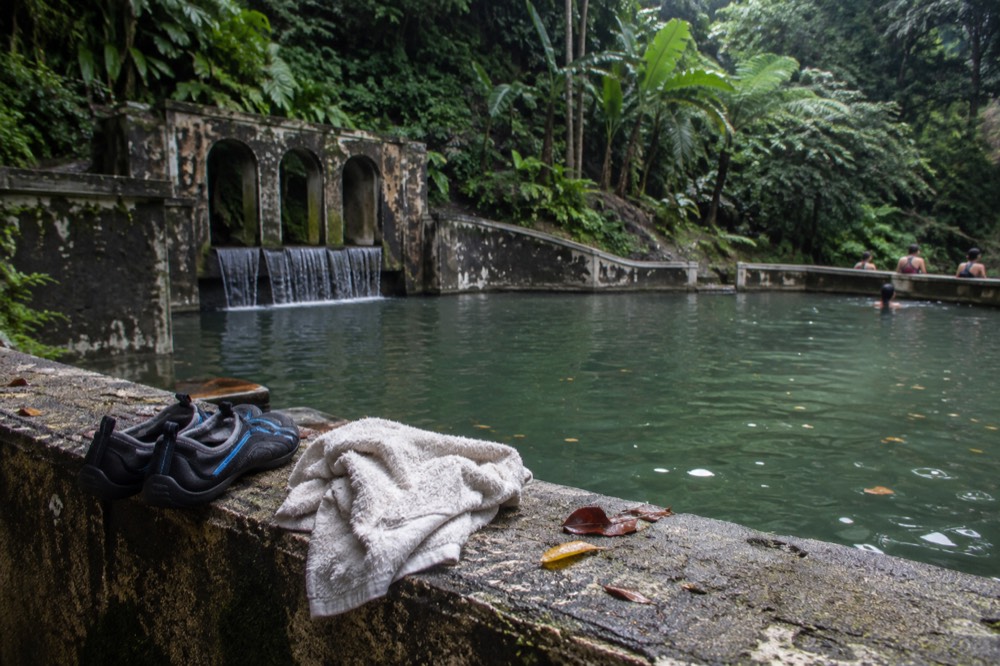
The wet-rock grip point deserves emphasis because it is where cheap shoes fail. The rock on the natural slides and in the river pools is smooth, and it is polished smoother by every season of water and foot traffic. A water shoe with a flat, hard sole slides on that surface exactly like a sneaker does. What you want is soft, sticky rubber with deep lugs, the same logic that makes approach shoes climb well on damp stone.
The closed-toe point is about what is in the water with you. These are natural rivers, not pools: there are submerged stones, occasionally glass or metal from decades of visitors, and on the private-land slides there is no ranger sweeping the run. An open-toe water sandal that drains beautifully still leaves your toes exposed on the walk back up the slide path, which is the part of the day with the most trips and stumbles.
Drainage is the third leg. A shoe that holds water turns every climb back up the rock into a squat workout with a weight vest on each foot, and it keeps your skin macerated for hours afterward, which is how blisters form on the drive home. Look for mesh panels and drainage ports, and check that the insole is perforated or removable, because a solid insole acts as a small bucket.
| Feature | Why it matters at El Yunque | What to avoid |
|---|---|---|
| Sticky rubber outsole | Smooth wet rock is the main hazard | Hard plastic or flat soles |
| Deep tread lugs | Grip on mossy slopes and stairs | Shallow tread patterns |
| Closed toe | Submerged stones and debris | Open-toe beach sandals |
| Drainage ports and mesh | Shoes stay light after immersion | Sealed fabric uppers |
| Secure heel strap | Pull-through currents and slide exits | Slip-on styles with no strap |
| Quick-dry upper | Comfort on the ride back | Cotton or padded linings |
Fit advice is the same as for any shoe: buy your normal size, wear them in the shower or a shallow stream once before the trip, and check the heel strap holds when wet. A water shoe that fits dry and sloppy will fit wet and gone.
Can You Just Wear Sneakers, Sandals, Or Crocs Instead?
Sneakers fail on wet rock because they fill with water and lose grip, so they are the worst common choice for slide and river tours. Strap sandals with real tread are a defensible middle option for river pools but poor on slippery slopes, and foam clogs are genuinely unsafe on wet rock and are refused by some operators for water activities. A cheap pair of proper water shoes costs less than most tour tickets and solves all three problems.
Sneakers first, because they are what most people arrive with. The problem is not the upper, it is the physics: a soaked running shoe holds a surprising amount of water, the weight shifts with every step, and the tread compounds used for pavement and track are engineered for dry grip. On smooth wet rock they skate. The one scenario where sneakers are fine is the sightseeing corridor day described earlier, where they stay dry.
Strap sandals, the kind with a proper heel strap and a lugged sole, are the honest runner-up. They drain instantly, they dry instantly, and on a hot day they are more comfortable than anything else in the bag. Their weakness is the open toe and the thin footbed: fine for standing in the Las Damas Pool by the Angelito Trail, less fine for climbing back up a natural slide run repeatedly. If you already own good sandals and your day is a gentle river-pool day rather than a slide day, they will do.
Foam clogs deserve their own sentence because they are the most common bad decision. They float, they have no tread worth the name, and they pop off feet in moving water, which is a genuine hazard on a river day rather than just an inconvenience. Operators who run rope swings and slides know this, and some will tell you to go barefoot rather than wear them in the water, which tells you what the footwear hierarchy looks like from the guide's side of the day.
If you are still weighing whether the whole day is worth it, our piece on are El Yunque tours worth it covers the honest case, which on this site rests on transport, permitted pick-up, and a guide who knows what is open, not on any claim that a tour skips a line, because there is no line to skip: entry to the PR-191 North corridor is free and needs no reservation.
Where Can You Actually Get Your Feet Wet Inside The Forest?
Inside the national forest, the Forest Service lists specific swimming and wading sites, including the Juan Diego Falls pool, the Angelito Trail's Las Damas Pool on the Río Mameyes, Puente Roto, Quebrada Grande, Quebrada Sonadora, the Río Espíritu Santo Observation Point, and the Río Sabana Recreation Area. La Coca Falls is viewing only, and Baño Grande has been closed to swimmers since 1968.
This is the section where water shoes and honesty intersect, because a lot of tour marketing implies a generic "swim in El Yunque" that the Forest Service's own site does not support. The verified list is the one above, and each of those sites carries the same flash-flood warning: the Forest Service advises that flash floods can occur throughout the year, more frequently in the rainy months of April and May, and that a sudden surge can claim victims in less than a minute. The official alerts page is the place to check conditions before any water day, and our can you swim at El Yunque article covers the full picture.
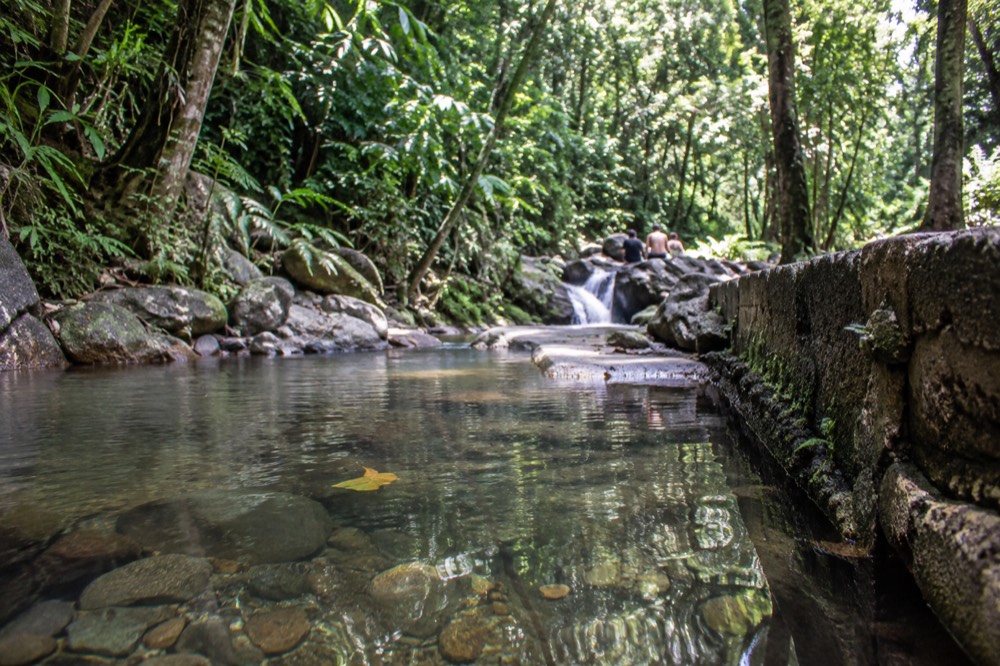
The distinction that matters for your feet: the forest-listed swimming sites are natural rivers and pools with rock beds, so the water-shoe advice applies fully. The private-land slides outside the forest are a different experience, faster and more polished, and they are also outside any official safety net, which raises rather than lowers the case for good footwear. A tour that visits both in one day, like the small-group waterfall and slides outings on our roster, is exactly the day a real pair of water shoes was invented for.
Whatever you choose, the planning sequence is the same. Decide whether water is in your day, and if it is, buy closed-toe draining shoes with sticky rubber and bring them broken in. If it is not, the Forest Service's own words are all you need: good shoes with traction, because it is a rainforest, and it is wet.
Common Questions About Water Shoes At El Yunque
Do You Need Water Shoes For El Yunque?
Only if your day includes river time: a natural waterslide, a rope swing, or a river pool. Sightseeing along the PR-191 corridor needs ordinary shoes with traction, and the Forest Service's own advice is simply good shoes on wet surfaces. Waterslide and rope-swing tours are where water shoes become close to mandatory.
Can I wear regular sneakers on the waterslides?
You can, but it is the worst common choice. Sneakers soak through, gain weight, and their tread is designed for dry pavement, so they slide on smooth wet rock. A basic pair of closed-toe water shoes with drainage ports costs far less than the tour and works dramatically better.
Are water shoes required for ziplining near El Yunque?
No. Zipline and adventure-park operators generally require closed-toe shoes for platform and harness work, not water shoes. If your day is a zipline day, wear sturdy closed-toe walking shoes and leave the aqua shoes at home.
Do I need water shoes for hiking trails like Mount Britton?
Not strictly. The Forest Service's advice for all El Yunque hiking is good traction shoes, and challenging trails with elevation gain are better served by a supportive trail shoe. Pack water shoes as a spare if your route includes stream crossings, such as the two crossings on the Bisley Trail.
Are flip-flops or foam clogs acceptable anywhere in the forest?
Flip-flops are a poor choice everywhere in the forest, including paved stops, because surfaces stay damp and slick. Foam clogs are genuinely unsafe on wet rock and in moving water, and some operators will ask you to go barefoot rather than wear them for water activities.
What features matter most in a water shoe for El Yunque?
Sticky rubber with deep tread for wet rock grip, a closed toe for submerged stones and debris, drainage ports and quick-dry mesh so the shoe stays light, and a secure heel strap so moving water cannot pull it off. Break them in before your trip, not during it.