What Not To Miss In El Yunque?
The stops that define an El Yunque day, which ones the tours on this roster actually visit, and the two famous ones you cannot currently reach.
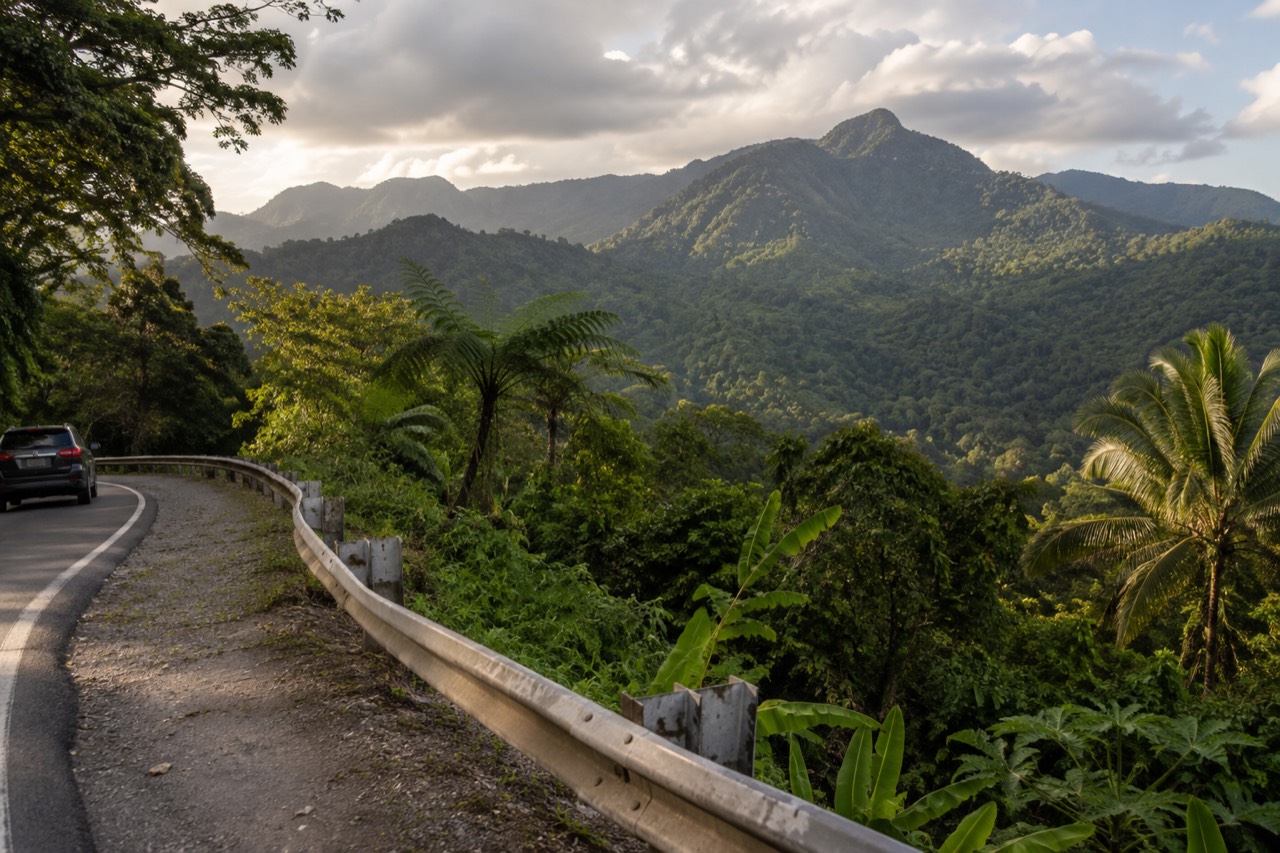
What Not To Miss In El Yunque?
The must-see stops in El Yunque are Yokahú Tower, La Coca Falls, Juan Diego Falls, the Angelito Trail down to the Río Mameyes, and El Portal Rainforest Center, with Mount Britton Tower as the reward for a longer walk. Note that La Mina Falls is unreachable because both access trails are closed, and the natural waterslides near Luquillo sit on private land outside the national forest.
Start with the fact that reshapes every itinerary: entrance to the PR-191 North recreational corridor in Río Grande is free and no reservation is required. The corridor is open 8:00 a.m. to 5:00 p.m., and the Forest Service manages capacity through parking, not tickets. Anyone telling you to book a corridor reservation is working from outdated information. The only thing that charges admission anywhere in the forest is El Portal Rainforest Center, at $8 for visitors 16 and over, free under 15.
That changes what "must-see" means. You are not rationing scarce entry slots. You are rationing a parking-constrained mountain road, a 5 p.m. hard closing, and your own energy in heat and humidity. The smart list is short, ordered low to high, and honest about what is closed. This site's El Yunque National Forest Tours roster exists for exactly that reason: a permitted vehicle with a legal drop-off solves the parking problem, and a guide knows which trails are actually open on the day.
For a first visit built around the corridor's classic viewpoints plus water time, the three options below cover the most ground per hour. The first is the small-group waterslide day, the second a photo-inclusive six-hour version with transport, the third a nine-and-a-half-hour hike and zipline combination for visitors who want the forest on foot.
Which Stops Along The PR-191 Corridor Should Anchor Your Day?
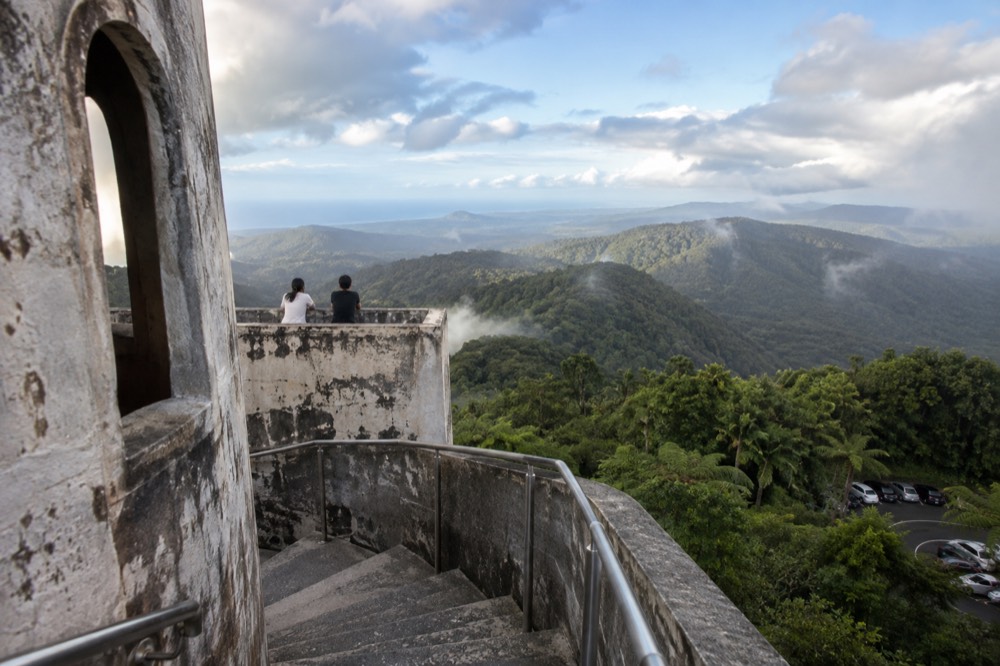
Anchor the day on La Coca Falls, Yokahú Tower and the Baño Grande dam, in that order as you climb. La Coca is an 85-foot roadside drop at kilometer 8.1, Yokahú is a 69-foot stone tower with a 10-mile-plus view, and Baño Grande is a CCC-built pool you look at but never swim in. All three are short stops, which is why tours chain them together in a single morning.
La Coca Falls drops 85 feet onto a rock formation right beside the road, and after a completed construction project it now has a new welcome station, improved accessibility and freshly signed parking. It is a photo stop, not a swimming stop: the only listed recreation opportunity there is viewing scenery, and parking violators are ticketed. Yokahú Tower sits at kilometer 8.8, was built in the early 1960s by Dr. Frank H. Wadsworth, a former forest supervisor, and from its platform you can read four forest types, Colorado, Tabonuco, Palm and Cloud Forest, and on a clear day the coastline and the Virgin Islands. Parking there is limited to thirty minutes, and the same cap applies at Juan Diego.
Baño Grande is the stop most often misdescribed in third-party copy. It is a man-made pool 18 feet deep, formed by a stone and masonry dam built by the Civilian Conservation Corps in the late 1930s, and it has been closed to swimmers since 1968. The Forest Service posts it plainly: no swimming permitted. It is one of the best-preserved pieces of New Deal-era construction in Puerto Rico and worth ten quiet minutes, but nobody should arrive in a swimsuit expecting a dip.
| Stop | Kilometer on PR-191 | What it is | Time to budget |
|---|---|---|---|
| La Coca Falls | 8.1 | 85-foot roadside waterfall, photo stop | 15-20 minutes |
| Juan Diego Falls | 9.6 | Short path to a natural pool, wading listed | 30 minutes parking cap |
| Yokahú Tower | 8.8 | 69-foot stone tower, panoramic view | 30 minutes parking cap |
| Baño Grande | 11.9 | Historic CCC dam pool, no swimming | 10-15 minutes |
| Palo Colorado | 12.2 | Information center, trailhead area | Brief stop |
Several corridor tours on the roster cover these stops in one sweep. The island day tour that includes El Yunque lists La Coca Falls, Yokahú Tower and Piñones among its confirmed stops and runs 6 to 7 hours with hotel pickup, from $89. The half-day national forest trip from San Juan confirms La Coca Falls and Yokahú Tower in 5 hours from $100, and the guided day tour from San Juan adds the Río Mameyes to both, from $75. If you would rather not drive the mountain road yourself, that last category is where the value sits, because the permitted vehicle solves both the parking limits above and the rideshare problem discussed later.
Where Can You Actually Get In The Water?
The Forest Service lists swimming at Juan Diego Falls, the Angelito Trail's Las Damas Pool on the Río Mameyes, Puente Roto, Quebrada Grande, Quebrada Sonadora, the Río Espíritu Santo observation point and the Río Sabana Recreation Area. La Coca Falls is viewing only, Baño Grande has banned swimming since 1968, and both trails to La Mina Falls are closed. Flash flooding is the standing risk at every one of these sites.
Juan Diego Falls, at kilometer 9.6, is the easiest water stop on the main corridor: a short path to a natural pool along Juan Diego Creek with a waterfall you can wade into, and a thirty-minute parking cap because capacity is limited. The Forest Service asks visitors to stay on the trail there because restoration work has repaired ground cover inside a Wilderness-designated area.
The Angelito Trail is the family favorite. It is 0.4 kilometers one way, easy, with only 132 feet of elevation change, and it descends through Tabonuco trees to the federally designated Wild and Scenic Río Mameyes and the Las Damas Pool. It sits on Road 988, the Luquillo entrance, at kilometer 3.6. A nighttime nature walk on the roster uses the Angelito Trail as its confirmed stop, a 2-hour-30-minute tour from $75, and several waterslide-and-beach tours list the Río Mameyes among their confirmed stops.
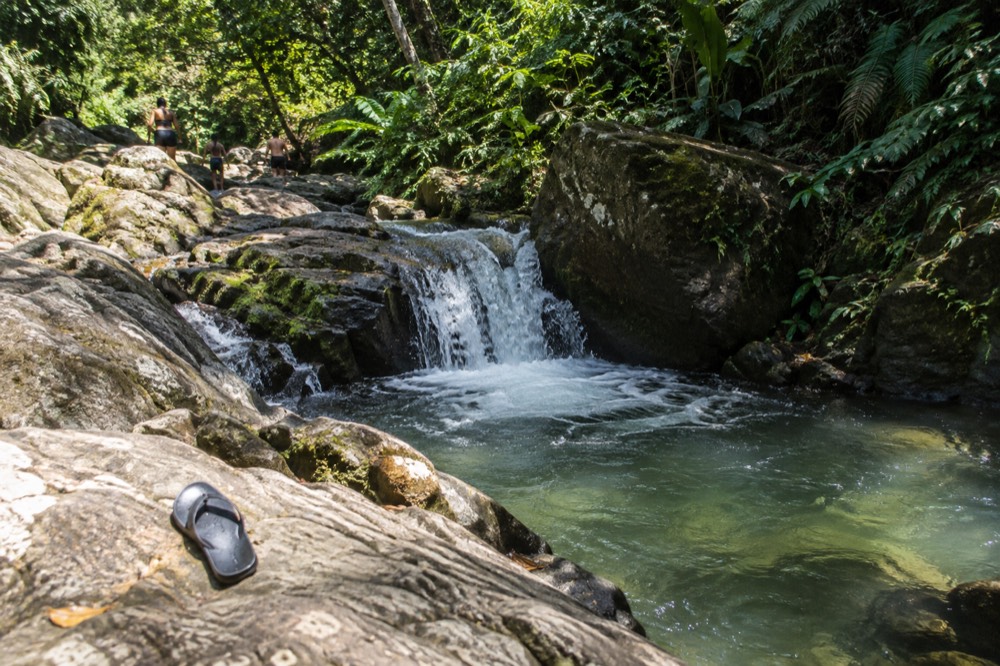
One warning applies everywhere on this list, in the Forest Service's own words: flash floods can occur throughout the year, and a sudden surge can claim victims in less than one minute. During a flash flood, rapidly rising water can reach heights of 30 feet or more. Check conditions before you go, watch for heavy rain upstream as well as where you are standing, and get to higher ground if water starts to rise. The Río Mameyes even has a live USGS stream gauge publishing real-time discharge and gage height, so the river can be checked before anyone gets in.
Is El Portal Worth Your Time, And What About The Towers?
El Portal is worth 45 minutes to an hour for the Puerto Rican Parrot exhibit, the film and the interpretive trail, and it is the only place in the forest that charges admission, $8 for adults 16 and over. Mount Britton Tower, a CCC stone tower at 3,087 feet reached by a challenging 1.3 km trail, is the quiet alternative to crowded roadside stops.
El Portal opened in 1996, was badly damaged by Hurricanes Irma and María in 2017, and reopened in January 2022 with exhibits, a store, a cafe and a theater. Wood from trees blown down in the hurricanes is built into some of the exhibits, which is a detail children tend to remember. The facility keeps three live Puerto Rican Parrots, an endangered species the forest actively works to protect, and shows the film Beyond the Peaks and Seas. An interpretive trail loops below the walkway and a portion of it is accessible. Hours are 8 a.m. to 4 p.m., and it closes for Thanksgiving, Christmas Day, New Year's Day and Three Kings Day, plus an annual two-week September maintenance window, so check the alerts page before planning a visit around it.
Mount Britton is the stop most first-time visitors miss and shouldn't. The stone tower was built by the Civilian Conservation Corps in 1937-38, and on a clear day its deck shows the forest, the Atlantic, the Caribbean and the eastern coastal plain at once. The catch is the walk: 1.3 kilometers with 591 feet of elevation change, rated challenging, crossing two mountain streams before the tower. The trailhead sits on a one-way loop road off the upper end of PR-191 near kilometer 13. Los Picachos, at 3,175 feet, is another CCC stone platform with a 360-degree view, reached from the El Yunque Trail system, though the section from Los Picachos to the peak itself remains closed.
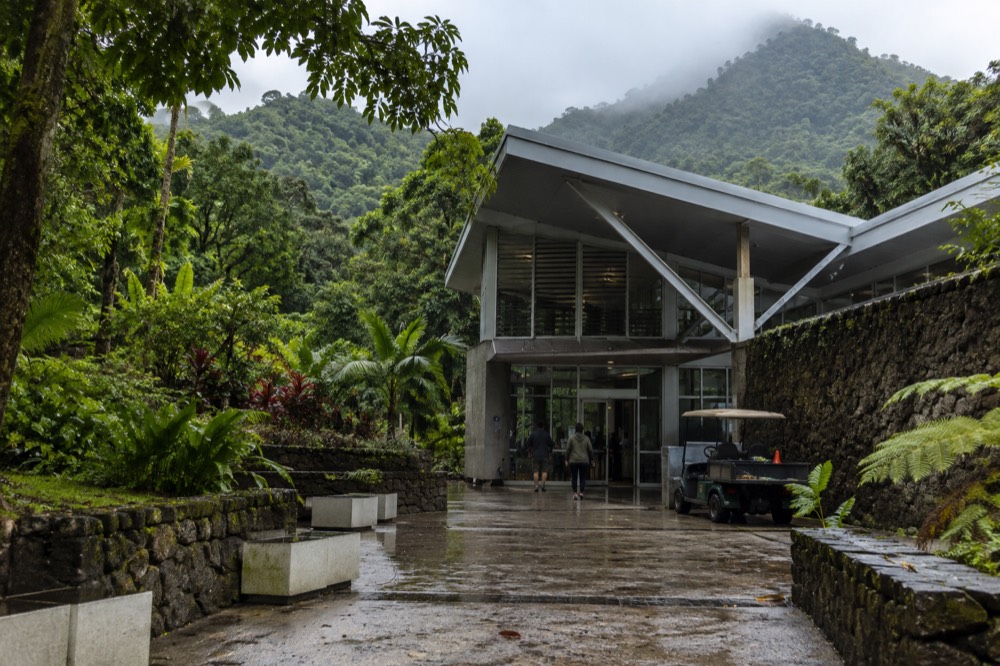
If towers and visitor centers are your priority, the sightseeing half-day tour with transfer lists El Portal de El Yunque Rainforest Center among its confirmed stops alongside La Coca Falls and Yokahú Tower, from $85 with hotel pickup. It is one of the few roster tours that names El Portal outright. For a deeper treatment of the corridor's geography and how the stops string together, the El Yunque map and main stops guide walks the road kilometer by kilometer.
What About The Waterslides Everyone Talks About?
The famous natural waterslides are not inside El Yunque National Forest. They sit on private land near Luquillo, outside the forest boundary, with no Forest Service management, staffing or safety oversight. Tours that sell a waterslide day are selling a mix: forest-side river spots plus this private-land slide, and that mix can be a good day, as long as you know what you are buying.
This is the single most misrepresented item in El Yunque marketing, so it deserves plain language. Point-tested against the USDA Forest Service's own boundary and ownership GIS layers, the Luquillo waterslides return zero features, while a La Coca Falls control returns El Yunque National Forest. The slides appear on none of the Forest Service's 37 published recreation sites. Access is arranged with private landowners on the spot, and no verified fee, hours or safety information exists for the site, so this site does not print any.
What the roster's waterslide tours actually do is combine that private slide with genuine forest-side water: the Río Mameyes, Las Tinajas, Charco Frío, and rope swings and cliff jumps at operator-permitted spots, several of which are also outside the federal forest boundary. Traveller reviews describe the slides, the swings and the jumps in enthusiastic detail, and those descriptions are real accounts of real days. They are not, however, a general permission to swim anywhere in the national forest; only the Forest Service-listed sites in the section above carry that status.
The flagship version is the 7-hour small-group tour, rated 4.9 across 16,584 reviews and priced from $45. Note what that rating figure is: a combined pool of reviews and ratings aggregated on the listing, not a headcount of this specific tour's customers. The half-day self-drive version, where you meet the guide rather than riding from San Juan, runs 4 hours from $25 with free cancellation, rated 4.8 across 8,066 reviews. For the full picture of what these tours include and how the private-land slide fits the day, see the Luquillo waterslides tours guide.
What Is Closed Right Now, And How Do You Check?
La Mina Trail and Big Tree Trail, the two routes to La Mina Falls, are closed, as is the section of the El Yunque Peak Trail between Los Picachos and the summit. Trail status in this forest changes with construction and storm recovery, so no list, including this one, should be trusted as standing fact. The Forest Service's alerts page is the live authority, and every El Yunque plan should include a two-minute check of it.
The reason this matters more here than at most destinations is that El Yunque's most photographed waterfall has been unreachable for years, and a great deal of tour copy still glosses over it. The Forest Service's own FAQ says La Mina trail and falls remain closed for construction, and that hurricane damage across the forest was significant and recovery continues. Any tour listing that promises swimming at La Mina Falls is making the listing's claim, not a verified fact about the forest, and this site does not repeat it as its own.
The honest planning move is to substitute. Juan Diego Falls gives you a waterfall-and-pool stop on the main corridor. The Angelito Trail gives you river swimming on the Luquillo side. Mount Britton gives you a summit-feeling tower without the closed peak section. A guide who knows which trails are open on the day is genuinely worth more in this forest than in most, which is part of the real case for booking rather than self-driving. Check the Forest Service alerts page before you finalize anything.
Which Tour Covers The Most Must-See Stops In One Day?
The guided day tour from San Juan covers the most named forest stops per dollar, confirming the Río Mameyes, La Coca Falls and Yokahú Tower in a 5-hour day from $75. The island day tour adds Piñones and hotel pickup for a longer 6-to-7-hour day from $89. For water-focused visitors, the small-group waterslide tours from $45 pair forest-side river time with the private-land slides.
Matching stops to tours is the practical way to choose, because no single tour covers everything, and the differences are mostly about water versus viewpoints. The table below uses only confirmed stops from each listing, not advertised maybes.
| Tour (roster name) | Length | From | Confirmed stops |
|---|---|---|---|
| Guided Day Tour from San Juan | 5 hours | $75 | Río Mameyes, La Coca Falls, Yokahú Tower |
| Island Day Tour, Pickup Included | 6-7 hours | $89 | La Coca Falls, Yokahú Tower, Piñones |
| Louie's VIP Guided Tour | 5 hours | $80 | Río Mameyes, La Coca Falls, Baño Grande |
| Small-Group Beach Day, Pickup | 6 hours | $65 | Luquillo Beach, Río Mameyes, Luquillo Kiosks, Las Tinajas |
| Nighttime Nature Walk | 2.5 hours | $75 | Angelito Trail |
Notice what is absent from every confirmed-stop list: La Mina Falls. That absence is the market telling you the truth. If a waterfall-and-pool experience is the priority, the tours that deliver it do so at Juan Diego, the Río Mameyes or the Luquillo-side river spots, not at the famous closed falls. The El Yunque waterfall tours guide breaks this down stop by stop.
One more logistical point that quietly decides many itineraries: rideshare apps cannot pick you up at the recreational corridor or El Portal. The Forest Service has warned that visitors relying on them have been forced to walk long distances to reach a valid pick-up point, and the advisory recommends permitted taxis, authorized tour providers or a private or rental vehicle instead. Not every taxi holds a forest permit either, so the official advice is to ask before hiring. For a visitor without a rental car, that makes a tour with transport the practical option, not a luxury. The current conditions page carries the official transport guidance alongside the entry rules.
Common Questions About What Not To Miss In El Yunque
What Not To Miss In El Yunque?
Yokahú Tower, La Coca Falls, Juan Diego Falls, the Angelito Trail to the Río Mameyes, and El Portal Rainforest Center are the core stops. Mount Britton Tower rewards the extra hike. La Mina Falls is currently unreachable because both access trails are closed, and the Luquillo waterslides are outside the national forest on private land.
Do I need a reservation to enter El Yunque?
No. Entrance to the PR-191 North recreational corridor is free and no reservation is required, with hours from 8:00 a.m. to 5:00 p.m. Capacity is managed through designated parking. The only paid site is El Portal Rainforest Center at $8 for visitors 16 and over.
Can you swim at La Mina Falls?
Not currently, and no tour can make that possible. Both trails to La Mina Falls, La Mina Trail and Big Tree Trail, are closed. The Forest Service-listed swimming spots include Juan Diego Falls, the Angelito Trail's Las Damas Pool, Puente Roto, Quebrada Grande, Quebrada Sonadora and the Río Espíritu Santo observation point.
Are the waterslides part of El Yunque National Forest?
No. The natural waterslides near Luquillo sit on private land outside the forest boundary, with no Forest Service management or safety oversight. Tours that include them are combining private-land slides with forest-side river spots, and they say so in their stop lists.
What is the best stop for swimming with kids?
The Angelito Trail on Road 988 is the family pick: an easy 0.4 km walk down to the Río Mameyes and the Las Damas Pool. Juan Diego Falls on the main corridor is the shorter option, with a 30-minute parking cap. Always check flash-flood conditions before getting in any river.
Is a guided tour worth it if entry is free?
For many visitors, yes, but not for queue-skipping, because there is no queue. A tour provides a permitted vehicle with legal drop-off in a parking-constrained corridor, a solution to the rideshare pick-up problem, and a guide who knows which trails are open that day. That last point matters more here than at most destinations.
If you are still assembling the day, these three cover the widest spread of what this page describes: the corridor classics, the water, and the long-format forest-plus-adventure day.