Can You Zipline At El Yunque?
The honest answer to whether you can zipline at El Yunque: the courses sit on private land next to the national forest, not inside it. Costs, combos and how to choose.
Can You Zipline At El Yunque?
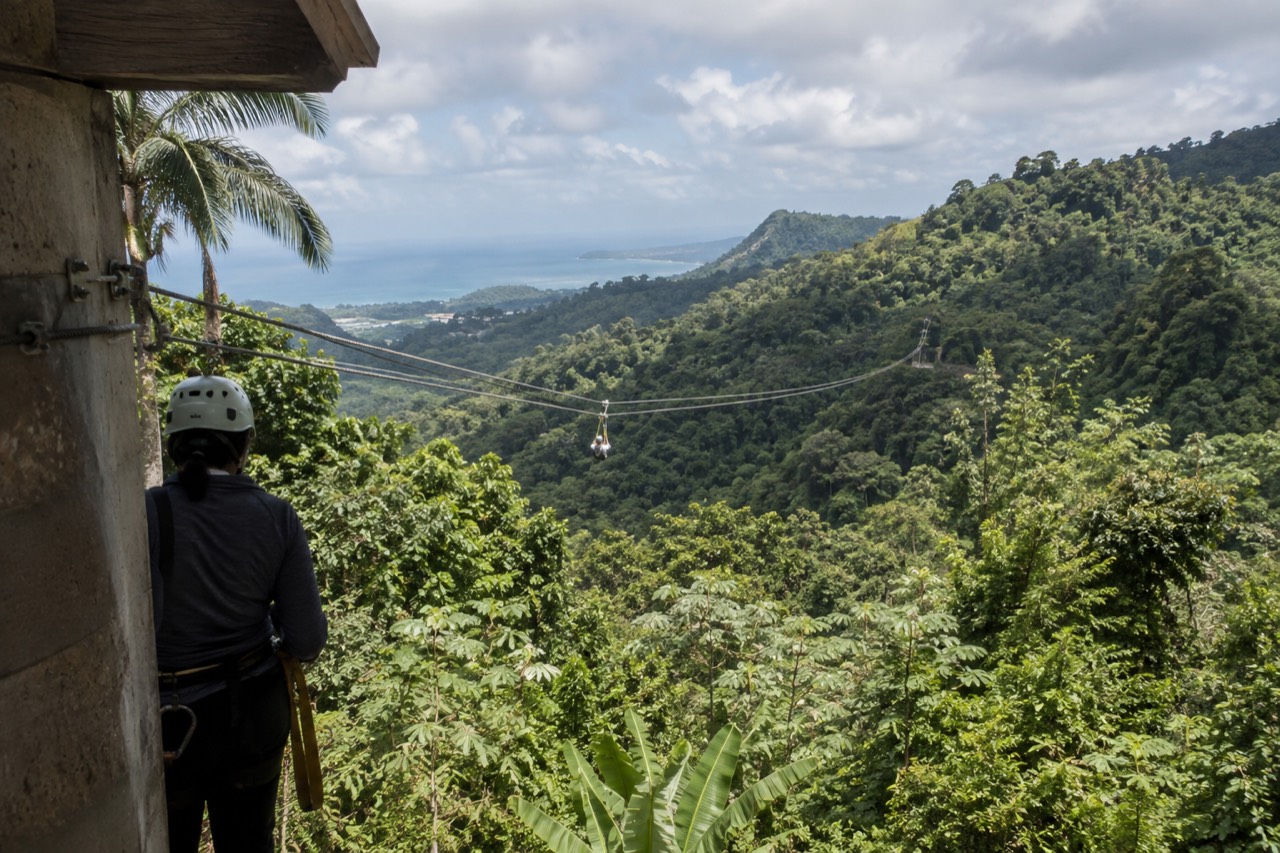
Yes, but with one honest catch: the ziplines are not inside El Yunque National Forest itself. The USDA Forest Service publishes 37 recreation sites and trails for the forest, and not one of them is a zipline course. Every zipline tour sold under the El Yunque name runs on private land adjacent to the forest, operated by adventure companies rather than the Forest Service.
That distinction matters more here than in most destinations, and it is the single most useful thing to understand before you click book on anything. The tours are real, the cables are real, and the rainforest scenery around them is genuinely spectacular. But a buyer who expects to soar through the canopy of a federally managed national forest, past Forest Service signage and over Forest Service trails, is buying a different product from the one that exists.
What actually exists is a cluster of private adventure operations in the Río Grande and Luquillo lowlands, on the forest's eastern doorstep. The Forest Service does not run them, does not permit them to build inside the forest, and does not list them among its recreation sites. The companies market themselves with the words "rainforest" and "El Yunque" because that is the name travelers search for, and because the forest genuinely looms over the region. The marketing is not false, exactly, but it flattens the boundary between the national forest and the private property beside it.
None of this is a reason to skip ziplining. For many visitors it is the highlight of a Puerto Rico trip, and the reviews on the live listings back that up. It is a reason to know what you are buying, so the rest of this article separates the courses, the prices, the combos and the practical details, and makes the case for when a tour is worth it. For a fuller comparison of the options, see our guide to El Yunque ziplining tours.
Where Are The Zipline Courses, If Not Inside The Forest?
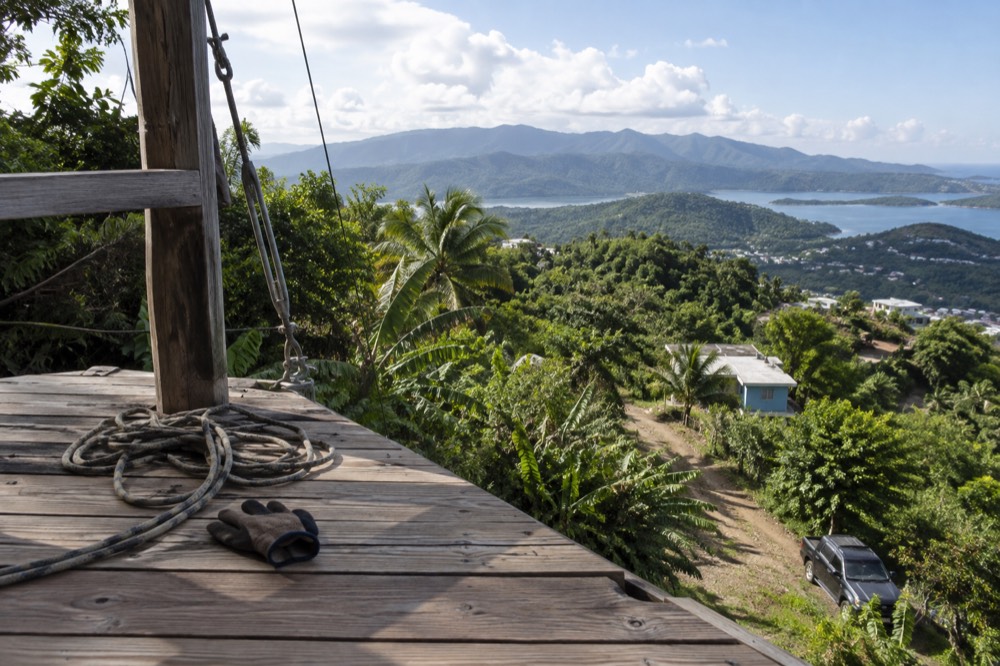
The zipline courses operate from private adventure parks in the Río Grande area, on the eastern edge of the forest. The Forest Service's recreation index for El Yunque lists its sites and trails, and ziplining does not appear among the listed opportunities. The courses are commercial businesses on private property, subject to private operators' rules rather than Forest Service oversight.
The Forest Service's own recreation pages describe what the forest offers: hiking, scenic driving, water activities at listed sites, interpretive trails and observation towers. You can read the full list on the official El Yunque recreation index, and ziplining is simply not one of the activities the forest itself provides. That is not an accident or an oversight. It reflects how the forest is managed: a protected tropical rainforest within the national forest system, not an amusement venue.
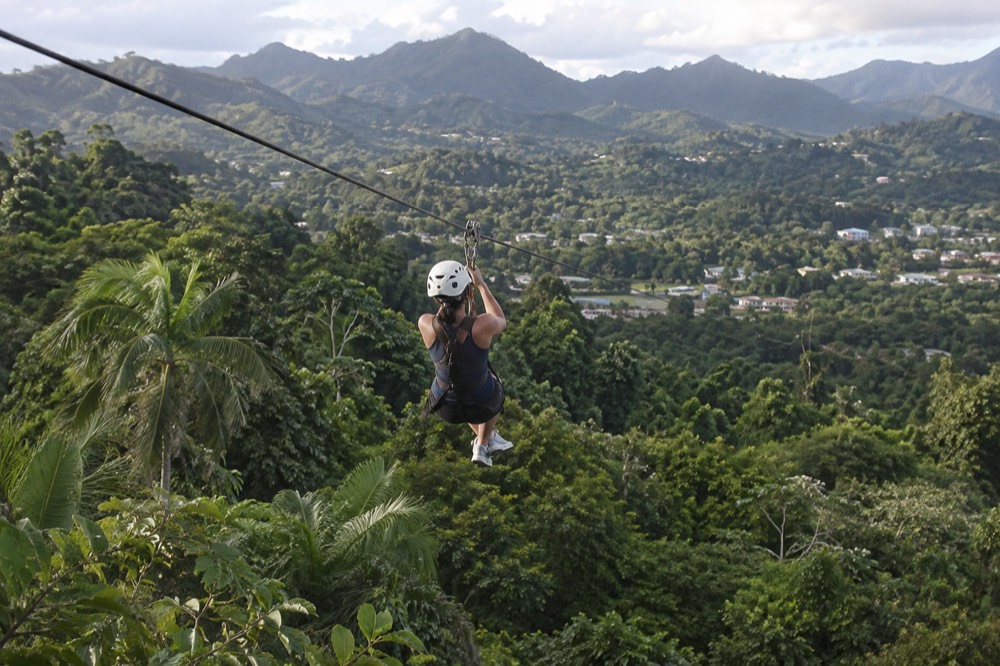
The private operators fill that gap, and they fill it well. The Río Grande Rainforest Zipline Experience, rated 4.9 across 304 reviews and priced from $99 for a 90-minute session, is the most-reviewed pure zipline option on our roster. Its listing places it in Río Grande, the municipality that hosts the forest's main PR-191 entrance corridor, which tells you the course sits close enough to the forest that the ride out from San Juan is short. The Junglequi Rainforest Zipline Adventure, rated 5 across 20 reviews and from $139 for the same 90-minute format, is a smaller-crew alternative in the same family.
What the private-land status changes in practice is mostly expectation and paperwork. The Forest Service's alerts, hours and corridor rules do not govern your zipline booking. The operator's own weight limits, age minimums, harnessing rules and weather calls govern it. If a storm rolls in, it is the operator who cancels or shortens the run, not the Forest Service. And if you are combining ziplining with a visit inside the forest on the same day, the two experiences run under two different sets of rules, which is worth keeping straight in your head.
The boundary question also explains why prices vary so much between listings that look identical in photographs. A course with long cables spanning a valley costs more to build, insure and inspect than a shorter circuit in the lowlands. The listing for the Río Grande experience does not publish its cable count or total length, so treat any specific figure you see elsewhere as the operator's claim to verify on the live listing rather than a settled fact.
What Does A Zipline Tour At El Yunque Cost?
The pure zipline options on our roster run from $99 to $139 per person for roughly 90 minutes on the cables. Combo products that bundle ziplining with a forest hike and transport run higher, from $225, because they pack a full day of guiding and travel into one booking. Group size is listed on each operator's page rather than fixed in advance.
Here is how the zipline-family options compare, using only figures verified on the live listings:
| Tour | Format | Duration | From (per person) | Rating | Cancellation |
|---|---|---|---|---|---|
| Río Grande Rainforest Zipline Experience | Zipline only | 1 hour 30 minutes | $99 | 4.9 across 304 reviews | Free cancellation |
| Junglequi Rainforest Zipline Adventure | Zipline only | 1 hour 30 minutes | $139 | 5 across 20 reviews | Free cancellation |
| El Yunque Forest Hike & Ziplining Combo | Hike plus zipline, transport | 9 hours 30 minutes | $225 | 4.7 across 21 reviews | Free cancellation |
Two patterns jump out of that table. First, the pure zipline products cluster tightly around the $100 mark, so the choice between them comes down to reviews, schedule and pickup logistics rather than price. Second, the combo more than doubles the cost because it more than quadruples the time: you are paying for a guided hike inside the forest, the zipline session, and the vehicle moving you between them across a nine-and-a-half-hour day.
The budget question is really a time question. A traveler with one full day in Puerto Rico who wants both the forest and the flight can either book two separate products and manage the connection personally, or pay once for a combo that handles it. The combo wins on convenience and loses on flexibility, because a fixed itinerary cannot linger at a waterfall or skip a stop you dislike. Our El Yunque tours cost breakdown covers the same trade-off across the wider roster.
One cost note that catches people out: the zipline listings generally do not include photos in the base price unless the listing says so. If you want the GoPro footage of yourself mid-flight, check whether it is bundled or sold separately before you assume either way. The listing text is the authority on this, and it varies between operators.
What Do The Zipline And Hike Combos Include?
The main combo on the roster, the El Yunque Forest Hike & Ziplining Combo, runs 9 hours 30 minutes from $225 and pairs a guided rainforest hike with a zipline session, with transport woven through the day. It is rated 4.7 across 21 reviews. It suits travelers who want one booking to cover the forest and the flight rather than two.
The combo logic is straightforward. Ziplining is a 90-minute activity, and the forest is a half-day or more for most visitors, so the two stack naturally into a single outing. The combo's listing confirms Old San Juan among its stops, which tells you it is built around San Juan-based travelers being collected, moved through the day, and returned. That pickup structure is the hidden value in the price: the alternative is renting a car or arranging permitted transport, which is its own project on this coast.
The honest caveat is the review base. Twenty-one reviews is a genuine but small sample, and the 4.7 rating should be read as a small-pool figure rather than the settled verdict that a thousand-review product carries. The pure zipline listings carry the deeper review histories in this family, so if the flight is the priority and the hike is a bonus, the standalone course plus a separate forest tour may serve you better than the bundle.
There is also a scheduling reality to weigh. A 9 hour 30 minute day that includes a hike, a zipline session and San Juan traffic is a long day, and the forest corridor closes to visitors at 5:00 p.m. with the Forest Service advising people to begin exiting at least 15 minutes before closing. Combos are built around that clock, which is one reason they start early. If you are not a morning person, check the departure time on the listing before committing to the full-day format.
What If You Would Rather Ride Than Fly?
The same private-land adventure economy that powers the ziplines also powers ATV, UTV and horseback operations around the forest's edge, led by Carabalí Rainforest Park in the Río Grande lowlands. Carabalí's own site lists its guided ATV tour at 1 to 2 hours, minimum age 16, a 450 lb maximum per vehicle, priced from $80. The park says it keeps over 85 horses of the Paso breed.
Carabalí is the anchor of this cluster, and it sits on the forest's flank near the Mameyes river valley. On our roster it appears as a 2-hour horseback ride from $110, rated 4.7 across 1,183 reviews, with hotel pickup and free cancellation; a 1-hour UTV adventure from $162 per group up to 2, rated 4.7 across 400 reviews; and a 1-hour guided ATV tour from $151 per group up to 2, rated 4.8 across 385 reviews, also with pickup. The operator's own site quotes its ATV pricing from $80 for the drive-yourself option, so the spread between the operator's direct price and the pickup-included tour price on the roster is the cost of transport and booking convenience. The rest of the planning pages sit on El Yunque National Forest Tours.
The same boundary honesty applies here as with the ziplines. Carabalí is a private adventure park adjacent to the forest, not a Forest Service facility, and its rides operate on its own land and trails. That does not diminish them; the horseback ride along the Mameyes valley is one of the most consistently praised experiences in the region, and the review depth shows it. It just means the national forest's rules, hours and alerts do not govern the experience. Our ATV and horseback tour guide and the Carabalí versus El Yunque comparison cover the choice in depth.
Choosing between flying and riding is mostly a matter of party composition. Ziplines have height and weight minimums and a tolerance for heights that not everyone shares. Horses have their own comfort threshold, but the Paso breed's smooth gait, which Carabalí itself cites as the reason it can suit all rider skill levels, makes the ride approachable for nervous beginners. Mixed parties with young teenagers often land on the ATV or UTV options, where the age 16 minimum on the ATVs is the binding constraint.
Do You Need A Reservation For El Yunque If You Book A Zipline Tour?
No, and this is where a lot of outdated advice goes wrong. Entrance to the PR-191 North recreational corridor is free and requires no reservation, and the old recreation.gov timed-entry system no longer exists. A zipline tour does not buy you past an entry queue, because there is no queue to skip. What a tour buys is transport, a permitted operator and someone who knows what is open.
The Forest Service states this plainly on its current conditions page: entrance to the recreational corridor on PR-191 North in Río Grande is free, no reservations are required, hours run 8:00 a.m. to 5:00 p.m., and visitor capacity is managed through parking, which is permitted only in designated areas. The four access corridors, PR-191 North, PR-191 South, PR-988 and PR-186, are all published as not requiring a reservation. Much of the third-party content still telling travelers to book a corridor reservation is describing a system that has been retired.
So the honest case for booking tours in this region is not queue-skipping, and any listing that implies it is overselling. The real case is practical. Parking inside the corridor is the genuine constraint, enforced with tickets at La Coca Falls and 30-minute maximums at Yokahú Tower and Juan Diego. Rideshare apps cannot pick up at the corridor or at El Portal, which has left visitors walking long distances to reach a valid pick-up point. And not every taxi driver holds a permit to operate in the forest, which the Forest Service itself flags, advising visitors to ask before hiring. A tour with a permitted vehicle and a legal drop-off solves all three problems at once.
The zipline courses, being outside the forest, are unaffected by any of this. Your zipline booking is with a private operator on private land, and the corridor rules only start to matter if you add a forest visit to the same day. If you are doing both, the corridor's 8 to 5 window and the designated-parking rule are the two constraints to plan around, and the official current conditions page is the live authority on both.
One more boundary note worth carrying: the famous natural waterslides above Luquillo, Las Paylas, are also on private land outside the national forest, with no Forest Service oversight. Several tours on the wider roster visit them, and the honest framing is the same as for the ziplines: real, popular, and not a national-forest attraction. Our Luquillo waterslides guide covers that side of the region.
What Should You Wear And Know Before You Go?
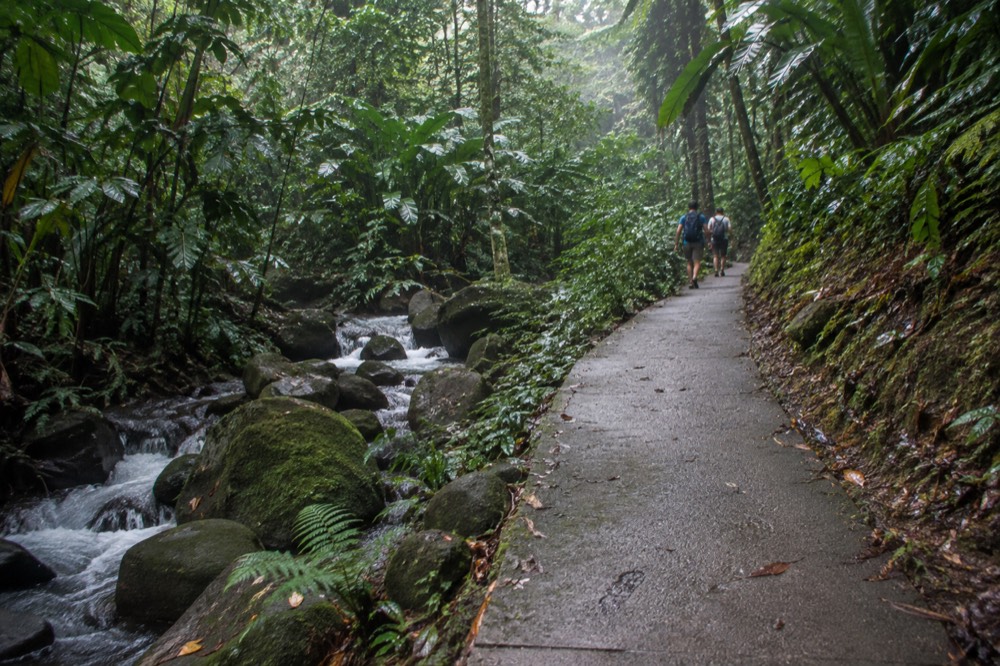
The Forest Service's own preparation advice for the region leads with footwear: wear good shoes with traction, because it is a rainforest, it is wet and mossy, and wet surfaces on a slope are a hazard. For ziplining specifically, that translates to closed-toe shoes, clothing that can be cinched under a harness, and nothing loose. Long hair gets tied back.
The rain reality deserves respect. Forest Service research publications record annual rainfall ranging from roughly 96 inches at lower elevations to over 157 inches at higher stations, with the highest station, El Yunque Peak, recording 4,300 mm in a year. You are visiting a place where rain is the norm, not the exception, and the same wet ground that makes the forest lush makes platforms, steps and cable landing zones slick. Operators brief on this, but arriving already dressed for it saves time and discomfort.
For the forest half of a combo day, the same footwear advice applies doubly, and flash flooding is the serious risk the Forest Service asks every visitor to take seriously. Flash floods can occur throughout the year, are more frequent in the rainy months of April and May, and a sudden surge can claim victims in less than one minute. Stay out of rivers when rain falls upstream, and check conditions before any water stop. Our what to wear and bring guide has the full packing list.
Practical items that travelers under-pack for ziplining: insect repellent for the waiting periods between runs, a strap for glasses, and secure pockets or a locker plan for phones, since most courses restrict loose items on the cables. Sunscreen matters less under canopy but matters a lot on the ride out. And if your booking is a combo, the day is long enough that water and a snack stop are worth confirming on the listing before you assume either way.
So Is A Zipline Tour At El Yunque Worth It?
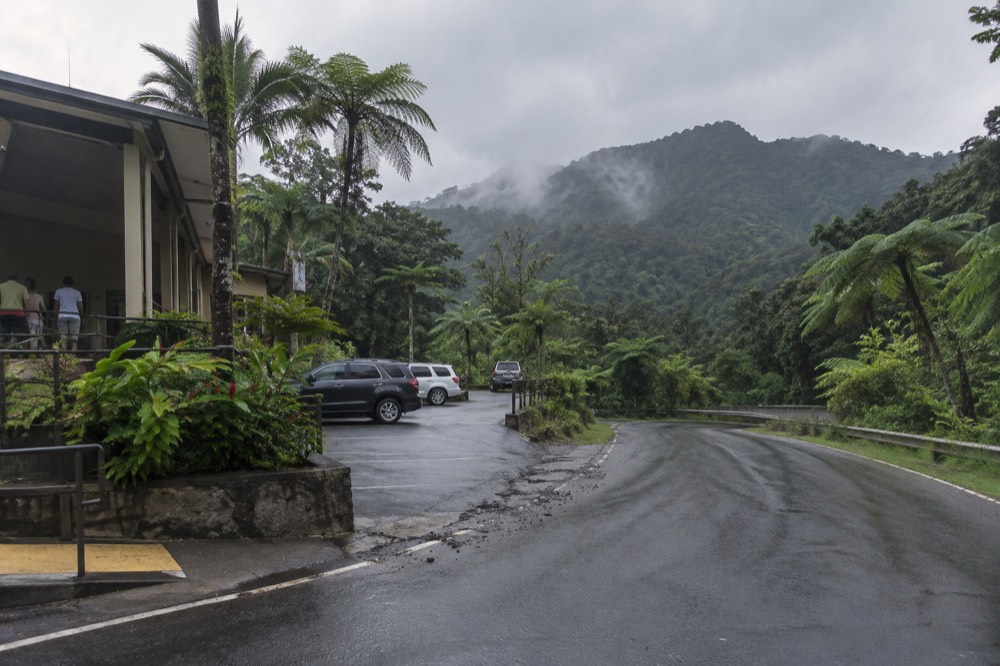
For most visitors, yes, provided you book it knowing what it is: a professionally run flight over private rainforest property on the forest's doorstep, not a ride through the national forest itself. The leading option runs from $99 for 90 minutes and carries a 4.9 rating across 304 reviews. The disappointment risk comes entirely from expecting the wrong product.
Read the reviews with the right lens and the pattern is consistent. Travelers who arrive knowing the course sits beside the forest rate the experience highly, because the scenery, the guides and the adrenaline all deliver. The complaints that surface tend to come from mismatched expectations: someone expected a specific view, a specific cable count, or a product inside the federal forest boundary. The distinction this article opened with is the same one that closes it, because it is the whole decision.
For help placing ziplining inside a wider itinerary, our pieces on how many hours you need in El Yunque and the best time to visit cover the scheduling math. The short version: ziplining pairs best with a forest morning, since the courses run on their own clocks and the corridor closes at 5:00 p.m.
Common Questions About Ziplining At El Yunque
Can You Zipline At El Yunque?
Yes, through private operators whose courses sit on land adjacent to the national forest, not inside it. The Forest Service lists no zipline among its recreation sites. The leading tour on our roster runs 90 minutes from $99, rated 4.9 across 304 reviews.
Is the zipline inside El Yunque National Forest?
No. The courses are operated by private adventure companies on private property in the Río Grande area, outside the forest boundary. The USDA Forest Service publishes 37 recreation sites and trails for El Yunque, and none of them is a zipline.
How much does a zipline tour cost?
The pure zipline options on our roster run from $99 to $139 per person for roughly 90 minutes. A combo that adds a guided forest hike and transport runs from $225 for a 9 hour 30 minute day. Group size is given on each listing.
Do I need a reservation to enter the forest on a zipline day?
No. Entrance to the PR-191 North recreational corridor is free and requires no reservation, with hours of 8:00 a.m. to 5:00 p.m. The old recreation.gov timed-entry system no longer exists. A tour buys transport and a permitted operator, not entry.
Can I combine ziplining with hiking in the forest?
Yes. The El Yunque Forest Hike & Ziplining Combo runs 9 hours 30 minutes from $225, pairing a guided rainforest hike with a zipline session and transport. It is rated 4.7 across 21 reviews and offers free cancellation.
What should I wear to zipline?
Closed-toe shoes with traction, clothing that fits under a harness, and nothing loose. The Forest Service's own advice for the region leads with footwear, because wet and mossy surfaces are a hazard. Tie back long hair and plan for rain, which is normal here.